


A cohort study of mild encephalitis/encephalopathy with a reversible splenial lesion in children
- PMID: 34333864
- PMCID: PMC8413819
- DOI: 10.1002/brb3.2306
A cohort study of mild encephalitis/encephalopathy with a reversible splenial lesion in children
Abstract
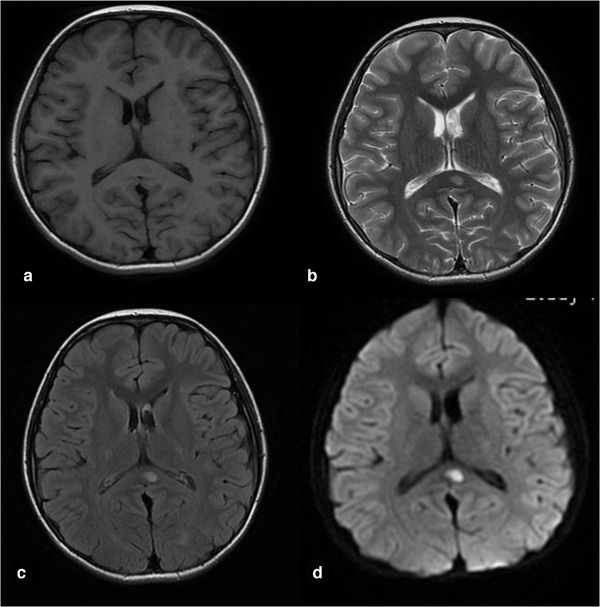
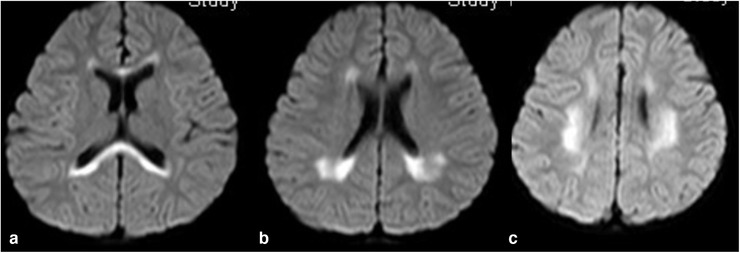
To investigate the clinical features, imaging features, and prognosis of mild encephalitis/encephalopathy with a reversible splenial lesion (MERS) in children METHODS: The clinical and imaging data of a cohort of 28 children diagnosed as MERS from January 2019 to October 2020 were retrospectively analyzed RESULTS: Of the 28 patients, 17 were males and 11 were females. The onset age ranged from 8 months to 12 years old, with an average age of 4 years and 2 months. All children developed normally before onset, and three of them had a history of febrile convulsion. More than half of the patients (62.9%) had preceding infections of gastrointestinal tract. All the cases developed seizures, and most (71.4%) had more than one time. Other neurological symptoms included dizziness/headache, consciousness disorder, limb weakness, blurred vision, and dysarthria. Cranial magnetic resonance imaging (MRI) showed lesions in the splenium of the corpus callosum in all, extending to other areas of the corpus callosum, bilateral semi-ovoid center, and adjacent periventricular in two cases. The clinical symptoms were relieved after steroids, intravenous immunogloblin, and symptomatic treatment, without abnormal neurodevelopment during the followed-up (2 months-2 years). Complete resolution of the lesions was observed 8-60 days after the initial MRI examinations CONCLUSION: MERS in children is related to prodromal infection mostly, with a wide spectrum of neurologic symptoms, characteristic MRI manifestations, and good prognosis.
Keywords: child; magnetic resonance imaging; mild encephalitis/encephalopathy with a reversible splenial lesion (MRES).
© 2021 The Authors. Brain and Behavior published by Wiley Periodicals LLC.
Conflict of interest statement
The authors declare no conflict of interest.
Figures
References
-
- Abenhaim Halpern, L., Agyeman, P., Steinlin, M., El‐Koussy, M., & Grunt, S. (2013). Mild encephalopathy with splenial lesion and parainfluenza virus infection. Pediatric Neurology, 48(3), 252–254. - PubMed
-
- Chen, F., Sun, S., Li, R., Du, Y., & Tang, H. (2020). Clinical analysis of children with mild encephalitis with reversible lesion of corpus callosum (report of 16 cases and literature review). Chinese Journal of Clinical Neuroscience, 28(2), 196–202.
-
- Chen, W. X., Liu, H. S., Yang, S. D., Zeng, S. H., Gao, Y. Y., Du, Z. H., Li, X. J., Lin, H. S., Liang, H. C., & Mai, J N. (2016). Reversible splenial lesion syndrome in children: Retrospective study and summary of case series. Brain & Development, 38(10), 915–927. - PubMed
-
- Dong, Y., Guo, A., Liu, L., Wang, Y., Chen, N., & Li, J. (2017). Clinical study of mild encephalitis/encephalopathy with reversible splenial lesions in children. Chinese Pediatric Emergency Medicine, 24(9), 709–712.
Publication types
MeSH terms
LinkOut - more resources
Full Text Sources
Medical
