


What's in a Face? Amygdalar Sensitivity to an Emotional Threatening Faces Task and Transdiagnostic Internalizing Disorder Symptoms in Participants Receiving Attention Bias Modification Training
- PMID: 34334846
- PMCID: PMC8320806
- DOI: 10.1007/s10608-021-10205-9
What's in a Face? Amygdalar Sensitivity to an Emotional Threatening Faces Task and Transdiagnostic Internalizing Disorder Symptoms in Participants Receiving Attention Bias Modification Training
Abstract
Background: Altered amygdala activation in response to the emotional matching faces (EMF) task, a task thought to reflect implicit emotion detection and reactivity, has been found in some patients with internalizing disorders; mixed findings from the EMF suggest individual differences (within and/or across diagnoses) that may be important to consider. Attention Bias Modification (ABM), a mechanistic attention-targeting intervention, has demonstrated efficacy in treatment of internalizing disorders. Individual differences in neural activation to a relatively attention-independent task, such as the EMF, could reveal novel neural substrates relevant in ABM's transdiagnostic effects, such as the brain's generalized threat reactivity capacity.
Methods: In a sample of clinically anxious patients randomized to ABM (n = 43) or sham training (n = 18), we measured fMRI activation patterns during the EMF and related them to measures of transdiagnostic internalizing symptoms (i.e., anxious arousal, general distress, anhedonic depression, and general depressive symptoms).
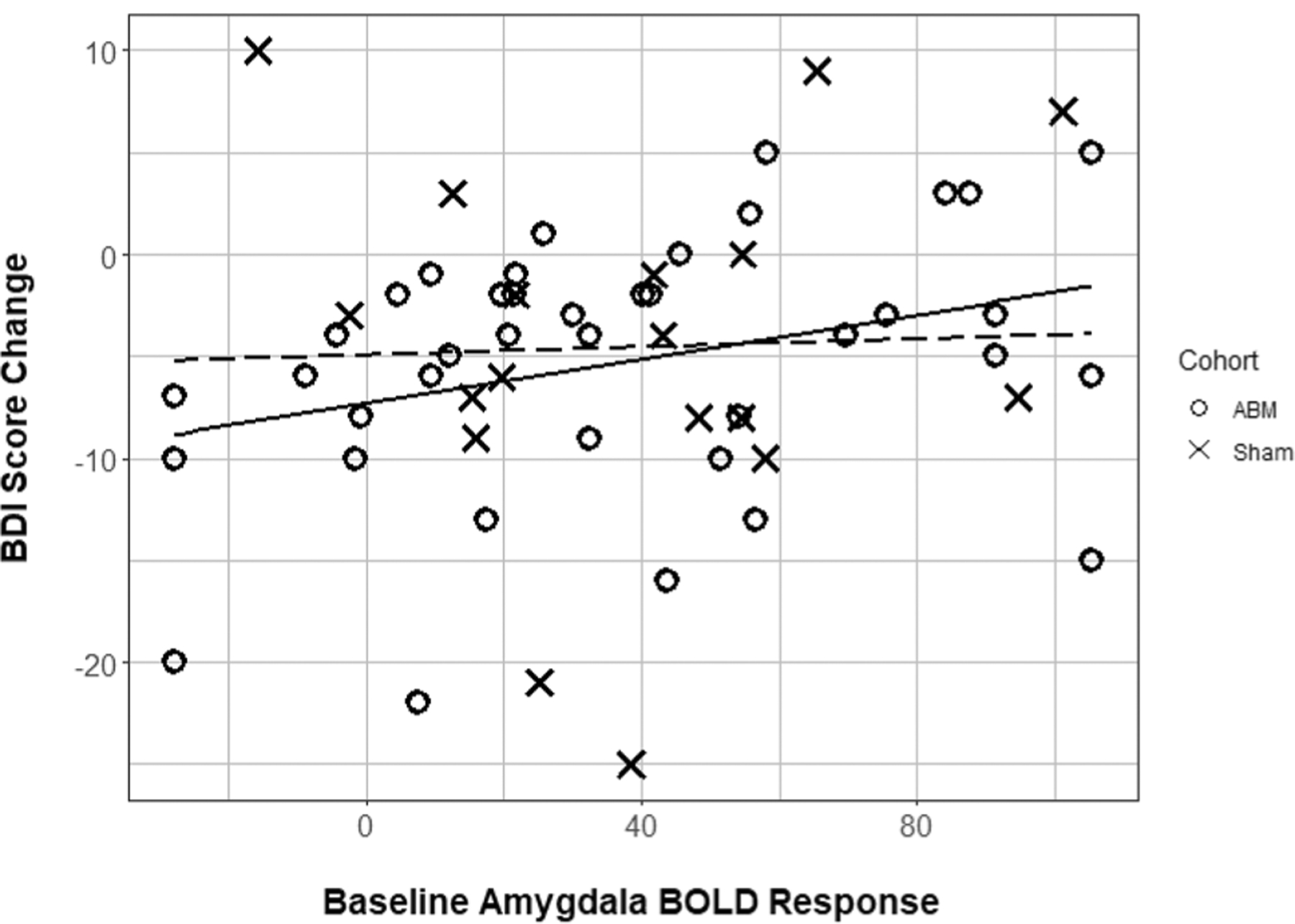
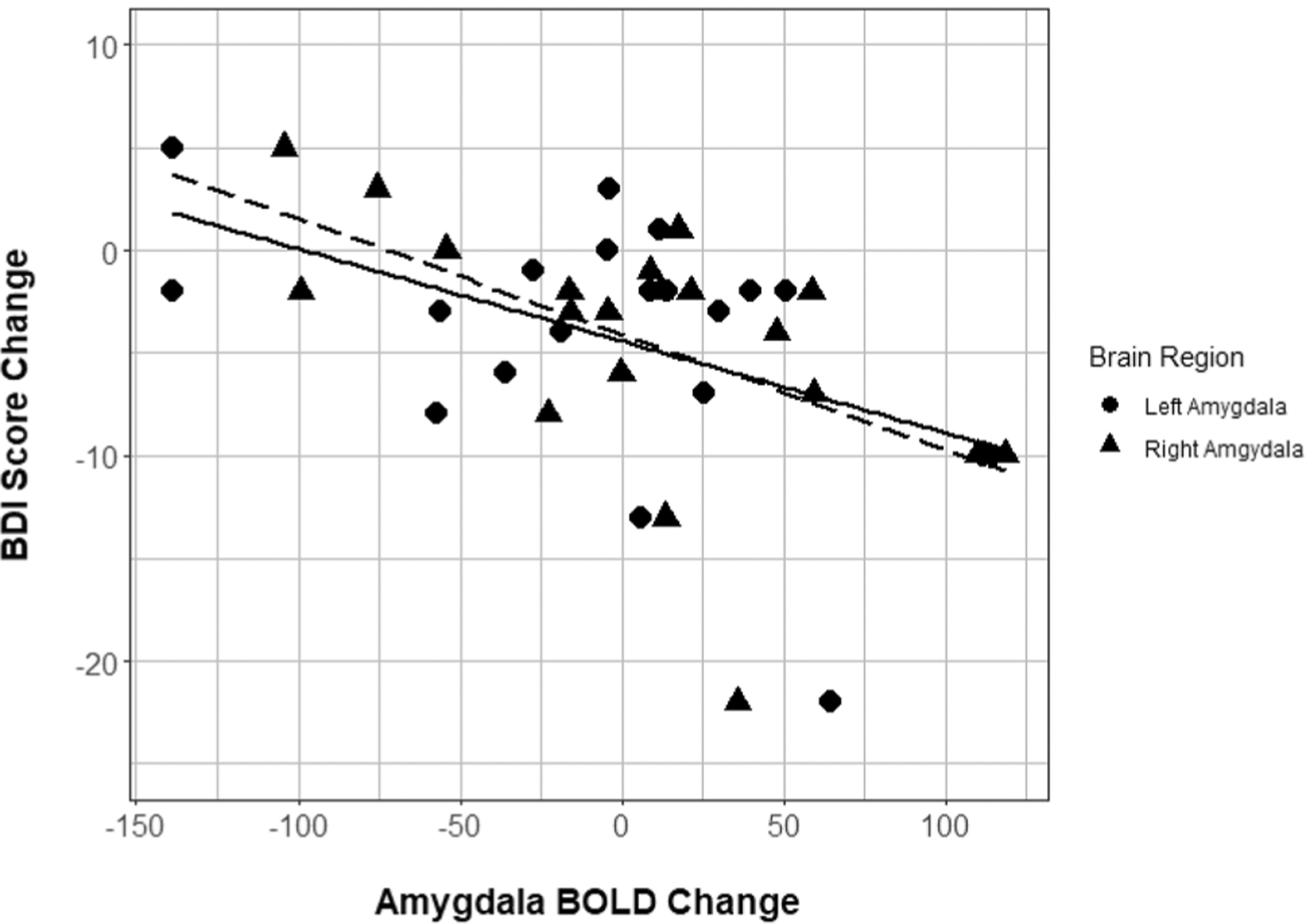
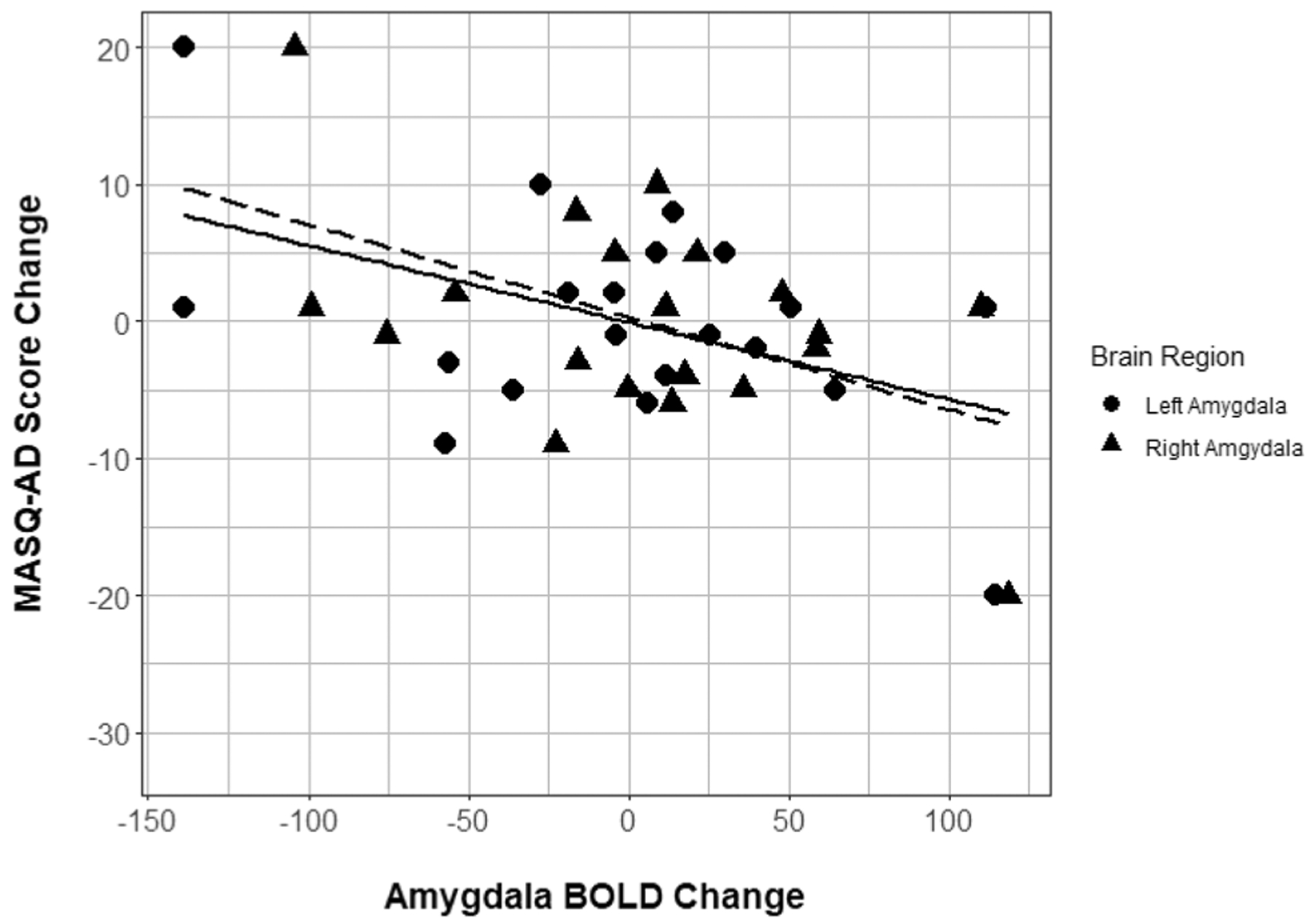
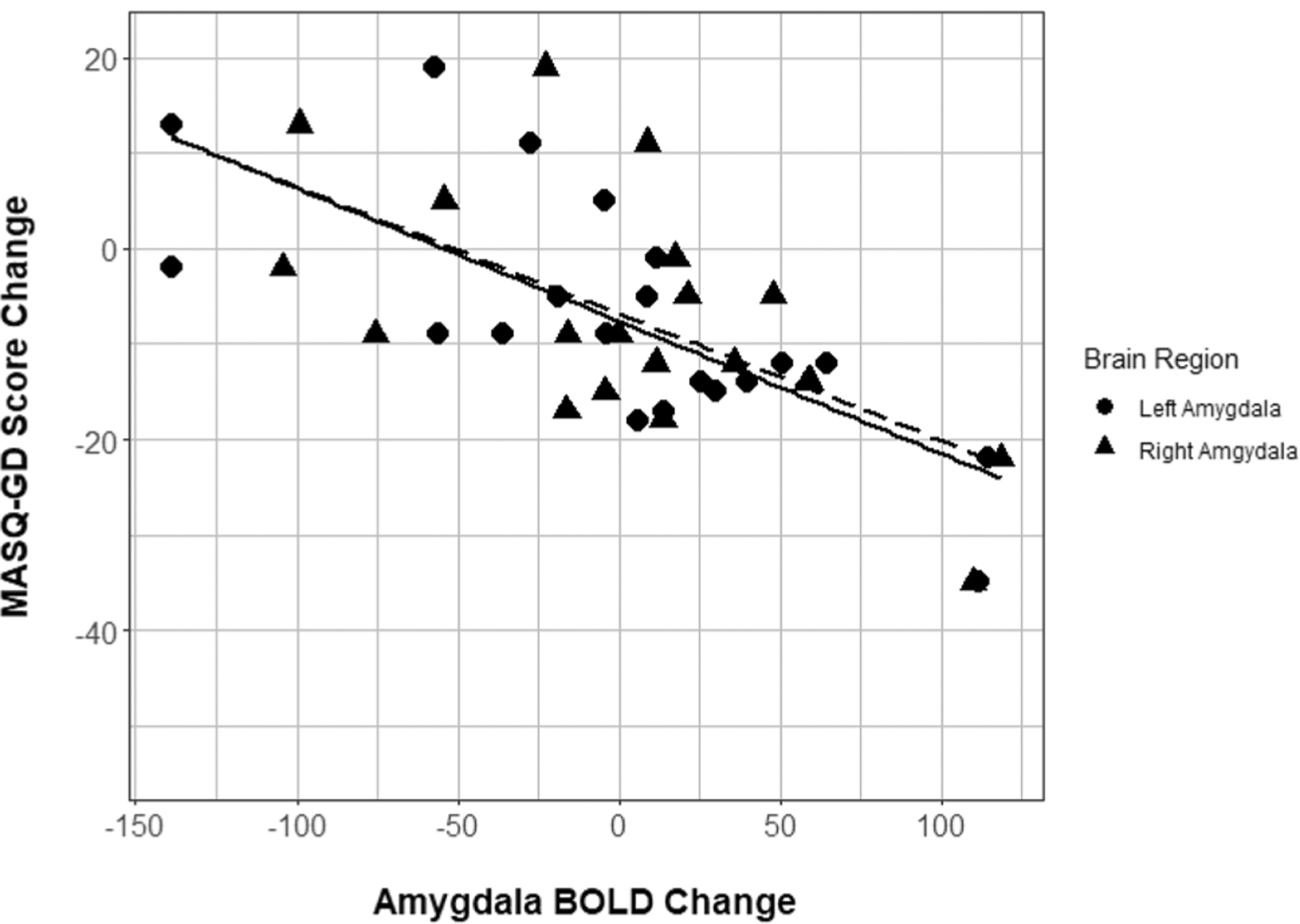
Results: Lower baseline right amygdala activation to negative (fearful/angry) faces, relative to shapes, predicted greater pre-to-post reduction in general depression symptoms in ABM-randomized patients. Greater increases in bilateral amygdalae activation from pre-to-post ABM were associated with greater reductions in general distress, anhedonic depression, and general depression symptoms.
Conclusions: ABM may lead to greater improvement in depressive symptoms in individuals exhibiting blunted baseline amygdalar responses to the EMF task, potentially by enhancing neural-level discrimination between negative and unambiguously neutral stimuli. Convergently, longitudinal increases in amygdala reactivity from pre-to-post-ABM may be associated with greater improvement in depression, possibly secondary to improved neural discrimination of threat and/or decreased neurophysiological threat avoidance in these specific patients.
Keywords: Amygdala; Anxiety; Attention bias modification; Depression; Emotional context insensitivity; Neuroimaging.
Conflict of interest statement
Conflict of Interest Manivel Rengasamy, Mary Woody, Tessa Kovats, Greg Siegle and Rebecca B. Price declare that they have no conflict of interest.
Figures
References
-
- Beck AT, Steer RA, & Carbin MG (1988). Psychometric properties of the Beck Depression Inventory: Twenty-five years of evaluation. Clinical Psychology Review, 8(1), 77–100.
-
- Behar E, Alcaine O, Zuellig AR, & Borkovec T (2003). Screening for generalized anxiety disorder using the Penn State Worry Questionnaire: A receiver operating characteristic analysis. Journal of Behavior Therapy and Experimental Psychiatry, 34(1), 25–43. - PubMed
-
- Benjamini Y, & Hochberg Y (1995). Controlling the false discovery rate: A practical and powerful approach to multiple testing. Journal of the Royal Statistical Society Series B (Methodological), 57, 289–300.
-
- Bradley BP, Mogg K, White J, Groom C, & De Bono J (1999). Attentional bias for emotional faces in generalized anxiety disorder. British Journal of Clinical Psychology, 38(3), 267–278. - PubMed
Grants and funding
LinkOut - more resources
Full Text Sources