


Narrative Analysis of the Impact of COVID-19 on Patients with Chronic Obstructive Pulmonary Disease, Their Caregivers, and Healthcare Professionals in Italy
- PMID: 34335023
- PMCID: PMC8318732
- DOI: 10.2147/COPD.S312372
Narrative Analysis of the Impact of COVID-19 on Patients with Chronic Obstructive Pulmonary Disease, Their Caregivers, and Healthcare Professionals in Italy
Abstract
Purpose: The COVID-19 pandemic has disrupted many lives, including those of people suffering from chronic obstructive pulmonary disease (COPD) and their caregivers. The main aim of this study was to use narrative medicine, a validated approach promoting quality of care to explore how the COVID-19 pandemic impacted the quality of care, quality of life, psychological factors and social factors of people affected by COPD and their caregivers and healthcare professionals (HCPs). A secondary aim was to explore the role of telemedicine in combating isolation and providing access to care.
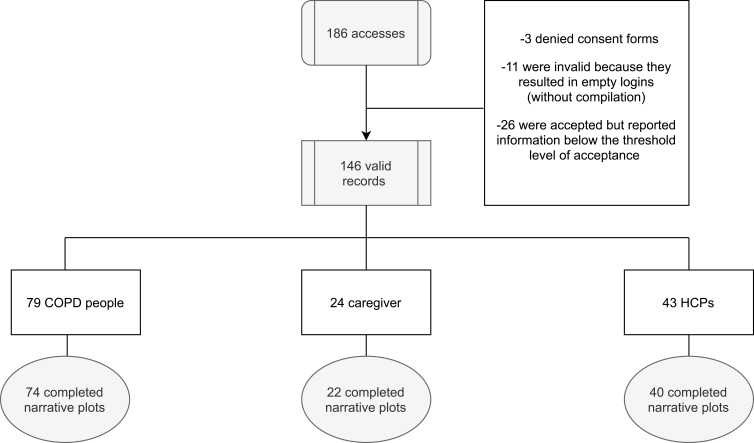
Methods: A cross-sectional observational narrative medicine study was conducted between July and November 2020 across Italy. An online semi-structured questionnaire with a narrative plot was completed by 146 participants (79 COPD patients, 24 caregivers, and 43 HCPs). Narrations were analyzed with descriptive statistics and evaluated using NVivo 11 software to break down the text and identify recurring themes and major semantic clusters.
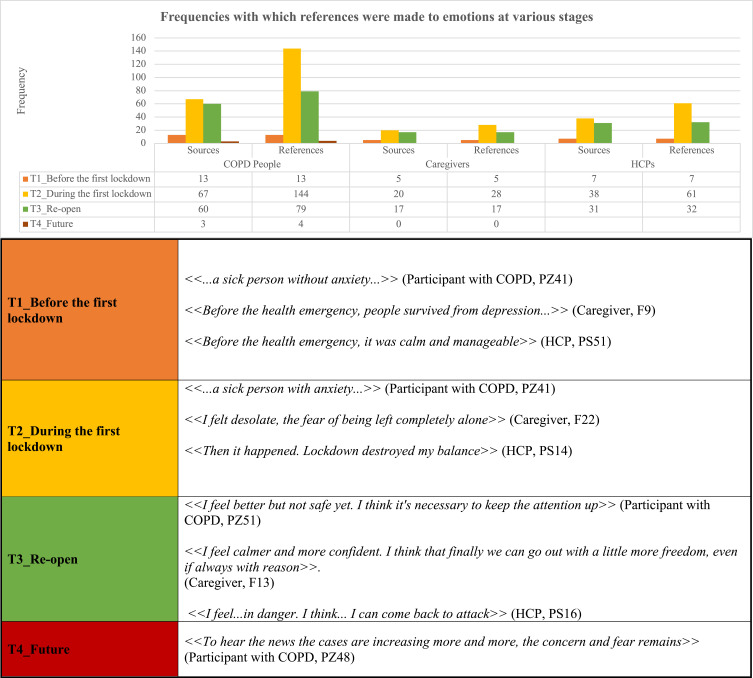
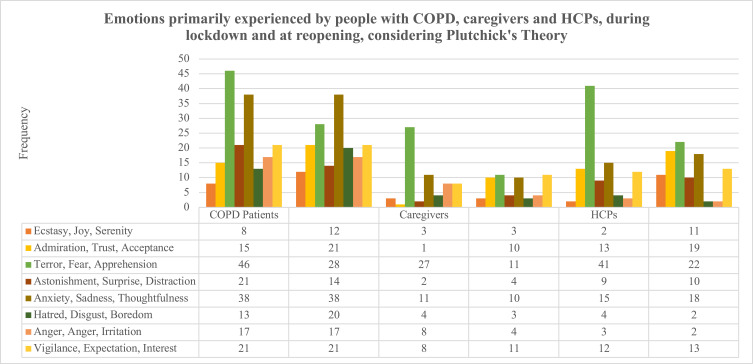
Results: During the first lockdown, 58.22% of responses from COPD patients indicated terror, fear and/or apprehension; at reopening, this figure was 35.44%. Among caregivers, these figures were 100% at first lockdown and 45.83% at reopening. The metaphors most commonly used by patients to describe COPD and COVID-19 were monster and murderer, respectively. Patients described their homes more often as clean and lonely than as offering no shelter. The narratives of 42 COPD patients (45.2%) described coping. Only 12.6% of COPD patients reported regular access to medical visits during lockdown, while 59.1% of general practitioners and pulmonologists reported using telemedicine, which was perceived as satisfactory by both patients and caregivers.
Conclusion: It is relevant to aim for a multidisciplinary and multilevel system of care that empowers telemedicine and integrates specific psychological support programs for COPD patients and their caregivers.
Keywords: COPD; COVID-19; chronic obstructive pulmonary disease; narrative medicine; quality of life.
© 2021 Volpato et al.
Conflict of interest statement
Dr Eleonora Volpato reports support for this study from Chiesi Farmaceutici S.p.A. Dr Alessio Piraino and Dr Luca Cavalieri are employers of Chiesti Italia S.p.A. The authors report no other conflicts of interest in this work.
Figures
References
-
- Yohannes AM, Baldwin RC, Connolly MJ. Mood disorders in elderly patients with chronic obstructive pulmonary disease. Rev Clin Gerontol. 2000;10(2):193–202. doi:10.1017/S0959259800002100 - DOI
