


New Insights on Streptococcus dysgalactiae subsp. dysgalactiae Isolates
- PMID: 34335512
- PMCID: PMC8319831
- DOI: 10.3389/fmicb.2021.686413
New Insights on Streptococcus dysgalactiae subsp. dysgalactiae Isolates
Abstract
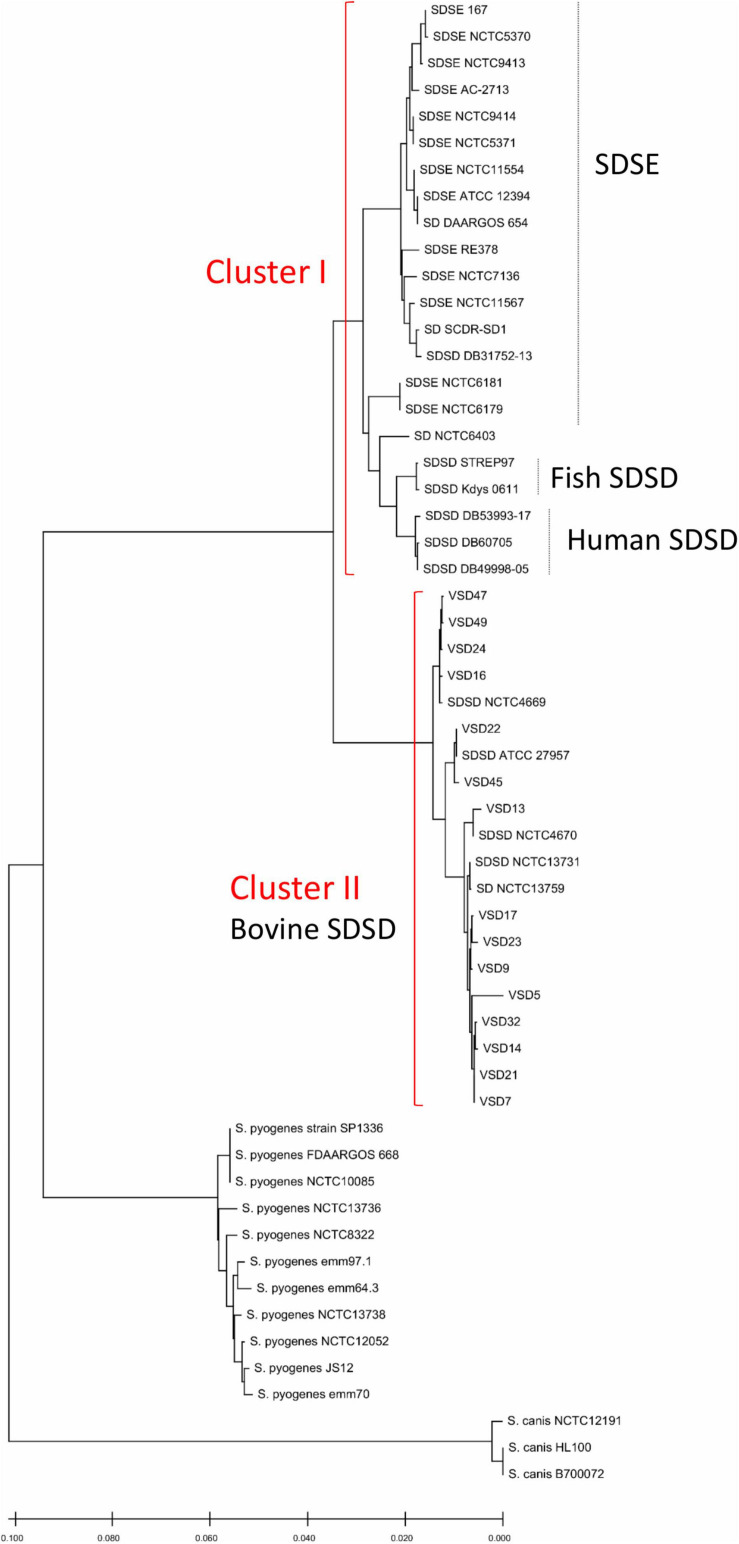
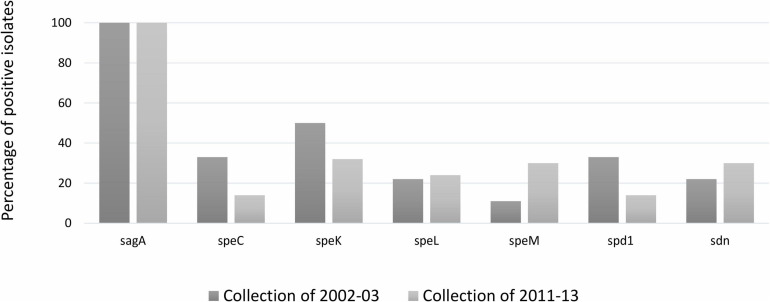
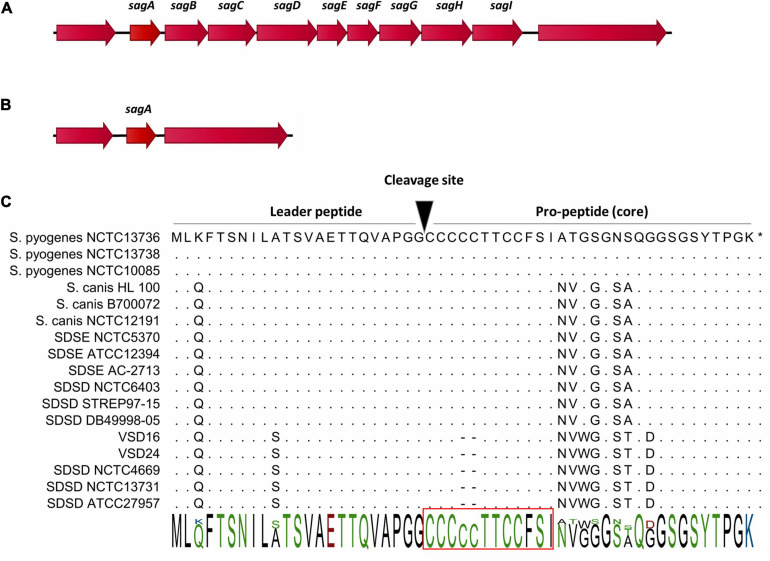
Streptococcus dysgalactiae subsp. dysgalactiae (SDSD) has been considered a strict animal pathogen. Nevertheless, the recent reports of human infections suggest a niche expansion for this subspecies, which may be a consequence of the virulence gene acquisition that increases its pathogenicity. Previous studies reported the presence of virulence genes of Streptococcus pyogenes phages among bovine SDSD (collected in 2002-2003); however, the identity of these mobile genetic elements remains to be clarified. Thus, this study aimed to characterize the SDSD isolates collected in 2011-2013 and compare them with SDSD isolates collected in 2002-2003 and pyogenic streptococcus genomes available at the National Center for Biotechnology Information (NCBI) database, including human SDSD and S. dysgalactiae subsp. equisimilis (SDSE) strains to track temporal shifts on bovine SDSD genotypes. The very close genetic relationships between humans SDSD and SDSE were evident from the analysis of housekeeping genes, while bovine SDSD isolates seem more divergent. The results showed that all bovine SDSD harbor Clustered Regularly Interspaced Short Palindromic Repeats (CRISPR)/Cas IIA system. The widespread presence of this system among bovine SDSD isolates, high conservation of repeat sequences, and the polymorphism observed in spacer can be considered indicators of the system activity. Overall, comparative analysis shows that bovine SDSD isolates carry speK, speC, speL, speM, spd1, and sdn virulence genes of S. pyogenes prophages. Our data suggest that these genes are maintained over time and seem to be exclusively a property of bovine SDSD strains. Although the bovine SDSD genomes characterized in the present study were not sequenced, the data set, including the high homology of superantigens (SAgs) genes between bovine SDSD and S. pyogenes strains, may indicate that events of horizontal genetic transfer occurred before habitat separation. All bovine SDSD isolates were negative for genes of operon encoding streptolysin S, except for sagA gene, while the presence of this operon was detected in all SDSE and human SDSD strains. The data set of this study suggests that the separation between the subspecies "dysgalactiae" and "equisimilis" should be reconsidered. However, a study including the most comprehensive collection of strains from different environments would be required for definitive conclusions regarding the two taxa.
Keywords: CRISPR typing; Streptococcus dysgalactiae subsp. dysgalactiae; phage genes; phylogenetic relationships; virulence genes.
Copyright © 2021 Alves-Barroco, Caço, Roma-Rodrigues, Fernandes, Bexiga, Oliveira, Chambel, Tenreiro, Mato and Santos-Sanches.
Conflict of interest statement
The authors declare that the research was conducted in the absence of any commercial or financial relationships that could be construed as a potential conflict of interest.
Figures
References
-
- Abdelsalam M., Fujino M., Eissa A. E., Chen S. C., Warda M. (2015). Expression, genetic localization and phylogenic analysis of NAPlr in piscine Streptococcus dysgalactiae subspecies dysgalactiae isolates and their patterns of adherence. J. Adv. Res. 6 747–755. 10.1016/j.jare.2014.05.005 - DOI - PMC - PubMed
-
- Alves-Barroco C., Roma-Rodrigues C., Balasubramanian N., Guimarães M. A., Ferreira-Carvalho B. T., Muthukumaran J., et al. (2019). Biofilm development and computational screening for new putative inhibitors of a homolog of the regulatory protein BrpA in Streptococcus dysgalactiae subsp. dysgalactiae. Int. J. Med. Microbiol. 309 169–181. 10.1016/j.ijmm.2019.02.001 - DOI - PubMed
-
- Alves-Barroco C., Roma-Rodrigues C., Raposo L. R., Brás C., Diniz M., Caço J., et al. (2018). Streptococcus dysgalactiae subsp. dysgalactiae isolated from milk of the bovine udder as emerging pathogens: In vitro and in vivo infection of human cells and zebrafish as biological models. Microbiol. Open 8:e00623. 10.1002/mbo3.623 - DOI - PMC - PubMed
-
- Aminov R. I., Garrigues-Jeanjean N., Mackie R. I. (2001). Molecular ecology of tetracycline resistance: development and validation of primers for detection of tetracycline resistance genes encoding ribosomal protection proteins. Appl. Environ. Microbiol. 67 22–32. 10.1128/AEM.67.1.22-32.2001 - DOI - PMC - PubMed
LinkOut - more resources
Full Text Sources
Molecular Biology Databases
