


Therapeutic Potential of Neoechinulins and Their Derivatives: An Overview of the Molecular Mechanisms Behind Pharmacological Activities
- PMID: 34336908
- PMCID: PMC8322439
- DOI: 10.3389/fnut.2021.664197
Therapeutic Potential of Neoechinulins and Their Derivatives: An Overview of the Molecular Mechanisms Behind Pharmacological Activities
Abstract
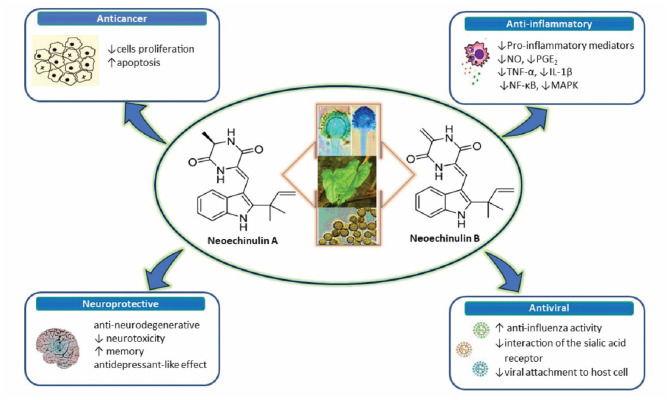
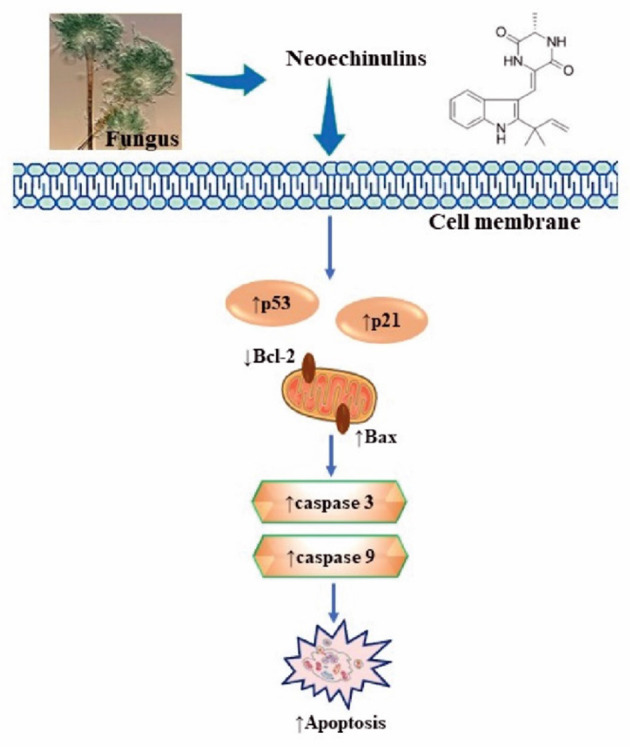
Neoechinulins are diketopiperazine type indole alkaloids that demonstrate radical scavenging, anti-inflammatory, antiviral, anti-neurodegenerative, neurotrophic factor-like, anticancer, pro-apoptotic, and anti-apoptotic properties. An array of neoechinulins such as neoechinulins A-E, isoechinulins A-C, cryptoechunilin have been isolated from various fungal sources like Aspergillus sp., Xylaria euglossa, Eurotium cristatum, Microsporum sp., etc. Besides, neoechinulin derivatives or stereoisomers were also obtained from diverse non-fungal sources viz. Tinospora sagittata, Opuntia dillenii, Cyrtomium fortunei, Cannabis sativa, and so on. The main purpose of this review is to provide update information on neoechinulins and their analogues about the molecular mechanisms of the pharmacological action and possible future research. The recent data from this review can be used to create a basis for the discovery of new neoechinulin-based drugs and their analogues in the near future. The online databases PubMed, Science and Google scholar were researched for the selection and collection of data from the available literature on neoechinulins, their natural sources and their pharmacological properties. The published books on this topic were also analysed. In vitro and in vivo assays have established the potential of neoechinulin A as a promising anticancer and anti-neuroinflammatory lead molecule. Neoechinulin B was also identified as a potential antiviral drug against hepatitis C virus. Toxicological and clinical trials are needed in the future to improve the phyto-pharmacological profile of neoquinolines. From the analysis of the literature, we found that neoechinulins and their derivatives have special biological potential. Although some modern pharmacological analyzes have highlighted the molecular mechanisms of action and some signalling pathways, the correlation between these phytoconstituents and pharmacological activities must be validated in the future by preclinical toxicological and clinical studies.
Keywords: alkaloid; anti-inflammatory; anticancer; antiviral; fungus; in vitro; in vivo; neoechinulins.
Copyright © 2021 Sharifi-Rad, Bahukhandi, Dhyani, Sati, Capanoglu, Docea, Al-Harrasi, Dey and Calina.
Conflict of interest statement
The authors declare that the research was conducted in the absence of any commercial or financial relationships that could be construed as a potential conflict of interest.
Figures
References
-
- Yamamoto Y, Arai K. Alkaloidal substances from aspergillus species. In: Arnold B. editor. The Alkaloids: Chemistry And Pharmacology. Maryland: Elsevier. (1986). 10.1016/S0099-9598(08)60249-7 - DOI
-
- Dossena A, Marchelli R, Pochini A. New metabolites of aspergillus amstelodami related to the biogenesis of neoechinulin. Chem Commun. (1974) 771–2. 10.1039/c39740000771 - DOI
Publication types
LinkOut - more resources
Full Text Sources
Other Literature Sources
