


When Azoles Cannot Be Used: The Clinical Effectiveness of Intermittent Liposomal Amphotericin Prophylaxis in Hematology Patients
- PMID: 34337090
- PMCID: PMC8318248
- DOI: 10.1093/ofid/ofab113
When Azoles Cannot Be Used: The Clinical Effectiveness of Intermittent Liposomal Amphotericin Prophylaxis in Hematology Patients
Abstract
Background: Patients unable to take azoles are a neglected group lacking a standardized approach to antifungal prophylaxis. We evaluated the effectiveness and safety of intermittent liposomal amphotericin B (L-AMB) prophylaxis in a heterogenous group of hematology patients.
Methods: A retrospective cohort of all hematology patients who received a course of intravenous L-AMB, defined as 1 mg/kg thrice weekly from July 1, 2013 to June 30, 2018, were identified from pharmacy records. Outcomes included breakthrough-invasive fungal disease (BIFD), reasons for premature discontinuation, and acute kidney injury.
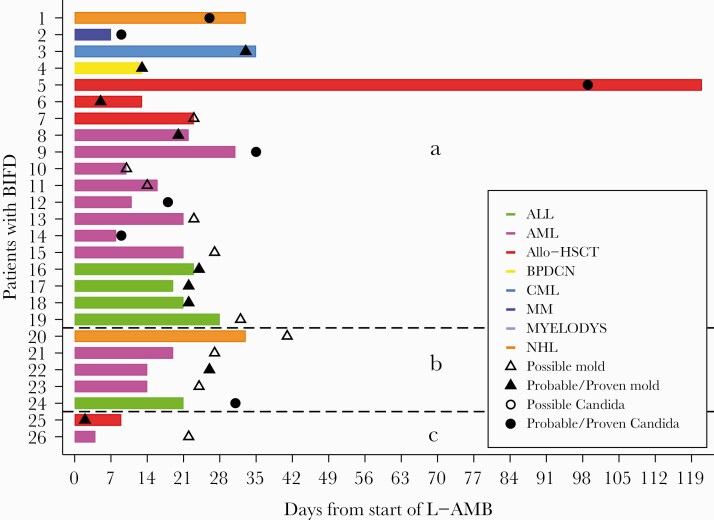
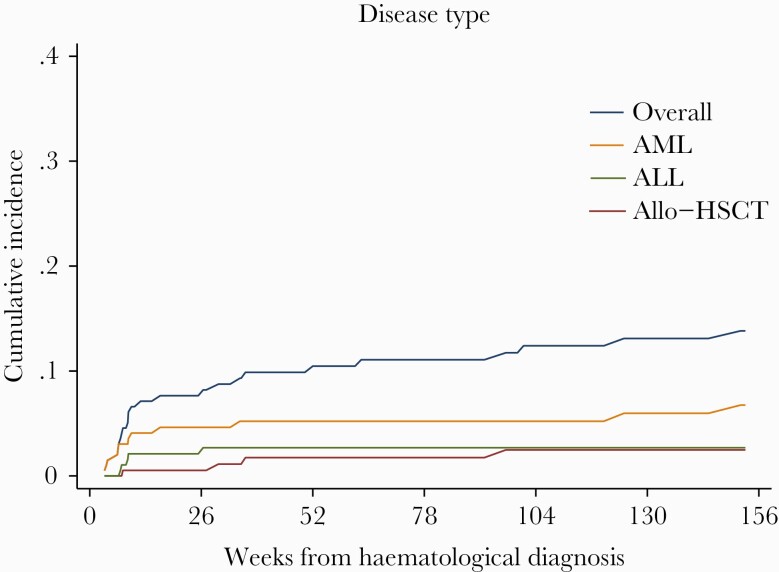
Results: There were 198 patients who received 273 courses of L-AMB prophylaxis. Using a conservative definition, the BIFD rate was 9.6% (n = 19 of 198) occurring either during L-AMB prophylaxis or up to 7 days from cessation in patients who received a course. Probable/proven BIFD occurred in 13 patients (6.6%, 13 of 198), including molds in 54% (n = 7) and non-albicans Candidemia in 46% (n = 6). Cumulative incidence of BIFD was highest in patients with acute myeloid leukemia (6.8%) followed by acute lymphoblastic leukemia (2.7%) and allogeneic stem cell transplantation (2.5%). The most common indication for L-AMB was chemotherapy, or anticancer drug-azole interactions (75% of courses) dominated by vincristine, or acute myeloid leukemia clinical trials, followed by gut absorption concerns (13%) and liver function abnormalities (8.8%). Acute kidney injury, using a modified international definition, complicated 27% of courses but was not clinically significant, accounting for only 3.3% (9 of 273) of discontinuations.
Conclusions: Our findings demonstrate a high rate of BIFD among patients receiving L-AMB prophylaxis. Pragmatic trials will help researchers find the optimal regimen of L-AMB prophylaxis for the many clinical scenarios in which azoles are unsuitable, especially as targeted anticancer drugs increase in use.
Keywords: antifungal prophylaxis; breakthrough fungal infection; invasive fungal disease; liposomal amphotericin B; malignant hematology.
© The Author(s) 2021. Published by Oxford University Press on behalf of Infectious Diseases Society of America.
Figures
References
-
- Pajares B, Torres E, Trigo JM, et al. Tyrosine kinase inhibitors and drug interactions: a review with practical recommendations. Clin Transl Oncol 2012; 14:94–101. - PubMed
-
- Agarwal SK, DiNardo CD, Potluri J, et al. Management of venetoclax-posaconazole interaction in acute myeloid leukemia patients: evaluation of dose adjustments. Clin Ther 2017; 39:359–67. - PubMed
-
- Cordonnier C, Mohty M, Faucher C, et al. Safety of a weekly high dose of liposomal amphotericin B for prophylaxis of invasive fungal infection in immunocompromised patients: PROPHYSOME Study. Int J Antimicrob Agents 2008; 31:135–41. - PubMed
