


Oxygen injury in neonates: which is worse? hyperoxia, hypoxia, or alternating hyperoxia/hypoxia
- PMID: 34337150
- PMCID: PMC8320601
Oxygen injury in neonates: which is worse? hyperoxia, hypoxia, or alternating hyperoxia/hypoxia
Abstract
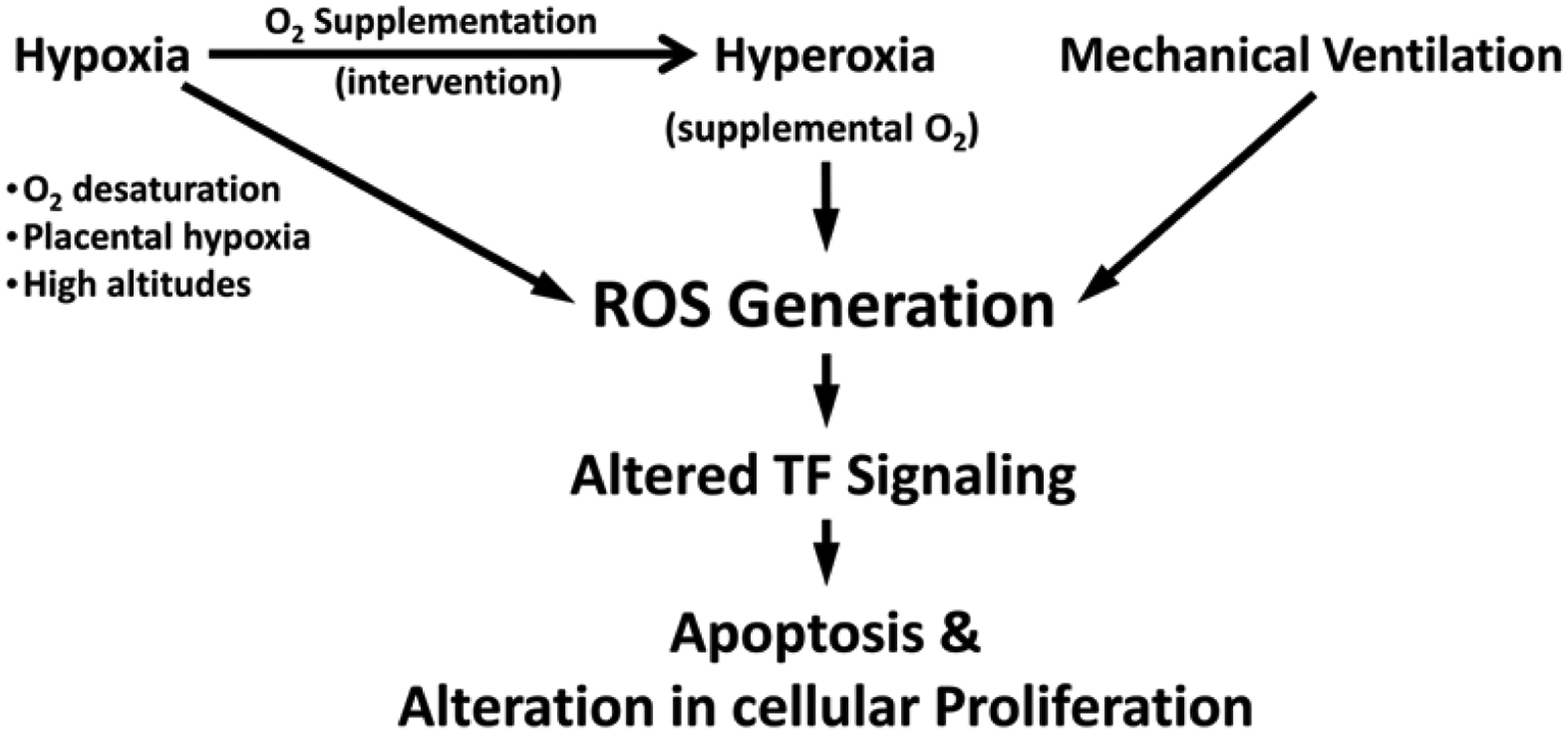
Premature birth results in an increased risk of respiratory distress and often requires oxygen therapy. While the supplemental oxygen has been implicated as a cause of bronchopulmonary dysplasia (BPD), in clinical practice this supplementation usually only occurs after the patient's oxygen saturation levels have dropped. The effect of hyperoxia on neonates has been extensively studied. However, there is an unanswered fundamental question: which has the most impact-hyperoxia, hypoxia or fluctuating oxygen levels? In this review, we will summarize the reported effect of hypoxia, hyperoxia or a fluctuation of oxygen levels (hypoxia/hyperoxia cycling) in preterm neonates, with special emphasis on the lungs.
Keywords: Bronchopulmonary dysplasia; lung injury; oxidative stress; renin angiotensin system.
Conflict of interest statement
Conflicts of interest Authors declare that there is no conflict of interest.
Figures
References
-
- Bhandari V Molecular mechanisms of hyperoxia-induced acute lung injury. Front Biosci. 2008;1:13:6653–6661. - PubMed
-
- Lee PJ, Choi AM. Pathways of cell signaling in hyperoxia. Free Radic Biol Med. 2003;35(4):341–350. - PubMed
-
- Smith VC, Zupancic JAF, McCormick MC, et al. Trends in severe bronchopulmonary dysplasia rates between 1994 and 2002. J Pediatr. 2005;146(4):469–473. - PubMed
Grants and funding
LinkOut - more resources
Full Text Sources