


The spectrum of mitochondrial DNA (mtDNA) mutations in pediatric CNS tumors
- PMID: 34337412
- PMCID: PMC8320689
- DOI: 10.1093/noajnl/vdab074
The spectrum of mitochondrial DNA (mtDNA) mutations in pediatric CNS tumors
Abstract
Background: We previously established the landscape of mitochondrial DNA (mtDNA) mutations in 23 subtypes of pediatric malignancies, characterized mtDNA mutation profiles among these subtypes, and provided statistically significant evidence for a contributory role of mtDNA mutations to pediatric malignancies.
Methods: To further delineate the spectrum of mtDNA mutations in pediatric central nervous system (CNS) tumors, we analyzed 545 tumor-normal paired whole-genome sequencing datasets from the Children's Brain Tumor Tissue Consortium.
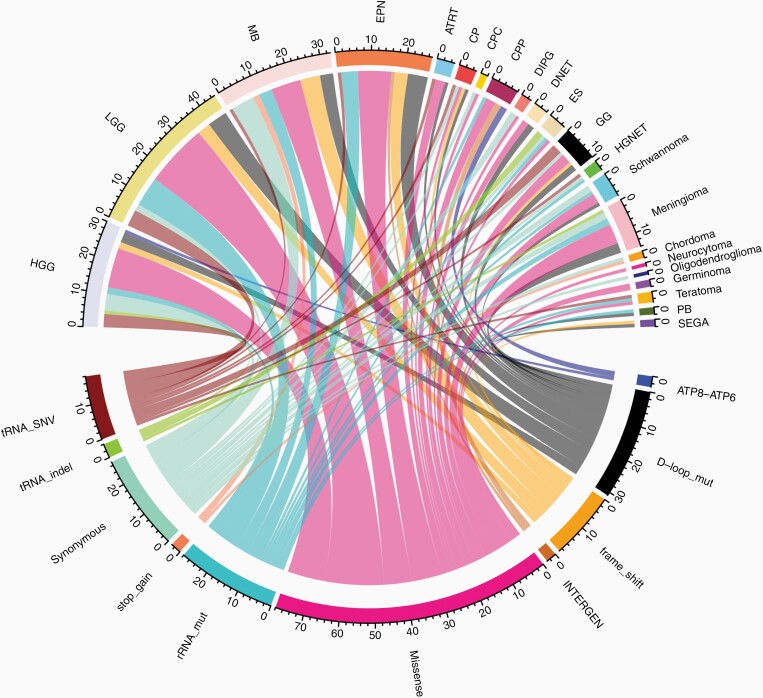
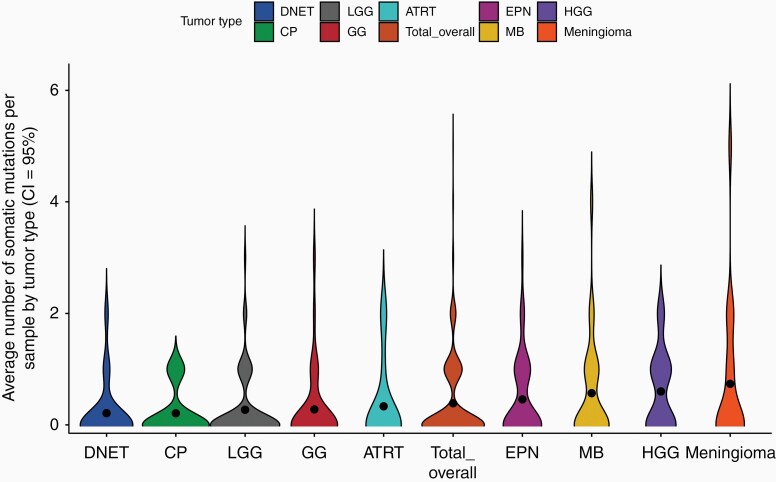
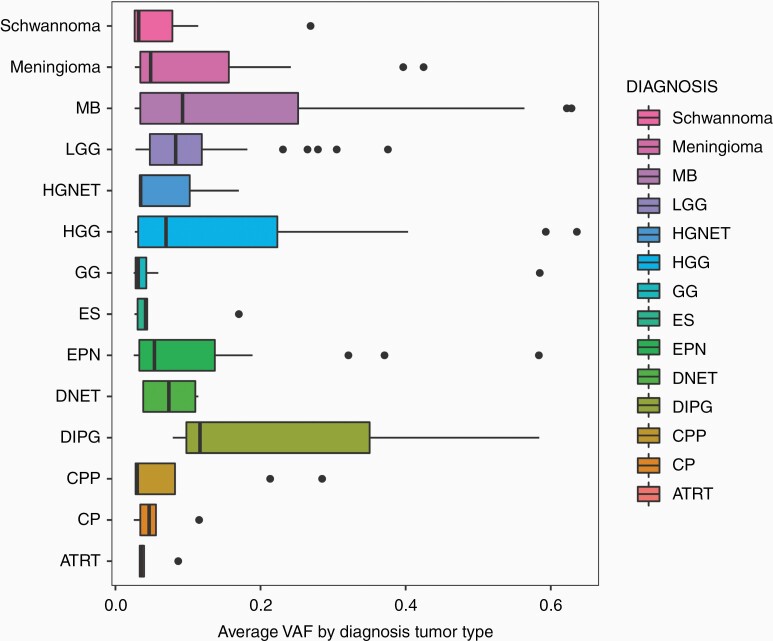
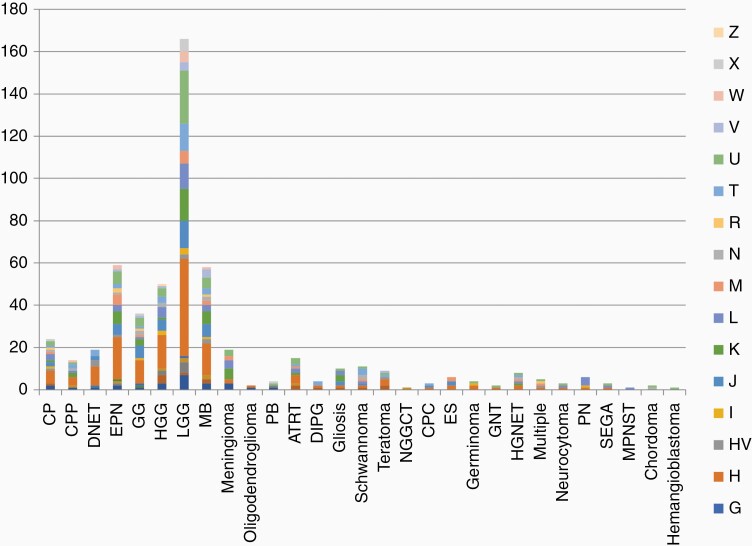
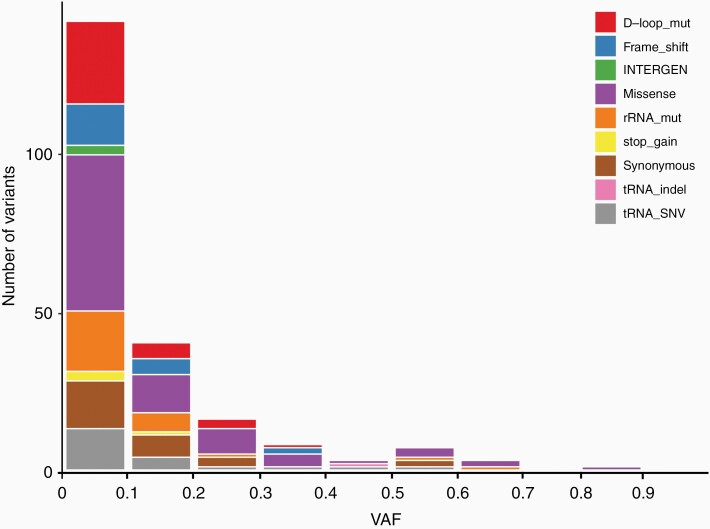
Results: Germline mtDNA variants were used to determine the haplogroup, and maternal ancestry, which was not significantly different among tumor types. Among 166 (30.5%) tumors we detected 220 somatic mtDNA mutations, primarily missense mutations (36.8%), as well as 22 loss-of-function mutations. Different pediatric CNS tumor subtypes had distinct mtDNA mutation profiles. The number of mtDNA mutations per tumor ranged from 0.20 (dysembryoplastic neuroepithelial tumor [DNET]) to 0.75 (meningiomas). The average heteroplasmy was 10.7%, ranging from 4.6% in atypical teratoid/rhabdoid tumor (AT/RT) to 26% in diffuse intrinsic pontine glioma. High-grade gliomas had a significant higher number of mtDNA mutations per sample than low-grade gliomas (0.6 vs 0.27) (P = .004), with almost twice as many missense mtDNA mutations per sample (0.24 vs 0.11), and higher average heteroplasmy levels (16% vs 10%). Recurrent mtDNA mutations may represent hotspots which may serve as biologic markers of disease.
Conclusions: Our findings demonstrate varying contributions of mtDNA mutations in different subtypes of CNS tumors. Sequencing the mtDNA genome may ultimately be used to characterize CNS tumors at diagnosis and monitor disease progression.
Keywords: CBTN; CBTTC; CNS tumors; brain tumors; mitochondrial DNA; pediatric.
© The Author(s) 2021. Published by Oxford University Press, the Society for Neuro-Oncology and the European Association of Neuro-Oncology.
Figures
References
Grants and funding
LinkOut - more resources
Full Text Sources