


Pharmacogenomics fail to explain proton pump inhibitor refractory esophagitis in pediatric esophageal atresia
- PMID: 34337835
- PMCID: PMC10302247
- DOI: 10.1111/nmo.14217
Pharmacogenomics fail to explain proton pump inhibitor refractory esophagitis in pediatric esophageal atresia
Abstract
Background: Esophagitis is prevalent in patients with esophageal dysmotility despite acid suppression, likely related to poor esophageal clearance. Esophageal atresia (EA) is a classic model of dysmotility where this observation holds true. In adult non-dysmotility populations, failure of esophagitis to respond to proton pump inhibitors (PPI) has been linked to variants in CYP2C19 that influence the activity of the encoded enzyme. It is unknown if CYP2C19 metabolizer phenotype contributes to PPI-refractory, non-allergic esophagitis in EA.
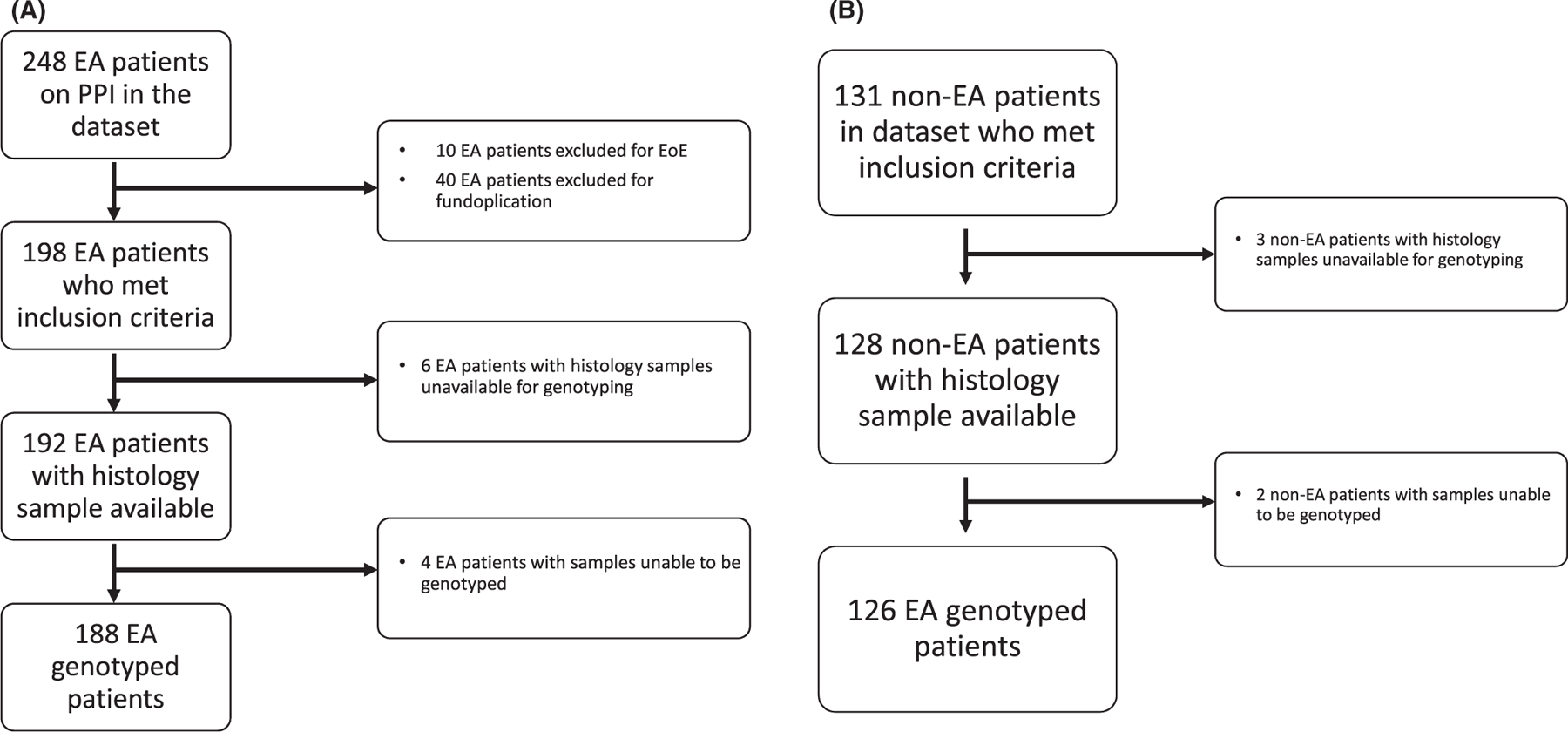
Methods: We performed a cross-sectional study of 314 children with (N = 188) and without (N = 126) EA who were on PPI therapy at the time of endoscopy to evaluate for possible gastroesophageal reflux disease. Patients with eosinophilic esophagitis and/or fundoplication were excluded. Clinical and histology data were collected. Genomic DNA from biopsy samples was genotyped for polymorphisms in CYP2C19.
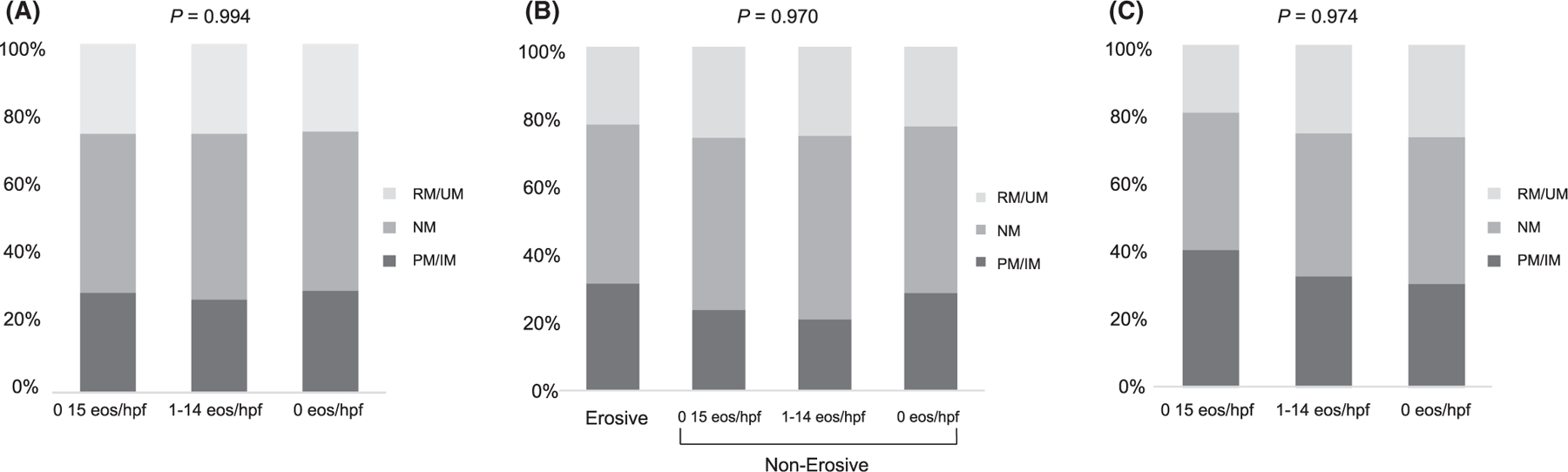
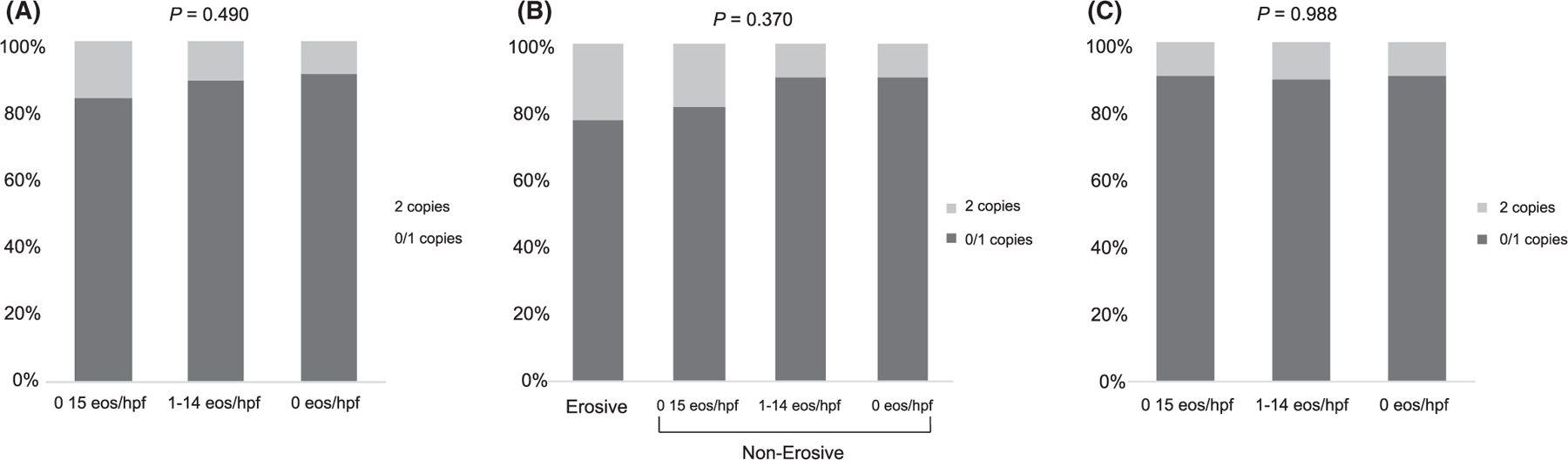
Results: CYP2C19 metabolizer phenotypes were not associated with presence or severity of esophagitis (P = 0.994). In a multivariate logistic regression adjusted for potential confounders, EA was the strongest and only significant predictor of esophagitis (odds ratio 2.72, P = 0.023). Using negative binomial regression, we found that CYP2C19 phenotype was not a significant predictor of eosinophil count in children with PPI-refractory esophagitis.
Conclusions: Patients with EA are significantly more likely to experience PPI-refractory, non-allergic esophagitis than controls regardless of CYP2C19 metabolizer phenotype, suggesting that factors other than CYP2C19 genetics, including dysmotility, are the primary drivers of esophagitis in EA. CYP2C19 genotype failed to predict PPI-refractory, non-allergic esophagitis in both EA and non-EA children.
Keywords: CYP2C19; dysmotility; esophageal atresia; esophagitis; proton pump inhibitor metabolism.
© 2021 John Wiley & Sons Ltd.
Figures
References
-
- Yasuda JL, Clark SJ, Staffa SJ, et al. Esophagitis in pediatric esophageal atresia: acid may not always be the issue. J Pediatr Gastroenterol Nutr 2019;69(2):163–170. - PubMed
-
- Sistonen SJ, Koivusalo A, Nieminen U, et al. Esophageal morbidity and function in adults with repaired esophageal atresia with tracheoesophageal fistula: A population-based long-term follow-up. Ann Surg 2010;251(6):1167–1173. - PubMed
-
- Deurloo JA, Ekkelkamp S, Taminiau JAJM, et al. Esophagitis and Barrett esophagus after correction of esophageal atresia. J Pediatr Surg 2005;40(8):1227–1231. - PubMed
-
- Franciosi JP, Mougey EB, Williams A, et al. Association between CYP2C19*17 Alleles and pH probe testing outcomes in children with symptomatic gastroesophageal reflux. J Clin Pharmacol 2018;58(1):89–96. - PubMed
Publication types
MeSH terms
Substances
Grants and funding
LinkOut - more resources
Full Text Sources
