


Effects of Mixing Energy Drinks With Alcohol on Driving-Related Skills
- PMID: 34338762
- PMCID: PMC8756085
- DOI: 10.1093/ijnp/pyab051
Effects of Mixing Energy Drinks With Alcohol on Driving-Related Skills
Abstract
Background: Energy drinks (EDs) reduce sleepiness and fatigue and improve driving performance whereas alcohol does just the opposite. Although it is a trendy combination among young people, the effects of alcohol mixed with EDs on driving performance have been poorly studied. The aim was to assess if there is an interaction between the effects of both drinks on driving-related skills as well as perceptions about driving ability.
Methods: We conducted a randomized, double-blind, and placebo-controlled 4-way crossover clinical trial. Participants were 16 healthy volunteers. Interventions of 60 g of ethanol and 750 mL of Red Bull (RB) were administered in 2 separated doses. Conditions were alcohol + RB placebo, alcohol + RB, alcohol placebo + RB, and both placebos. Objective performance was assessed using a tracking test and simple reaction time, N-Back, and movement estimation tasks. Additionally, willingness to drive, other subjective effects, and ethanol and caffeine blood concentrations were also measured.
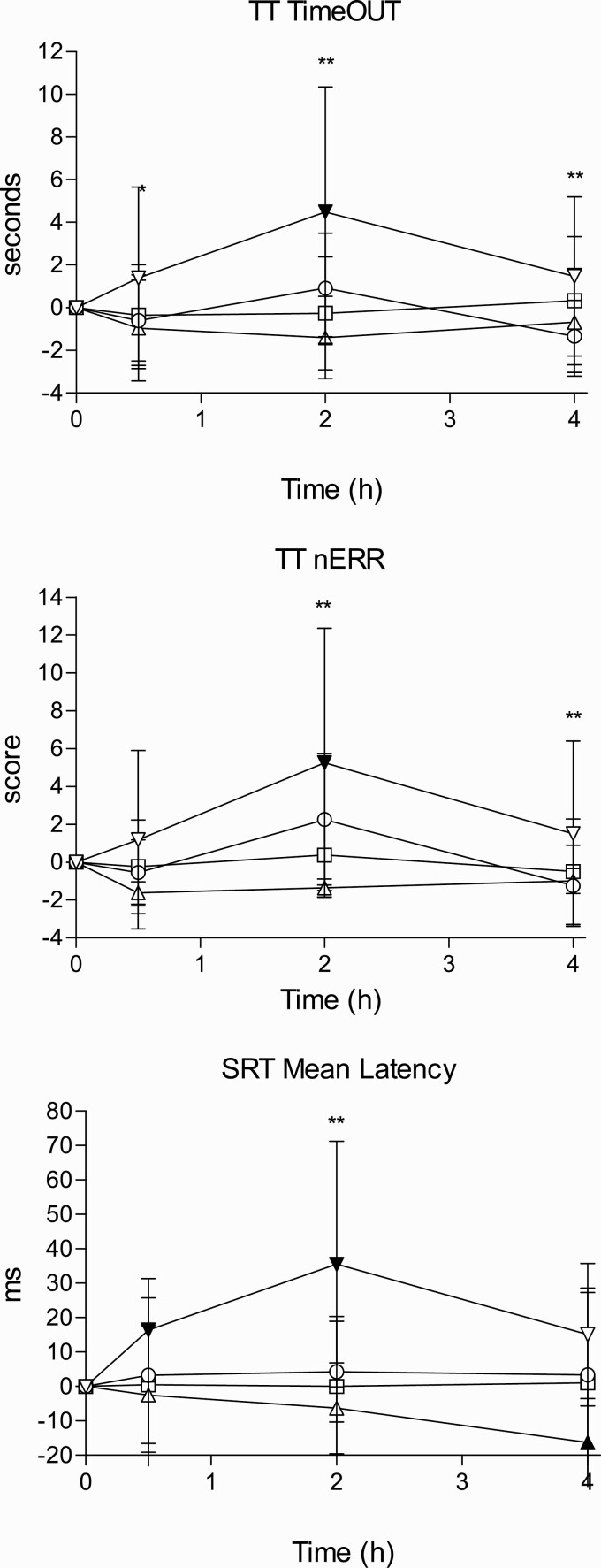
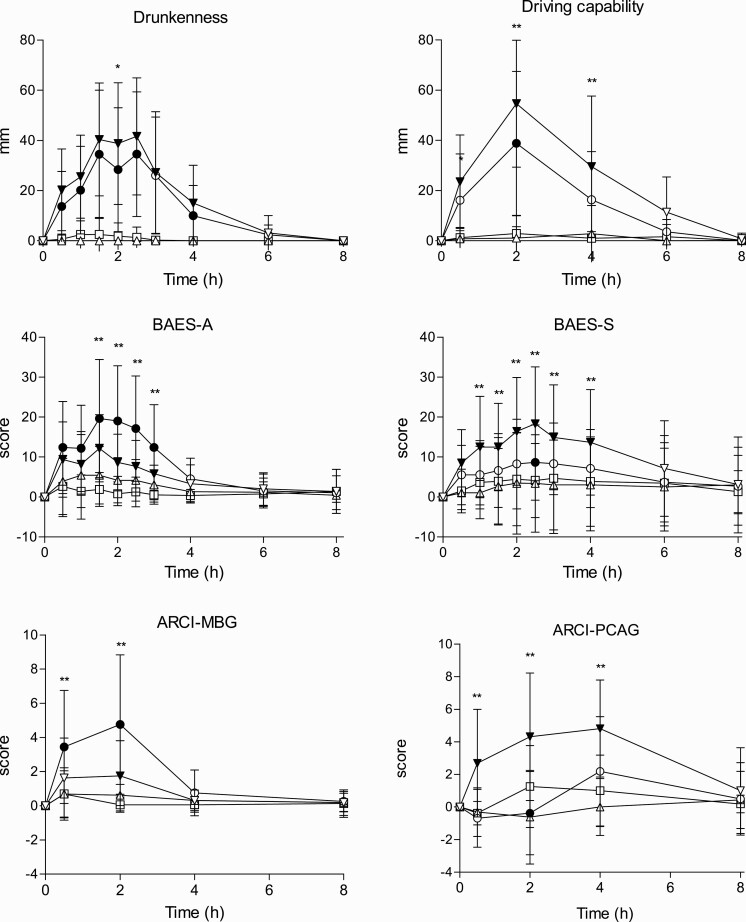
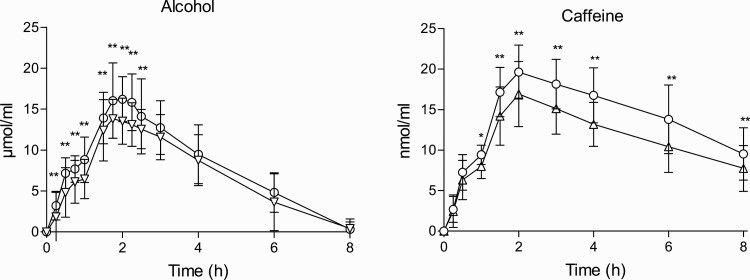
Results: Alcohol increased the time outside the road in the tracking test and increased simple reaction time, but the addition of RB had no main or interaction effects on performance. Nonetheless, driving-related skills after alcohol + RB were better than after alcohol alone. Willingness to drive increased with the combination of drinks. RB also reduced alcohol-induced sedation whereas drunkenness did not change. These effects were seen even though alcohol + RB increased alcohol (14.8%) and caffeine plasma concentrations (17.6%).
Conclusions: Mixing EDs with alcohol predisposes consumers to drive under alcohol influence, perhaps in part because EDs counteract its detrimental effects on driving-related skills. Clinicaltrials.gov: NCT02771587.
Keywords: Alcohol; addiction; caffeine; driving-related skills; energy drinks; interaction; pharmacokinetics.
© The Author(s) 2021. Published by Oxford University Press on behalf of CINP.
Figures
References
-
- Baraona E, Abittan CS, Dohmen K, Moretti M, Pozzato G, Chayes ZW, Schaefer C, Lieber CS (2001) Gender differences in pharmacokinetics of alcohol. Alcohol Clin Exp Res 25:502–507. - PubMed
Publication types
MeSH terms
Substances
Associated data
LinkOut - more resources
Full Text Sources
Medical
