


Trust In Governments And Health Workers Low Globally, Influencing Attitudes Toward Health Information, Vaccines
- PMID: 34339250
- PMCID: PMC9060815
- DOI: 10.1377/hlthaff.2020.02006
Trust In Governments And Health Workers Low Globally, Influencing Attitudes Toward Health Information, Vaccines
Abstract
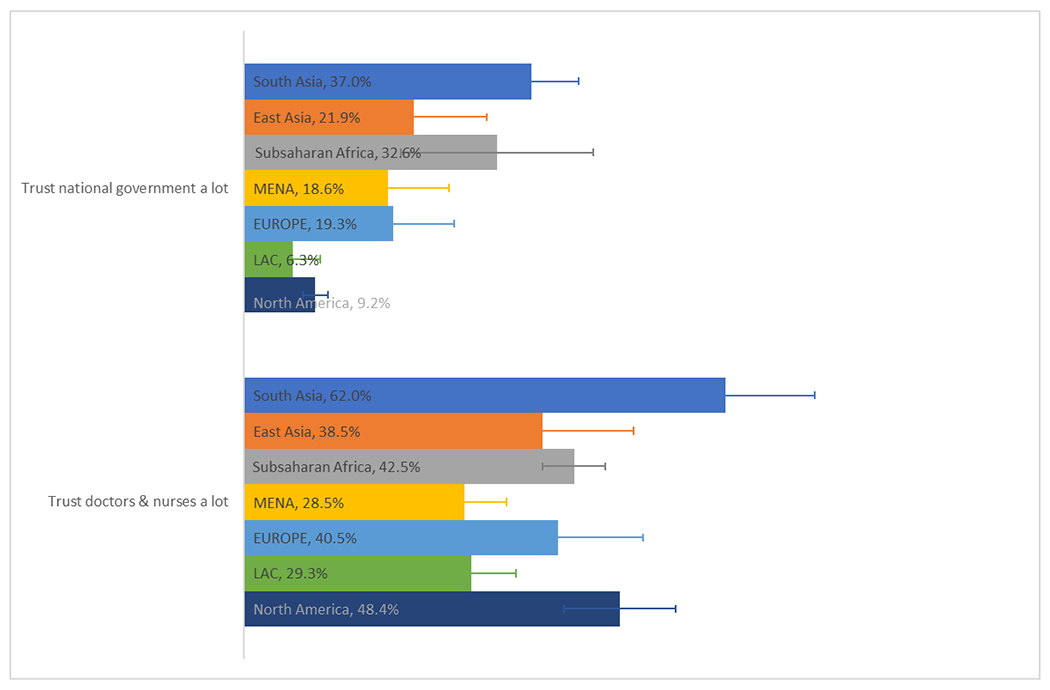
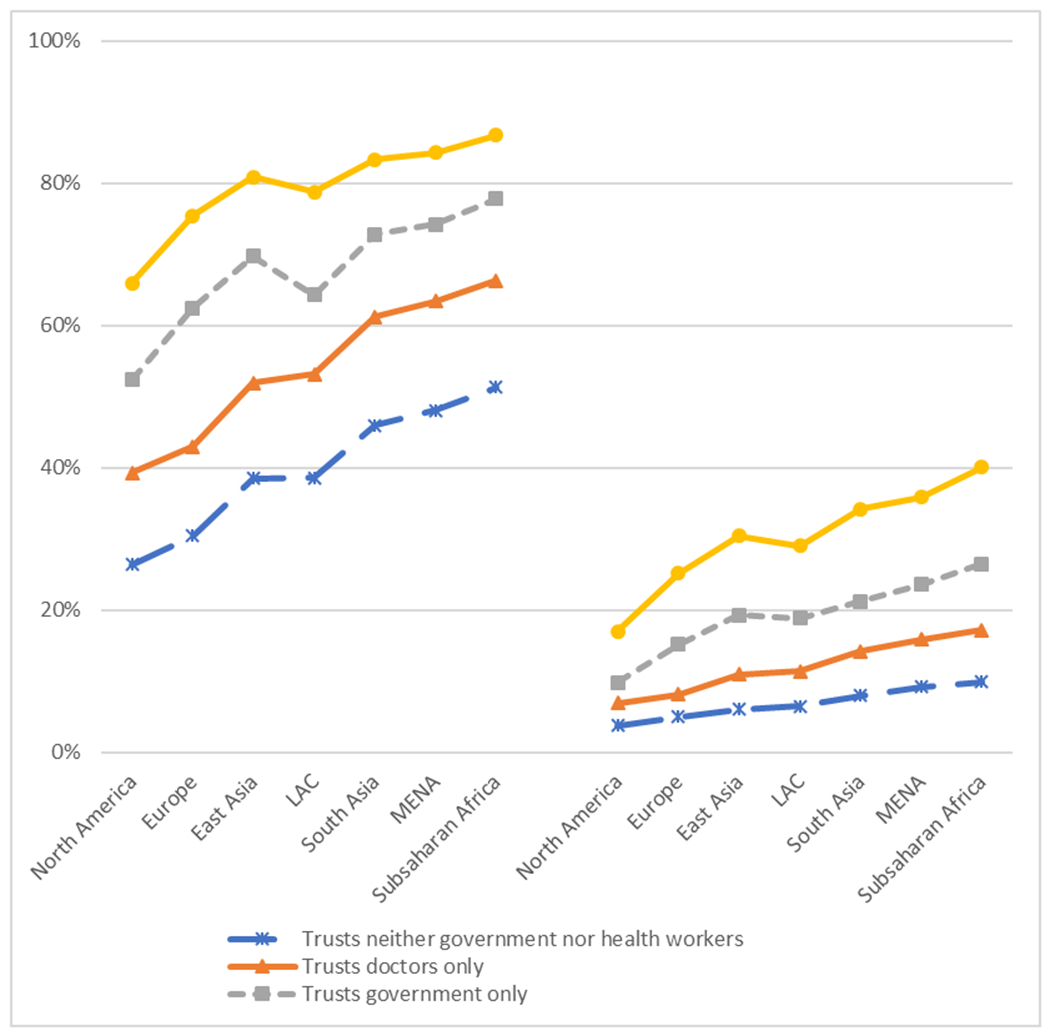
Trust, particularly during emergencies, is essential for effective health care delivery and health policy implementation. We used data from the 2018 Wellcome Global Monitor survey (comprising nationally representative samples from 144 countries) to examine levels and correlates of trust in governments and health workers and attitudes toward vaccines. Only one-quarter of respondents globally expressed a lot of trust in their government (trust was more common among people with less schooling, those living in rural areas, those who were financially comfortable, and those who were older), and fewer than half of respondents globally said that they trust doctors and nurses a lot. People's trust in these institutions was correlated with trust in health or medical advice from them, and with more positive attitudes toward vaccines. Vaccine enthusiasm varied substantially across regions, with safety being the most common concern. Policy makers should understand that the public may have varying levels of trust in different institutions and actors. Although much attention is paid to crafting public health messages, it may be equally important, especially during a pandemic, to identify appropriate, trusted messengers to deliver those messages more effectively to different target populations.
Figures
References
-
- Gilson L. Trust and the development of health care as a social institution. Soc Sci Med. 2003;56(7):1453–68. - PubMed
-
- Ozawa S, Sripad P. How do you measure trust in the health system? A systematic review of the literature. Soc Sci Med. 2013;91:10–4. - PubMed
-
- Kruk ME, Myers M, Varpilah ST, Dahn BT. What is a resilient health system? Lessons from Ebola. Lancet. 2015;385(9980):1910–2. - PubMed
-
- Hyde J Health system reform and social capital. Development. 1999;42(4):49–53.
