


Neuropathological findings from COVID-19 patients with neurological symptoms argue against a direct brain invasion of SARS-CoV-2: A critical systematic review
- PMID: 34339563
- PMCID: PMC8444743
- DOI: 10.1111/ene.15045
Neuropathological findings from COVID-19 patients with neurological symptoms argue against a direct brain invasion of SARS-CoV-2: A critical systematic review
Abstract
Background and purpose: Neuropathological studies can elucidate the mechanisms of nervous system damage associated with SARS-CoV-2 infection. Despite literature on this topic is rapidly expanding, correlations between neurological symptoms and brain pathology findings in COVID-19 patients remain largely unknown.
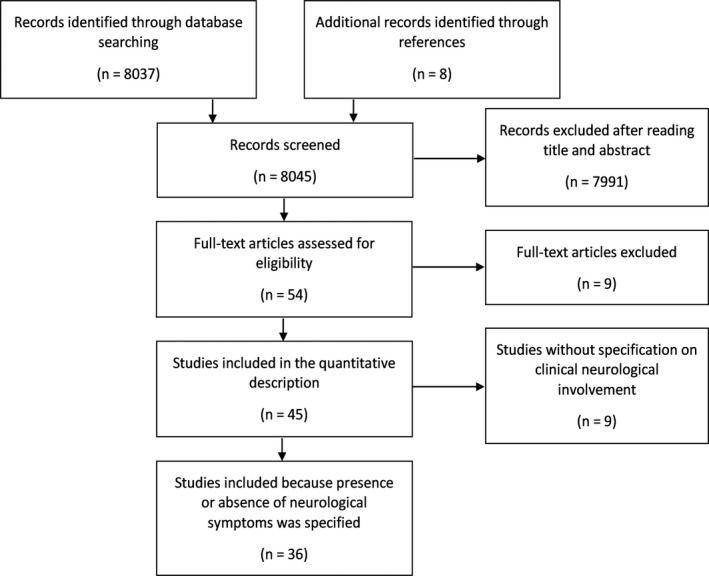
Methods: We performed a systematic literature review on neuropathological studies in COVID-19, including 438 patients from 45 articles published by April 22, 2021. We retrieved quantitative data regarding demographic, clinical, and neuropathological findings. We carried out a Wilcoxon rank sum test or χ2 test to compare patients' subgroups based on different clinical and brain pathology features.
Results: Neuropathological findings in COVID-19 patients were microgliosis (52.5%), astrogliosis (45.6%), inflammatory infiltrates (44.0%), hypoxic-ischemic lesions (40.8%), edema (25.3%), and hemorrhagic lesions (20.5%). SARS-CoV-2 RNA and proteins were identified in brain specimens of 41.9% and 28.3% of subjects, respectively. Detailed clinical information was available from 245 patients (55.9%), and among them, 96 subjects (39.2%) had presented with neurological symptoms in association with typical COVID-19 manifestations. We found that: (i) the detection rate of SARS-CoV-2 RNA and proteins in brain specimens did not differ between patients with versus those without neurological symptoms; (ii) brain edema, hypoxic-ischemic lesions, and inflammatory infiltrates were more frequent in subjects with neurological impairment; (iii) neurological symptoms were more common among older individuals.
Conclusions: Our systematic revision of clinical correlates in COVID-19 highlights the pathogenic relevance of brain inflammatory reaction and hypoxic-ischemic damage rather than neuronal viral load. This analysis indicates that a more focused study design is needed, especially in the perspective of potential therapeutic trials.
Keywords: COVID-19; SARS-CoV-2; brain; neurological symptoms; neuropathology.
© 2021 The Authors. European Journal of Neurology published by John Wiley & Sons Ltd on behalf of European Academy of Neurology.
Conflict of interest statement
All authors declare no conflicts of interest regarding the content of this article.
Figures
References
Publication types
MeSH terms
Substances
LinkOut - more resources
Full Text Sources
Medical
Miscellaneous
