


Abnormalities of the type I interferon signaling pathway in lupus autoimmunity
- PMID: 34340046
- PMCID: PMC8475157
- DOI: 10.1016/j.cyto.2021.155633
Abnormalities of the type I interferon signaling pathway in lupus autoimmunity
Abstract
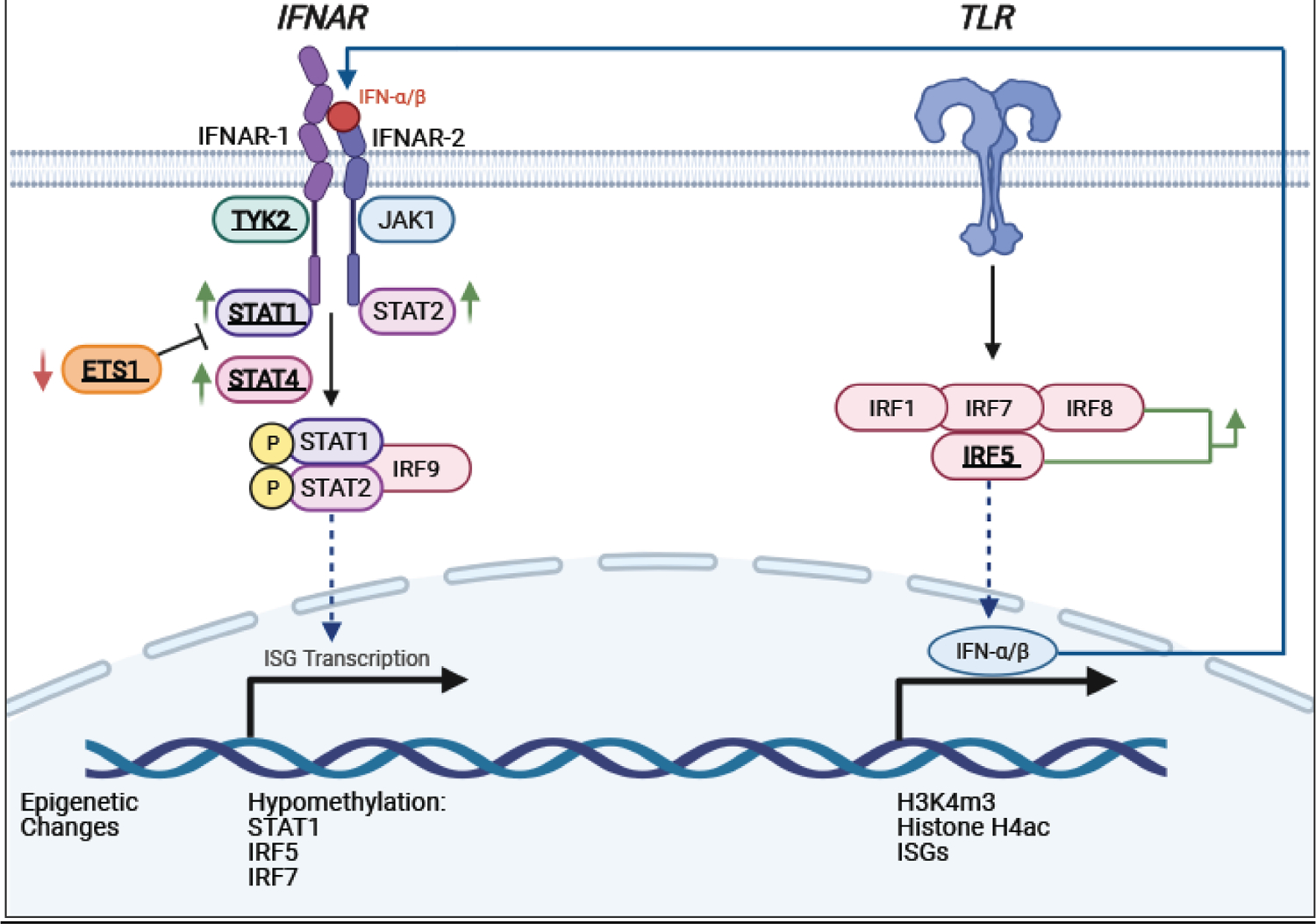
Type I interferons (IFNs), mostly IFNα and IFNβ, and the type I IFN Signature are important in the pathogenesis of Systemic Lupus Erythematosus (SLE), an autoimmune chronic condition linked to inflammation. Both IFNα and IFNβ trigger a signaling cascade that, through the activation of JAK1, TYK2, STAT1 and STAT2, initiates gene transcription of IFN stimulated genes (ISGs). Noteworthy, other STAT family members and IFN Responsive Factors (IRFs) can also contribute to the activation of the IFN response. Aberrant type I IFN signaling, therefore, can exacerbate SLE by deregulated homeostasis leading to unnecessary persistence of the biological effects of type I IFNs. The etiopathogenesis of SLE is partially known and considered multifactorial. Family-based and genome wide association studies (GWAS) have identified genetic and transcriptional abnormalities in key molecules directly involved in the type I IFN signaling pathway, namely TYK2, STAT1 and STAT4, and IRF5. Gain-of-function mutations that heighten IFNα/β production, which in turn maintains type I IFN signaling, are found in other pathologies like the interferonopathies. However, the distinctive characteristics have yet to be determined. Signaling molecules activated in response to type I IFNs are upregulated in immune cell subsets and affected tissues of SLE patients. Moreover, Type I IFNs induce chromatin remodeling leading to a state permissive to transcription, and SLE patients have increased global and gene-specific epigenetic modifications, such as hypomethylation of DNA and histone acetylation. Epigenome wide association studies (EWAS) highlight important differences between SLE patients and healthy controls in Interferon Stimulated Genes (ISGs). The combination of environmental and genetic factors may stimulate type I IFN signaling transiently and produce long-lasting detrimental effects through epigenetic alterations. Substantial evidence for the pathogenic role of type I IFNs in SLE advocates the clinical use of neutralizing anti-type I IFN receptor antibodies as a therapeutic strategy, with clinical studies already showing promising results. Current and future clinical trials will determine whether drugs targeting molecules of the type I IFN signaling pathway, like non-selective JAK inhibitors or specific TYK2 inhibitors, may benefit people living with lupus.
Keywords: Autoimmunity; Epigenetic; GWAS; JAK; STAT; Signaling pathways; Systemic Lupus Erythematosus; Type I interferon.
Copyright © 2021 Elsevier Ltd. All rights reserved.
Conflict of interest statement
DECLARATIONS
COMPETING INTERESTS
The authors declare that they have no competing interests.
Declaration of interests
The authors declare that they have no known competing financial interests or personal relationships that could have appeared to influence the work reported in this paper.
Figures
References
-
- Tsokos GC, Lo MS, Costa Reis P, Sullivan KE: New insights into the immunopathogenesis of systemic lupus erythematosus. Nat Rev Rheumatol 2016, 12:716–730. - PubMed
-
- Banchereau J, Pascual V: Type I interferon in systemic lupus erythematosus and other autoimmune diseases. Immunity 2006, 25:383–392. - PubMed
Publication types
MeSH terms
Substances
Grants and funding
LinkOut - more resources
Full Text Sources
Medical
Research Materials
Miscellaneous
