Law, criminalisation and HIV in the world: have countries that criminalise achieved more or less successful pandemic response?
- PMID: 34341021
- PMCID: PMC8330576
- DOI: 10.1136/bmjgh-2021-006315
Law, criminalisation and HIV in the world: have countries that criminalise achieved more or less successful pandemic response?
Abstract
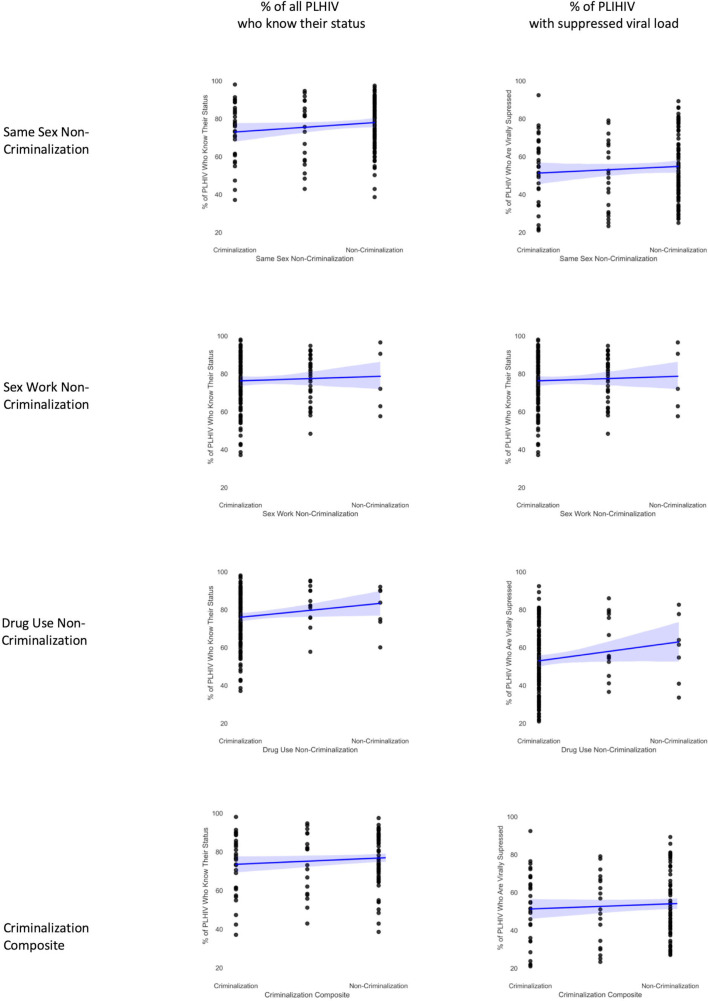
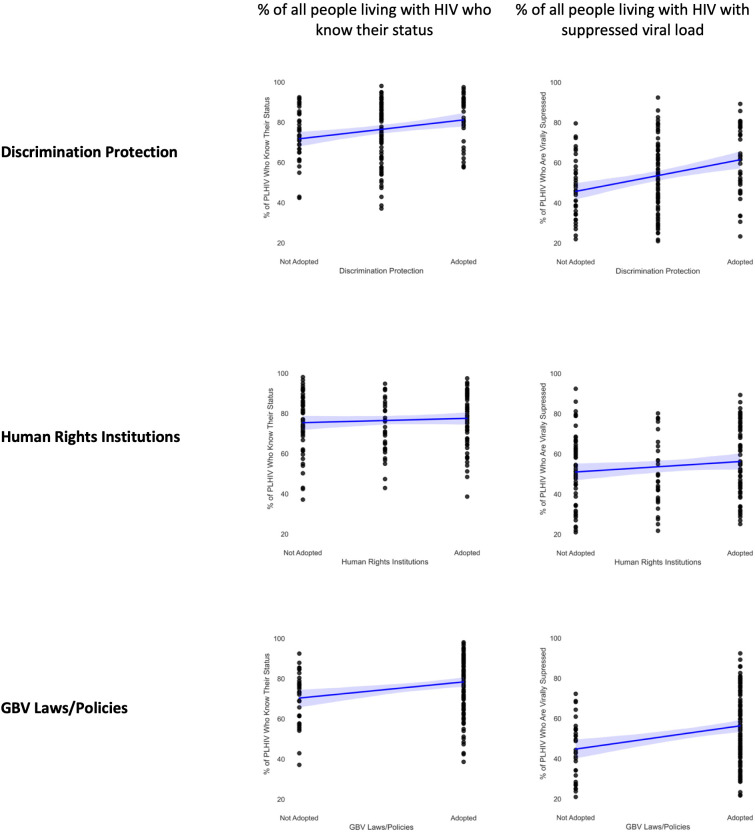
How do choices in criminal law and rights protections affect disease-fighting efforts? This long-standing question facing governments around the world is acute in the context of pandemics like HIV and COVID-19. The Global AIDS Strategy of the last 5 years sought to prevent mortality and HIV transmission in part through ensuring people living with HIV (PLHIV) knew their HIV status and could suppress the HIV virus through antiretroviral treatment. This article presents a cross-national ecological analysis of the relative success of national AIDS responses under this strategy, where laws were characterised by more or less criminalisation and with varying rights protections. In countries where same-sex sexual acts were criminalised, the portion of PLHIV who knew their HIV status was 11% lower and viral suppression levels 8% lower. Sex work criminalisation was associated with 10% lower knowledge of status and 6% lower viral suppression. Drug use criminalisation was associated with 14% lower levels of both. Criminalising all three of these areas was associated with approximately 18%-24% worse outcomes. Meanwhile, national laws on non-discrimination, independent human rights institutions and gender-based violence were associated with significantly higher knowledge of HIV status and higher viral suppression among PLHIV. Since most countries did not achieve 2020 HIV goals, this ecological evidence suggests that law reform may be an important tool in speeding momentum to halt the pandemic.
Keywords: HIV; health policy.
© Author(s) (or their employer(s)) 2021. Re-use permitted under CC BY-NC. No commercial re-use. See rights and permissions. Published by BMJ.
Conflict of interest statement
Competing interests: None declared.
Figures
References
-
- Grover A. Report of the special Rapporteur on the right of everyone to the enjoyment of the highest attainable standard of physical and mental health. Geneva: United Nations Office of the High Commissioner, 2011.
-
- Avafia T, Konstantinov B, Esom K. A rights-based response to COVID-19: lessons learned from HIV and TB epidemics. Health and Human Rights Journal 2020.
Publication types
MeSH terms
LinkOut - more resources
Full Text Sources
Medical