


Alcohol use and dysglycemia among people living with human immunodeficiency virus (HIV) in the Alcohol & Metabolic Comorbidities in PLWH: Evidence Driven Interventions (ALIVE-Ex) study
- PMID: 34342022
- PMCID: PMC8547613
- DOI: 10.1111/acer.14667
Alcohol use and dysglycemia among people living with human immunodeficiency virus (HIV) in the Alcohol & Metabolic Comorbidities in PLWH: Evidence Driven Interventions (ALIVE-Ex) study
Abstract
Background: At-risk alcohol use is a common and costly form of substance misuse that is highly prevalent among people living with HIV (PLWH). The goal of the current analysis was to test the hypothesis that PLWH with at-risk alcohol use are more likely to meet the clinical criteria for prediabetes/diabetes than PLWH with low-risk alcohol use.
Methods: A cross-sectional analysis was performed on measures of alcohol and glycemic control in adult PLWH (n = 105) enrolled in a prospective, interventional study (the ALIVE-Ex Study (NCT03299205)) that investigated the effects of aerobic exercise on metabolic dysregulation in PLWH with at-risk alcohol use. The Alcohol Use Disorders Identification Test (AUDIT), Timeline Followback, and phosphatidylethanol (PEth) level were used to measure alcohol use. Participants were stratified into low-risk (AUDIT score < 5) and at-risk alcohol use (AUDIT score ≥ 5). All participants underwent an oral glucose tolerance test and measures of glycemic control- the Homeostatic Model Assessment of Insulin Resistance (HOMA-IR) and Matsuda Index - were correlated with alcohol measures and compared by AUDIT score group using mixed-effects linear and logistic regression models, adjusting for age, sex, race, body mass index (BMI), and viral load.
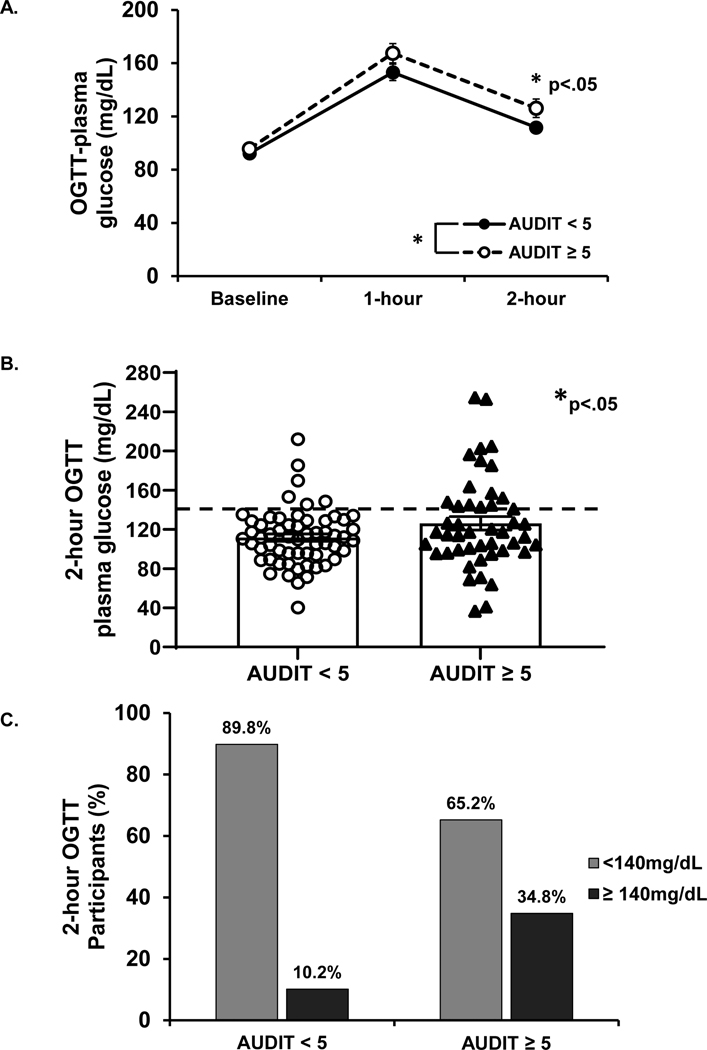
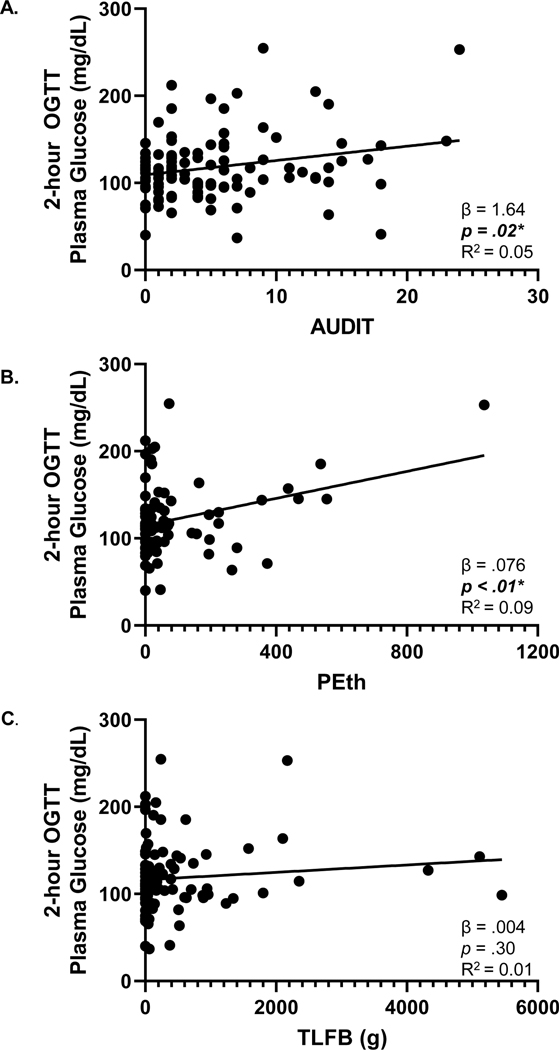
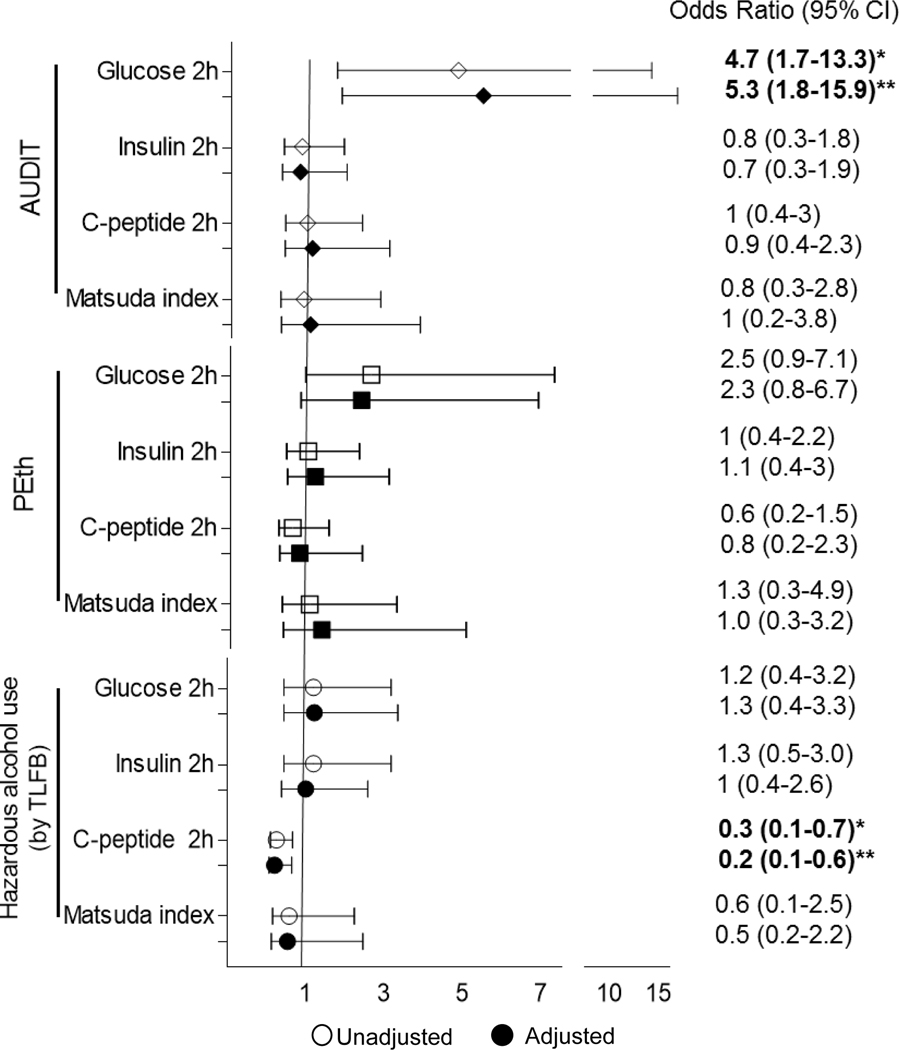
Results: In response to the glucose challenge, participants with at-risk alcohol use (n = 46) had higher glucose levels and were five times more likely to meet criteria for prediabetes/diabetes (OR: 5.3 (1.8, 15.9)) than participants with an AUDIT score < 5. Two-hour glucose values were positively associated with AUDIT score and PEth level and a higher percentage of PLWH with at-risk alcohol use had glucose values ≥140 mg/dl than those with low-risk alcohol use (34.8% vs. 10.2%, respectively).
Conclusion: In this cohort of PLWH, at-risk alcohol use increased the likelihood of meeting the clinical criteria for prediabetes/diabetes (2-h glucose level ≥140 mg/dl). Established determinants of metabolic dysfunction (e.g., BMI, waist-hip ratio) were not associated with greater alcohol use and dysglycemia, suggesting that other mechanisms may contribute to the impaired glycemic control observed in this cohort.
Keywords: HIV; OGTT; at-risk alcohol use; dysglycemia; glycemic control.
© 2021 Research Society on Alcoholism.
Conflict of interest statement
The authors declare no conflicts of interest.
Figures
References
-
- Andersen BN, Hagen C, Faber OK, Lindholm J, Boisen P. & Worning H. 1983. Glucose tolerance and B cell function in chronic alcoholism: its relation to hepatic histology and exocrine pancreatic function. Metabolism, 32, 1029–32. - PubMed
-
- Araujo S, Bañón S, Machuca I, Moreno A, Pérez-Elías MJ & Casado JL 2014. Prevalence of insulin resistance and risk of diabetes mellitus in HIV-infected patients receiving current antiretroviral drugs. Eur J Endocrinol, 171, 545–54. - PubMed
-
- Bhatia R, Ryscavage P. & Taiwo B. 2012. Accelerated aging and human immunodeficiency virus infection: emerging challenges of growing older in the era of successful antiretroviral therapy. J Neurovirol, 18, 247–55. - PubMed
-
- Bray GA 2004. Medical consequences of obesity. J Clin Endocrinol Metab, 89, 2583–9. - PubMed
Publication types
MeSH terms
Substances
Associated data
Grants and funding
LinkOut - more resources
Full Text Sources
Medical
