


Camouflaging Intent, First Impressions, and Age of ASC Diagnosis in Autistic Men and Women
- PMID: 34342806
- PMCID: PMC9296412
- DOI: 10.1007/s10803-021-05221-3
Camouflaging Intent, First Impressions, and Age of ASC Diagnosis in Autistic Men and Women
Abstract
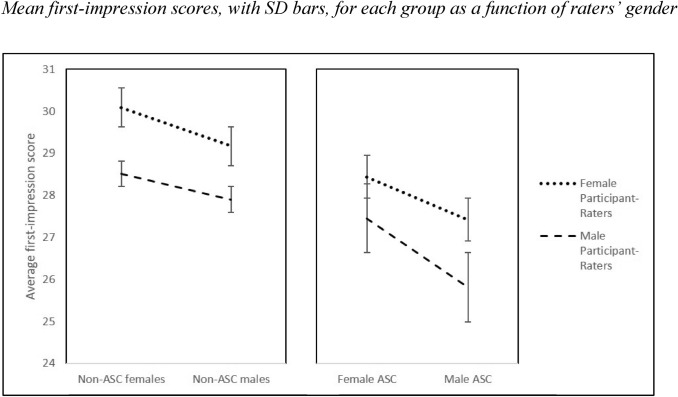
Camouflaging of autistic traits may make autism harder to diagnose. The current study evaluated the relations between camouflaging intent, first impressions, and age of autism diagnosis. Participants comprised autistic and non-autistic adults (n = 80, 50% female) who completed the Camouflaging of Autistic Traits Questionnaire. They were later video-recorded having a conversation with a person unaware of their diagnostic status. Ten-second clips from half these videos were later shown to 127 non-autistic peers, who rated their first impressions of each participant. Results showed that autistic participants were rated more poorly on first impressions, males were rated less favourably than females, and male raters were particularly harsh in their evaluations of autistic males. Camouflaging intent did not predict first impressions but better first impressions were linked with a later age of diagnosis.
Keywords: Autism; Camouflaging; Female autism phenotype; First impressions; Gender differences; Masking.
© 2021. The Author(s).
Conflict of interest statement
The authors have no relevant financial or non-financial interests to disclose.
Figures
References
-
- Baio J. Prevalence of autism spectrum disorders—Autism and developmental disabilities monitoring network, 14 sites, United States, 2008. Morbidity and Mortality Weekly Report: Surveillance Summaries. 2012;61(3):1–19. - PubMed
-
- Bancroft, K. (2012). The way we are: autism in 2012. London, UK: National Autism Society. http://library.autism.org.uk/Portal/Default/en-GB/RecordView/Index/28271
MeSH terms
LinkOut - more resources
Full Text Sources
Medical
Miscellaneous
