


Quantitative Control for Stoichiometric Protein Synthesis
- PMID: 34343023
- PMCID: PMC8720029
- DOI: 10.1146/annurev-micro-041921-012646
Quantitative Control for Stoichiometric Protein Synthesis
Abstract
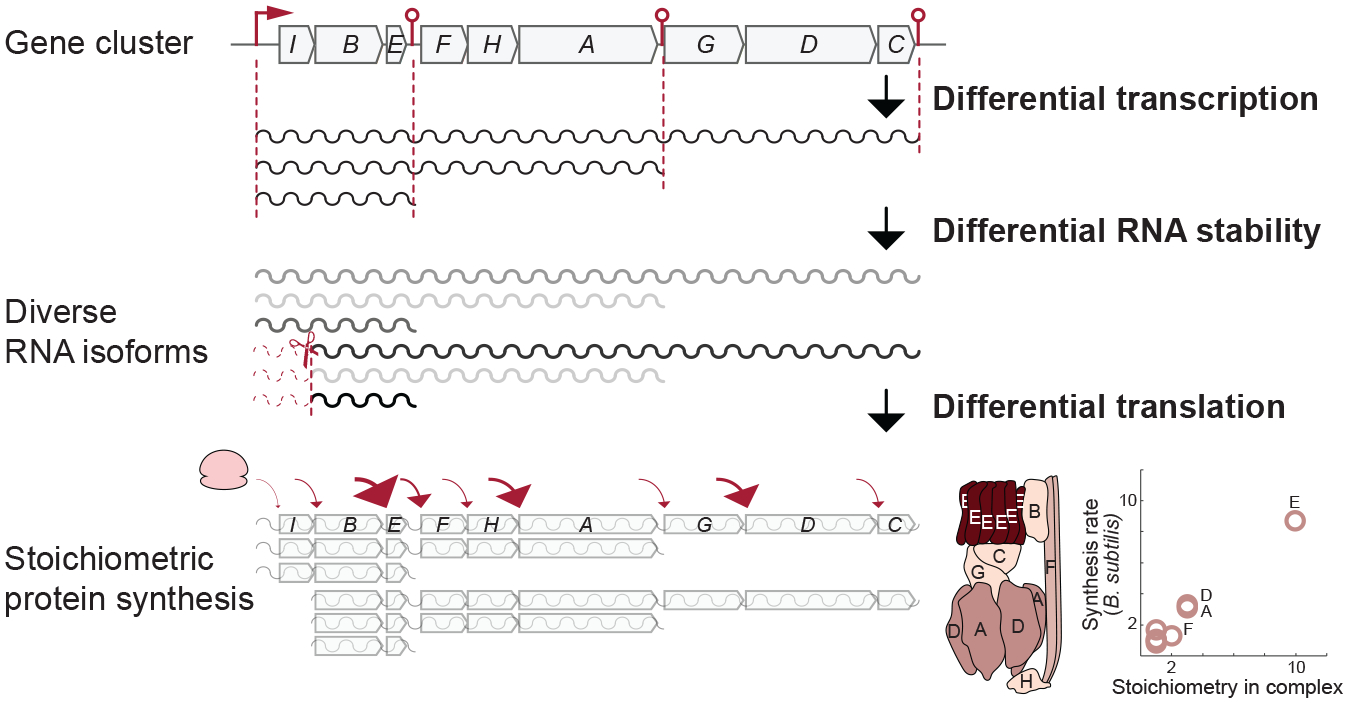
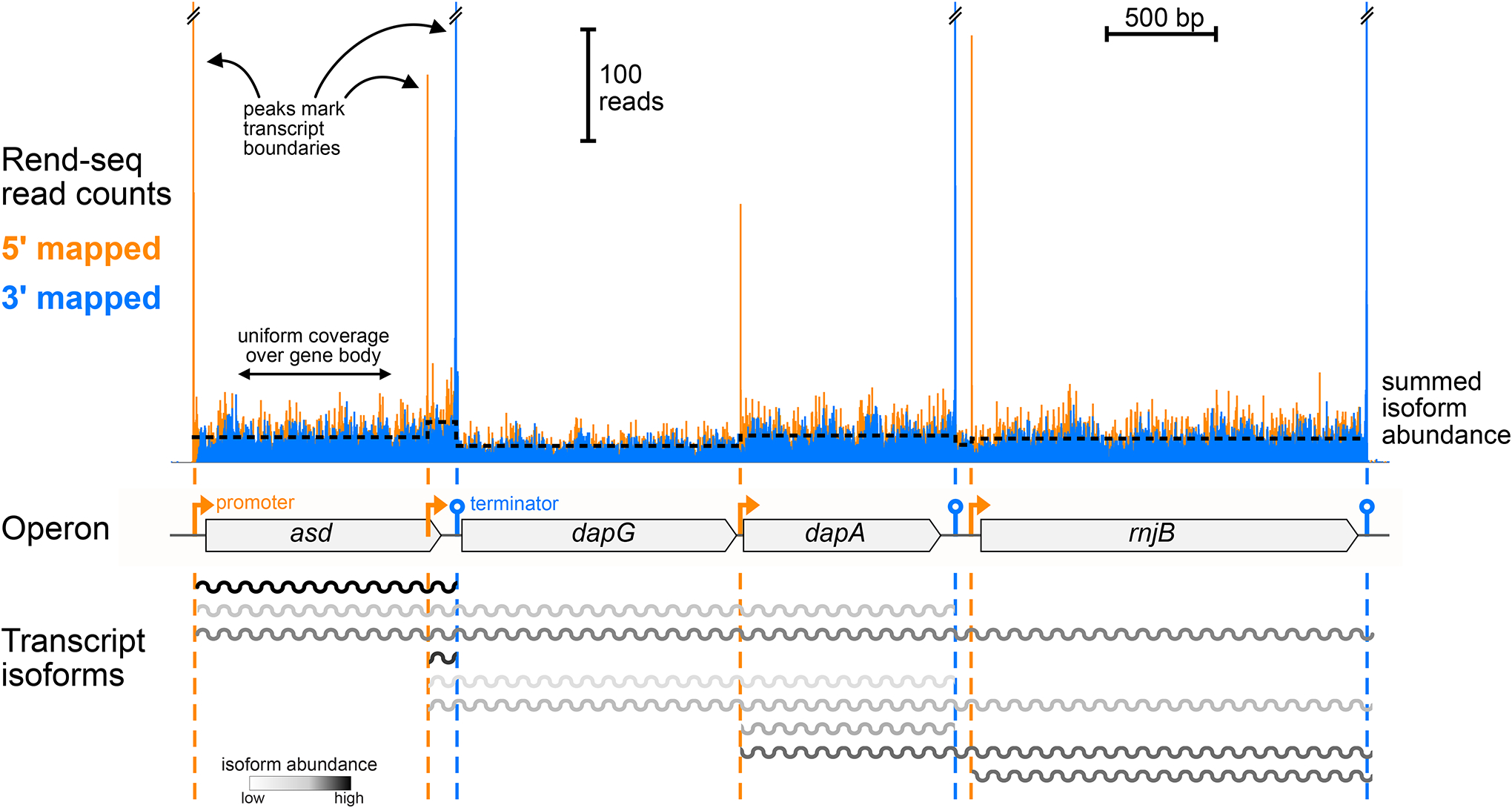
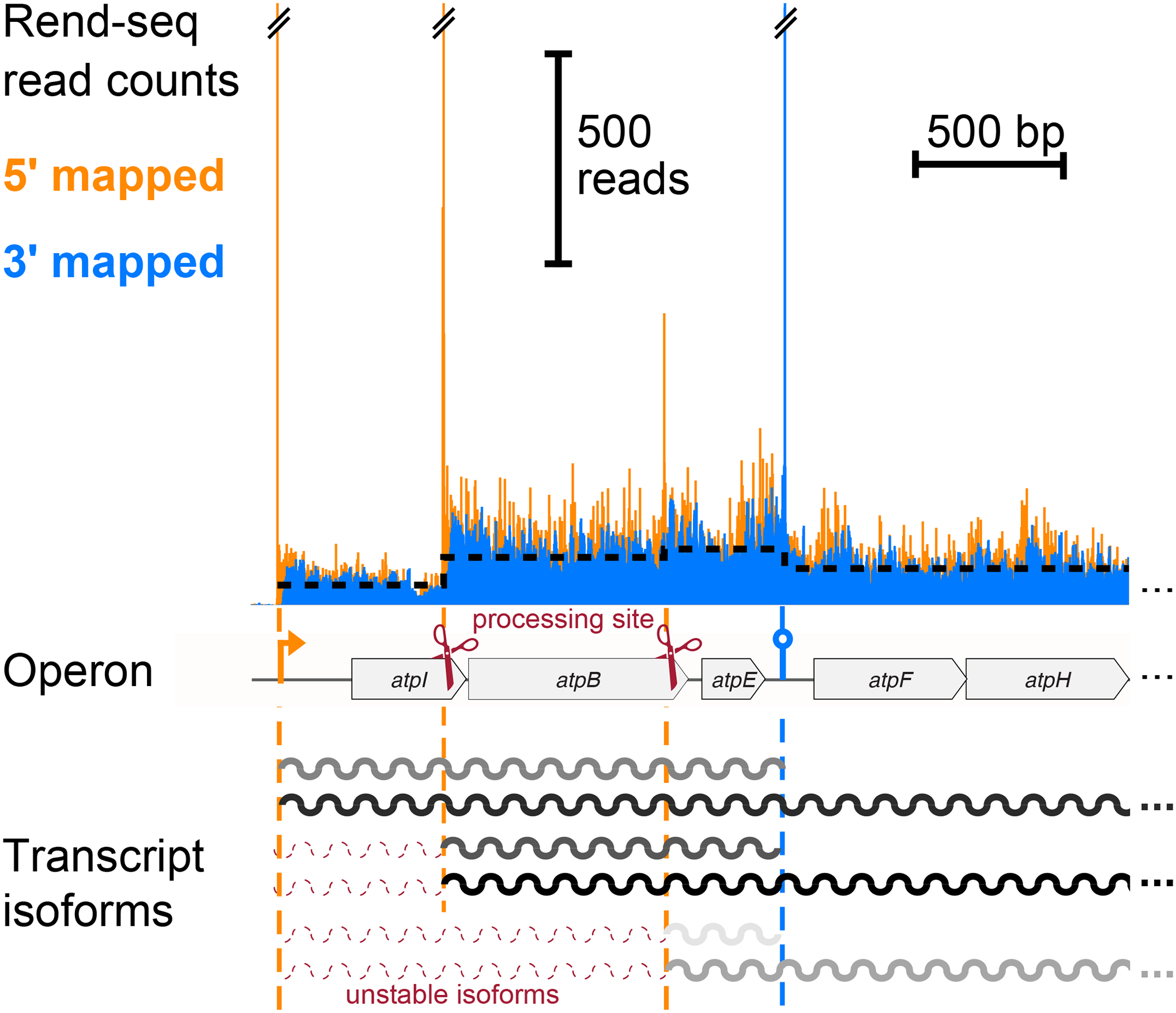
Bacterial protein synthesis rates have evolved to maintain preferred stoichiometries at striking precision, from the components of protein complexes to constituents of entire pathways. Setting relative protein production rates to be well within a factor of two requires concerted tuning of transcription, RNA turnover, and translation, allowing many potential regulatory strategies to achieve the preferred output. The last decade has seen a greatly expanded capacity for precise interrogation of each step of the central dogma genome-wide. Here, we summarize how these technologies have shaped the current understanding of diverse bacterial regulatory architectures underpinning stoichiometric protein synthesis. We focus on the emerging expanded view of bacterial operons, which encode diverse primary and secondary mRNA structures for tuning protein stoichiometry. Emphasis is placed on how quantitative tuning is achieved. We discuss the challenges and open questions in the application of quantitative, genome-wide methodologies to the problem of precise protein production.
Keywords: differential RNA stability; differential translation; expression stoichiometry; operon mRNA isoform; proportional synthesis.
Figures
References
-
- Adhya S 2003. Suboperonic regulatory signals. Sci. STKE 2003(185):e22 - PubMed
-
- Aebersold R, Mann M. 2016. Mass-spectrometric exploration of proteome structure and function. Nature 537(7620):347–55 - PubMed
-
- Apirion D, Lassar AB. 1978. A conditional lethal mutant of Escherichia coli which affects the processing of ribosomal RNA. J. Biol. Chem 253(5):1738–42 - PubMed
Publication types
MeSH terms
Substances
Grants and funding
LinkOut - more resources
Full Text Sources
