


Optimizing nutrient use efficiency, productivity, energetics, and economics of red cabbage following mineral fertilization and biopriming with compatible rhizosphere microbes
- PMID: 34344947
- PMCID: PMC8333308
- DOI: 10.1038/s41598-021-95092-6
Optimizing nutrient use efficiency, productivity, energetics, and economics of red cabbage following mineral fertilization and biopriming with compatible rhizosphere microbes
Abstract
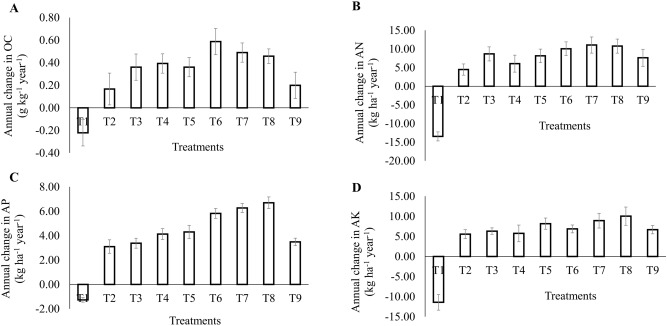
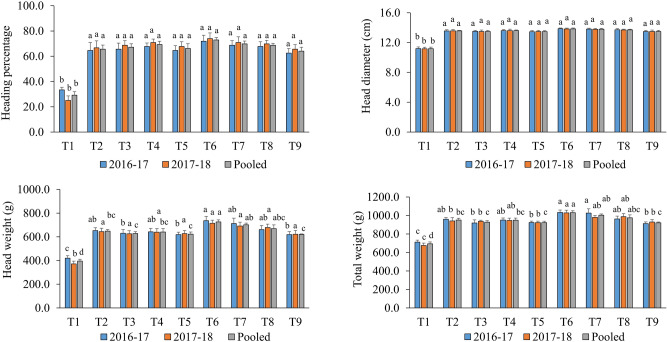
Conventional agricultural practices and rising energy crisis create a question about the sustainability of the present-day food production system. Nutrient exhaustive crops can have a severe impact on native soil fertility by causing nutrient mining. In this backdrop, we conducted a comprehensive assessment of bio-priming intervention in red cabbage production considering nutrient uptake, the annual change in soil fertility, nutrient use efficiency, energy budgeting, and economic benefits for its sustainable intensification, among resource-poor farmers of Middle Gangetic Plains. The compatible microbial agents used in the study include Trichoderma harzianum, Pseudomonas fluorescens, and Bacillus subtilis. Field assays (2016-2017 and 2017-2018) of the present study revealed supplementing 75% of recommended NPK fertilizer with dual inoculation of T. harzianum and P. fluorescens increased macronutrient uptake (N, P, and K), root length, heading percentage, head diameter, head weight, and the total weight of red cabbage along with a positive annual change in soil organic carbon. Maximum positive annual change in available N and available P was recorded under 75% RDF + P. fluorescens + B. subtilis and 75% RDF + T. harzianum + B. subtilis, respectively. Bio-primed plants were also higher in terms of growth and nutrient use efficiency (agronomic efficiency, physiological efficiency, apparent recovery efficiency, partial factor productivity). Energy output (26,370 and 26,630 MJ ha-1), energy balance (13,643 and 13,903 MJ ha-1), maximum gross return (US $ 16,030 and 13,877 ha-1), and net return (US $ 15,966 and 13,813 ha-1) were considerably higher in T. harzianum, and P. fluorescens treated plants. The results suggest the significance of the bio-priming approach under existing integrated nutrient management strategies and the role of dual inoculations in producing synergistic effects on plant growth and maintaining the soil, food, and energy nexus.
© 2021. The Author(s).
Conflict of interest statement
The authors declare no competing interests.
Figures
References
-
- Ramakrishna-Parama VR. Need for sustained nutrient cycling and management—issues and responses. J. Indian Soc. Soil Sci. 2014;62:S86–S94.
-
- Priyadarshini P, Abhilash PC. Policy recommendations for enabling transition towards sustainable agriculture in India. Land Use Policy. 2020;96:104718. doi: 10.1016/j.landusepol.2020.104718. - DOI
-
- Meena SK, Rakshit A, Meena VS. Effect of seed bio-priming and N doses under varied soil type on nitrogen use efficiency (NUE) of wheat (Triticum aestivum L.) under greenhouse conditions. Biocatal. Agric. Biotechnol. 2016;6:68–75. doi: 10.1016/j.bcab.2016.02.010. - DOI
Publication types
MeSH terms
Substances
LinkOut - more resources
Full Text Sources
Medical
Research Materials
