


Primary hepatocytes isolated from human and porcine donors display similar patterns of cytochrome p450 expression following exposure to prototypical activators of AhR, CAR and PXR
- PMID: 34345857
- PMCID: PMC8320632
- DOI: 10.1016/j.crtox.2021.03.002
Primary hepatocytes isolated from human and porcine donors display similar patterns of cytochrome p450 expression following exposure to prototypical activators of AhR, CAR and PXR
Abstract
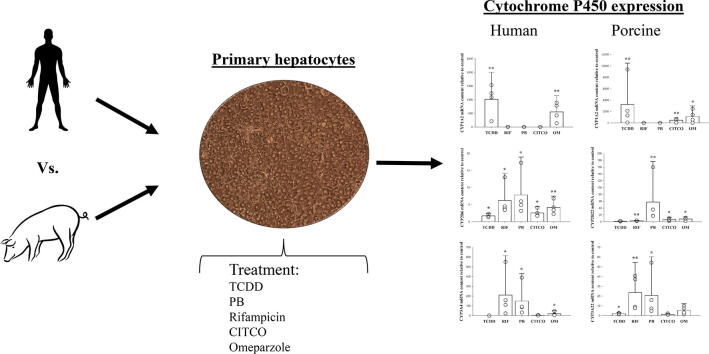
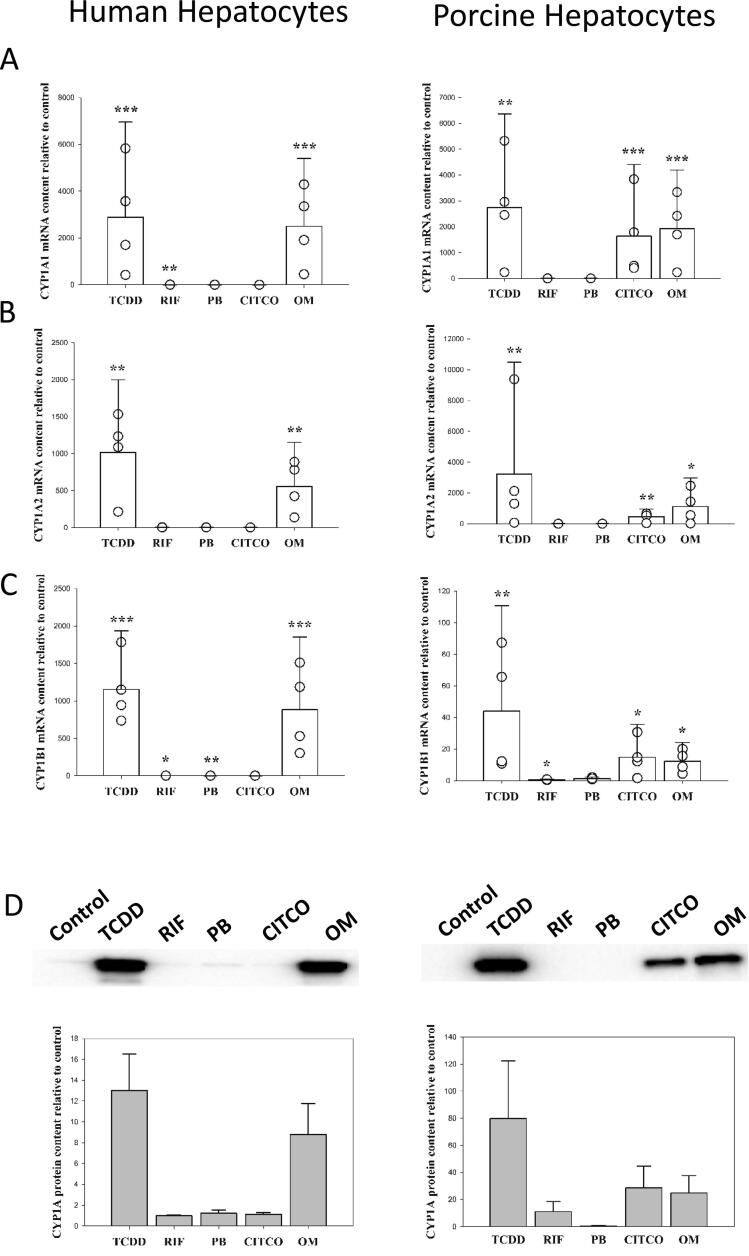
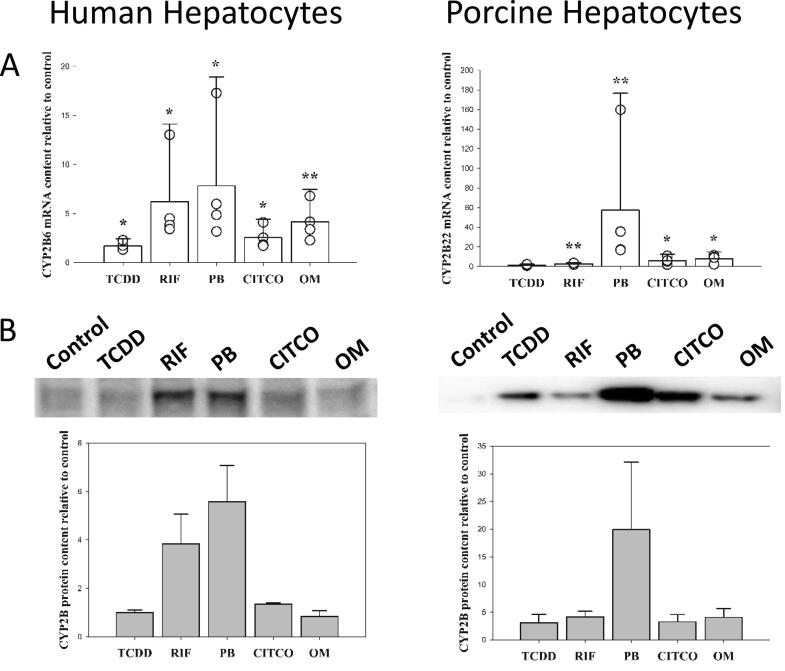
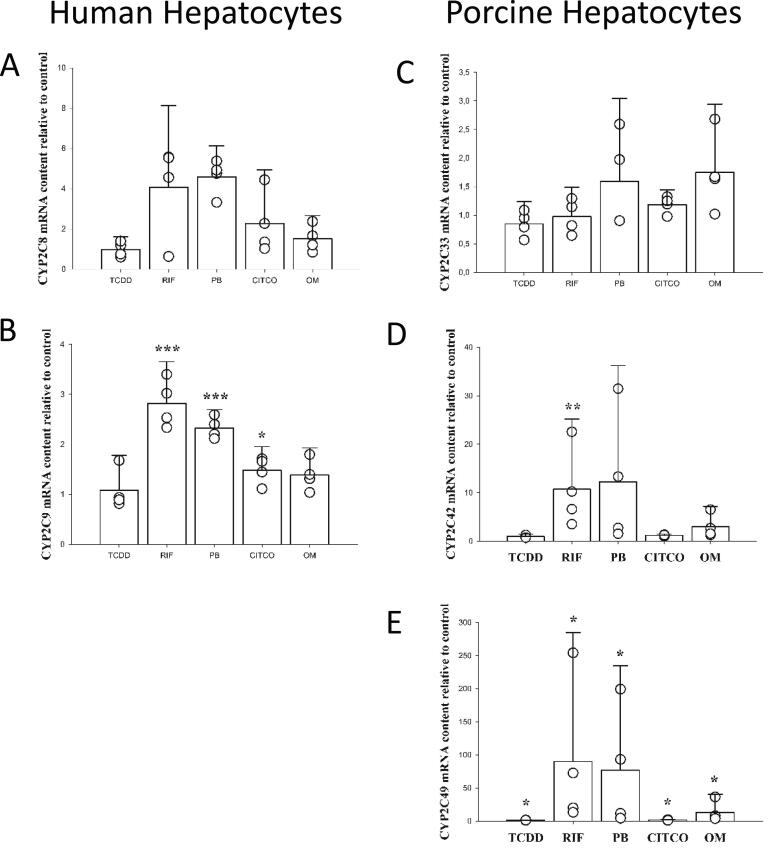
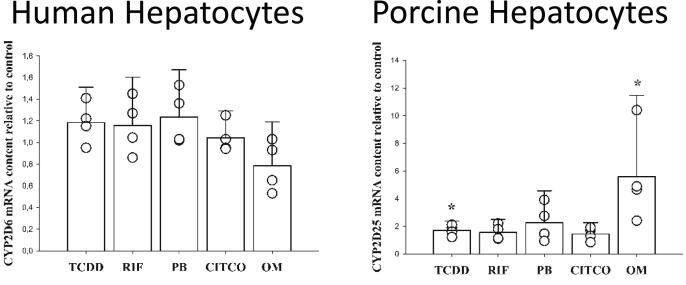
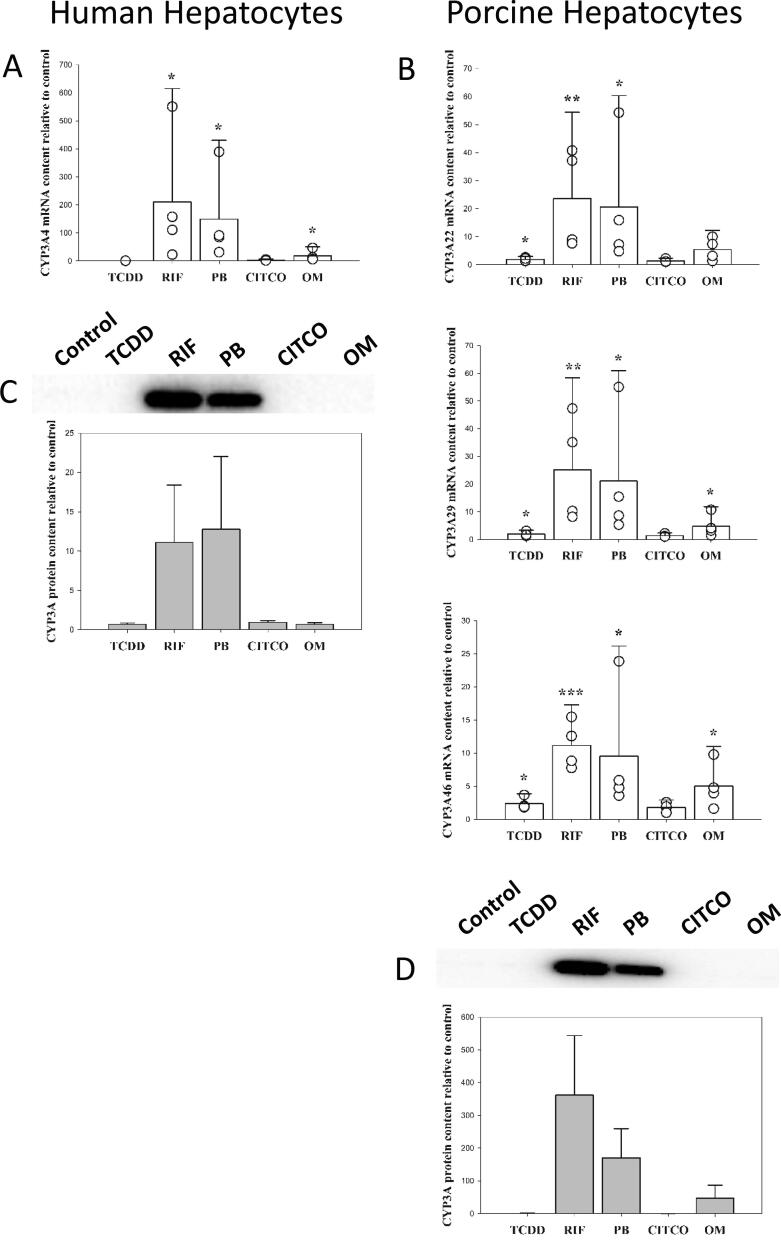
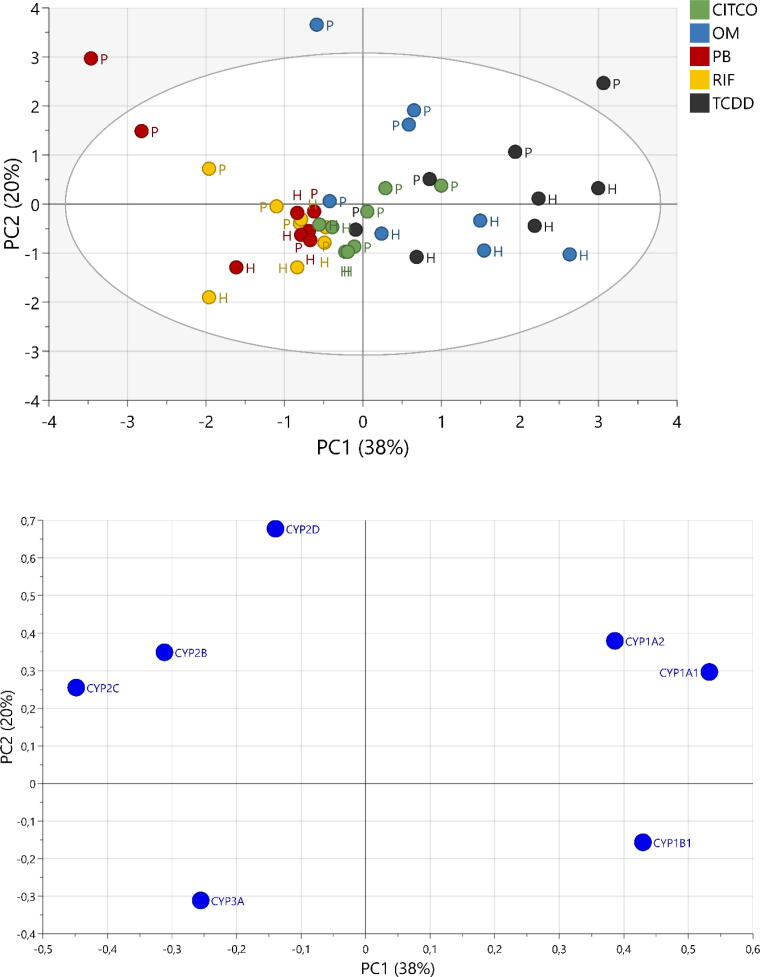
The hepatic cytochrome p450's (CYP) are of major importance for the metabolism of xenobiotics and knowledge about their regulation is crucial. This knowledge often originates from cell models; primary human hepatocytes (PHH) being the gold standard. However, due to limited availability of high-quality human donor organs, basic knowledge on alternative models are needed. Primary porcine hepatocytes (PPH) have been suggested as an alternative to PHH. Unfortunately, data comparing the response in gene-transcription to standard CYP inducers between PHH and PPH are missing. In the present study we, cultured PHH and PPH under the same conditions, treated them with standard inducers of the CYP1-3 and determined the response in gene and protein expression. The results demonstrated that in both species TCDD and omeprazole caused an increase in CYP1A/B expression. In PPH, CITCO increased the content of CYP1A/B. For the CYP2B/C/D's, phenobarbital and rifampicin caused increases in expression. For the CYP2D's, TCDD and omeprazole caused increased gene expression in PPH, which were not the case for PHH. Both phenobarbital, rifampicin and omeprazole increased CYP3A expression in PHH and PPH. Moreover, TCDD increased the gene expression of CYP3A in PPH; this was not the case for PHH. Multivariate data analysis found no difference in gene expression between PHH and PPH for phenobarbital, rifampicin and CITCO. However, differential clustering was observed for TCDD and omeprazole. In conclusion, despite model specificity, there are a high number of similar responses, and experiments investigating mRNA regulation made in PPH permits for a reliable translation into human setting.
Keywords: Detoxification; Gene-expression; Liver cells; Model; Pig; RT-PCR.
© 2021 The Author(s).
Conflict of interest statement
The authors declare that they have no known competing financial interests or personal relationships that could have appeared to influence the work reported in this paper.
Figures
References
-
- Anthérieu S., Chesné C., Li R., Guguen-Guillouzo C., Guillouzo A. Optimization of the HepaRG cell model for drug metabolism and toxicity studies. Toxicol. In Vitro. 2012;26(8):1278–1285. - PubMed
-
- Bogaards J.J.P., Bertrand M., Jackson P., Oudshoorn M.J., Weaver R.J., Van Bladeren P.J., Walther B. Determining the best animal model for human cytochrome P450 activities: a comparison of mouse, rat, rabbit, dog, micropig, monkey and man. Xenobiotica. 2000;30:1131–1152. - PubMed
-
- Burkina V., Rasmussen M.K., Pilipenko N., Zamaratskaia G. Comparison of xenobiotic-metabolising human, porcine, rodent, and piscine cytochrome P450. Toxicology. 2017;375:10–27. - PubMed
-
- Daujat M., Peryt B., Lesca P., Fourtanier G., Domergue J., Maurel P. Omeprazole, an inducer of human CYP1A1 and 1A2, is not a ligand for the Ah receptor. Biochem. Biophys. Res. Commun. 1992;188:820–825. - PubMed
-
- de Boussac H., Gondeau C., Briolotti P., Duret C., Treindl F., Römer M., Fabre J.-M., Herrero A., Ramos J., Maurel P., Templin M., Gerbal-Chaloin S., Daujat-Chavanieu M. Epidermal growth factor represses constitutive androstane receptor expression in primary human hepatocytes and favors regulation by pregnane X receptor. Drug Metab. Dispos. 2018;46:223–236. - PubMed
LinkOut - more resources
Full Text Sources
