


Elbow reconstruction after excision of proximal ulna tumors: Challenges and solutions
- PMID: 34350096
- PMCID: PMC8319519
- DOI: 10.1016/j.jcot.2021.101496
Elbow reconstruction after excision of proximal ulna tumors: Challenges and solutions
Erratum in
-
Erratum regarding previously published articles.J Clin Orthop Trauma. 2021 Jul 30;20:101539. doi: 10.1016/j.jcot.2021.101539. eCollection 2021 Sep. J Clin Orthop Trauma. 2021. PMID: 34405084 Free PMC article.
Abstract
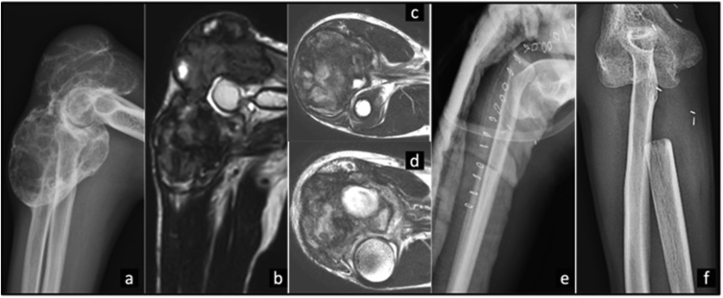
Most malignant bone tumors are treated with surgical excision, adhering to oncologic principles, followed by reconstruction to preserve form and function whenever feasible. Primary bone tumors around the elbow are rare accounting for <1% of all skeletal tumors. They pose a reconstructive challenge, due to the complex interplay between the osseous & capsulo-ligamentous structures which is essential for elbow stability and function. Tumors affecting the proximal ulna are rare and reconstruction of the defects following these tumors is extremely challenging. Various reconstruction options like arthrodesis, autogenous bone grafts, allografts, re-implantation of sterilized tumor bone, pseudoarthrosis, and endoprosthesis have been tried with variable success. However, due to lack of standardization and the rarity of the site, surgeons are often in a dilemma to choose the correct option. This can lead to suboptimal functional outcomes and long-term failures. In this article, we reviewed the published literature on proximal ulnar tumors and noted the pros and cons of various reconstructive procedures. We have also attempted to formulate reconstruction recommendations based on the level of resection of proximal ulna.
Keywords: Allograft; Autograft; Biological reconstruction; Elbow function; Endoprosthetic reconstruction; Single bone forearm.
© 2021 Delhi Orthopedic Association. All rights reserved.
Figures
References
-
- Sboui I., Jlalia Z., Riahi H. A new biological technique of elbow reconstruction following an extensive tumoral resection of the proximal ulna. Med Case Rep. 2017:1–5. 03(02)
-
- Dean G.S., Holliger E.H., Urbaniak J.R. Elbow allograft for reconstruction of the elbow with massive bone loss. Long term results. Clin Orthop. 1997;341(8):12–22. - PubMed
-
- Rydholm A. Reconstruction after resection of the proximal ulna: report of a case of chondrosarcoma. Acta Orthop. 1987;58(6):671–672. - PubMed
-
- Houdek M.T., Gupta S., Griffin A.M., Wunder J.S., Ferguson P.C. Radial neck-to-humerus transposition for elbow reconstruction following oncologic resection of the proximal ulna: a report of two cases. JBJS Case Connect. 2019;9(4):1–6. - PubMed
Publication types
LinkOut - more resources
Full Text Sources
Miscellaneous