


Individual patient data meta-analysis of the effects of the CARILLON® mitral contour system
- PMID: 34351074
- PMCID: PMC7754746
- DOI: 10.1002/ehf2.13125
Individual patient data meta-analysis of the effects of the CARILLON® mitral contour system
Abstract
Aims: Functional mitral regurgitation (MR) (FMR) is common in heart failure with reduced ejection fraction and worsens morbidity and mortality, even when mild. The CARILLON® mitral contour system (Cardiac Dimensions, Kirkland, WA, USA), a mitral annuloplasty device delivered percutaneously to the coronary sinus, is designed to reduce the mitral annular dimension by virtue of the close anatomic relationship between the coronary sinus and the posterior mitral annulus. We performed a comprehensive individual patient data meta-analysis of all studies that used CARILLON® device vs. control that have measured mitral regurgitation severity, left ventricular (LV) remodelling, functional status, and heart failure-related outcomes in heart failure with reduced ejection fraction patients.
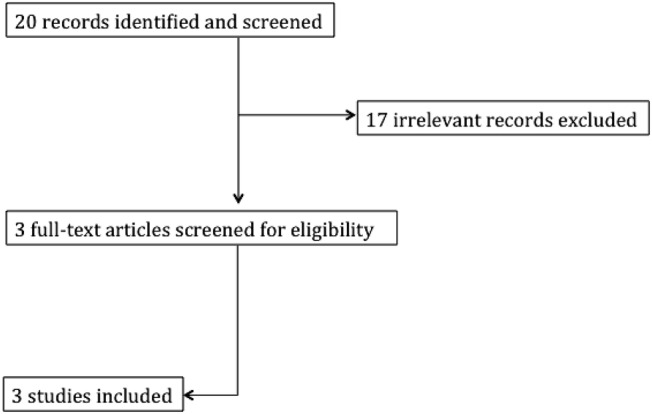
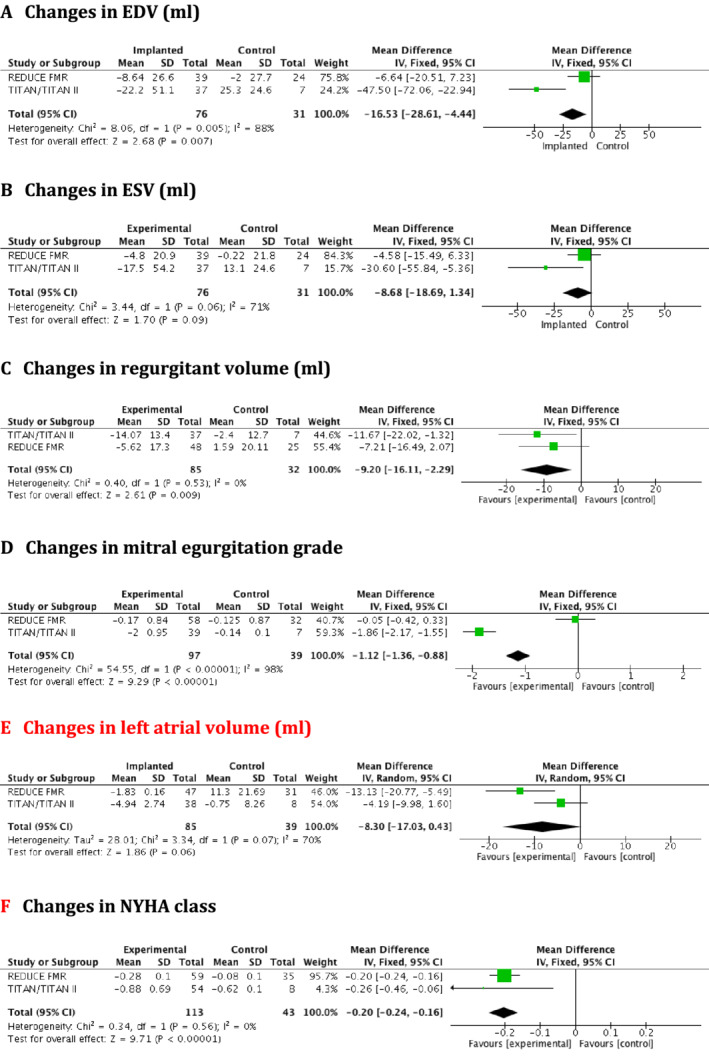
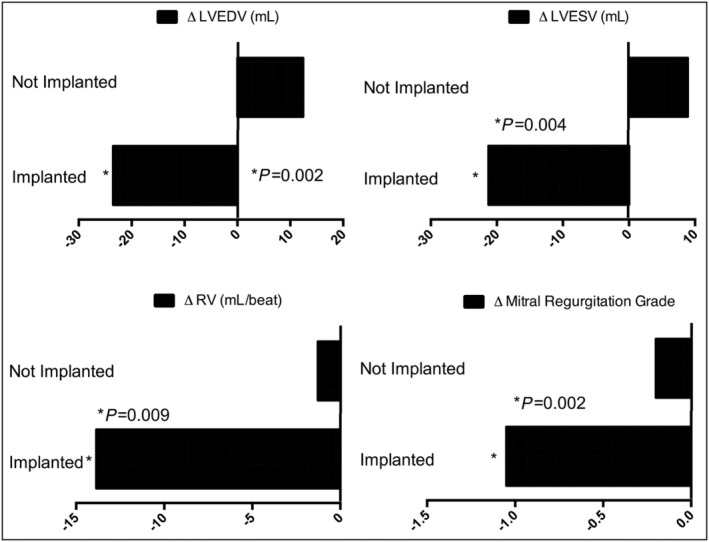
Methods and results: The Cochrane Central Register of Controlled Trials, MEDLINE, and EMBASE were searched in July 2020. Primary outcomes of interest were measures of MR severity, LV remodelling, New York Heart Association functional class and heart failure-related outcomes [mortality and heart failure hospitalization (HFH) during follow up]. All data were received as individual patient and individual time point data-points. Mean differences and 95% confidence intervals (CIs) were calculated for continuous data using a fixed-effects model. Three studies (REDUCE FMR, TITAN and TITAN II) enrolling 209 participants were identified and included. Pooled analysis showed that, compared with control, CARILLON® device significantly improved both MR volume (mean difference MD -9.20, 95% C.I. -16.11 to -2.29 mL, P = 0.009) and MR grade (MD -1.12, 95% CI -1.36 to -0.88, P < 0.00001) and this was associated with a significant reduction in LA volume, MD -7.54 mL, 95% CI -14.90 to - 0.18, P = 0.04. Significant LV reverse remodelling was also seen in terms of EDV (MD -16.53, 95% CI -28.61 to -44.4 mL, P = 0.007), and a trend in ESV (MD -8.68, 95% CI -18.69 to -1.34 mL, P = 0.09) but no significant effect on LVEF (MD 0.88, 95% CI -1.52% to 2.38%, P = 0.47), due presumably to the greater residual MR in the control patients falsely elevating the LVEF. In addition, the CARILLON® device significantly improved New York Heart Association functional Class (MD -0.22, 95% CI -0.24 to -0.16, P < 0.00001), associated with a lower rate of HFH compared with controls (45.3% vs. 64%, respectively, P = 0.04). As a sensitivity analysis we also restricted the analyses to those patients with Class 3+/4+ MR at baseline. In this cohort, the echocardiographic results were similar, and the reduction in HFH rates was even more marked (43.9% vs. 82.9%, respectively, P = 0.04).
Conclusions: This comprehensive meta-analysis of individual patient data has shown that CARILLON® device provides statistically significant and clinically meaningful benefits on MR severity, LA and LV volumes, and remodelling and rates of subsequent heart failure hospitalization.
Keywords: Carillon device; Heart Failure; Meta‐analysis; Mitral Regurgitation.
© 2020 The Authors. ESC Heart Failure published by John Wiley & Sons Ltd on behalf of European Society of Cardiology.
Conflict of interest statement
Professor Coats declares having received honoraria and/or lecture fees from Astra Zeneca, Bayer, Boehringer Ingelheim, Menarini, Novartis, Nutricia, Servier, Vifor, Abbott, Actimed, Arena, Cardiac Dimensions, Corvia, CVRx, Enopace, ESN Cleer, Faraday, Gore, Impulse Dynamics, Respicardia. Francesco Giallauria, Anna Di Lorenzo, Alessandro Parlato, Crescenzo Testa, Emanuele Bobbio, and Carlo Vigorito declare that they have no conflict of interest.
Figures

References
-
- De Marchena E, Badiye A, Robalino G, Junttila J, Atapattu S, Nakamura M, De Canniere D, Salerno T. Respective prevalence of the different Carpentier classes of mitral regurgitation: a stepping stone for future therapeutic research and development. J Card Surg 2011; 26: 385–392. - PubMed
-
- Patel JB, Borgeson DD, Barnes ME, Rihal CS, Daly RC, Redfield MM. Mitral regurgitation in patients with advanced systolic heart failure. J Card Fail 2004; 10: 285–2,911. - PubMed
-
- Trichon BH, Felker GM, Shaw LK, Cabell CH, O'Connor CM. Relation of frequency and severity of mitral regurgitation to survival among patients with left ventricular systolic dysfunction and heart failure. Am J Cardiol 2003; 91: 538–543. - PubMed
-
- Goel S, Bajaj N, Aggarwal B, Gupta S, Poddar KL, Ige M, Bdair H, Anabtawi A, Rahim S, Whitlow PL, Tuzcu EM. Prevalence and outcomes of unoperated patients with severe symptomatic mitral regurgitation and heart failure. J Am Coll Cardiol 2014; 63: 185–186. - PubMed
-
- DiSalvo TG, Acker MA, Dec GW, Byrne JG. Mitral valve surgery in advanced heart failure. J Am Coll Cardiol 2010; 55: 272–282. - PubMed
Publication types
MeSH terms
LinkOut - more resources
Full Text Sources
Research Materials
