


Expansion of the rare Eucalyptus risdonii under climate change through hybridization with a closely related species despite hybrid inferiority
- PMID: 34351372
- PMCID: PMC8752398
- DOI: 10.1093/aob/mcab103
Expansion of the rare Eucalyptus risdonii under climate change through hybridization with a closely related species despite hybrid inferiority
Abstract
Background and aims: Hybridization is increasingly recognized as an integral part of the dynamics of species range expansion and contraction. Thus, it is important to understand the reproductive barriers between co-occurring species. Extending previous studies that argued that the rare Eucalyptus risdonii was expanding into the range of the surrounding E. amygdalina by both seed and pollen dispersal, we here investigate the long-term fitness of both species and their hybrids and whether expansion is continuing.
Methods: We assessed the survival of phenotypes representing a continuum between the two pure species in a natural hybrid swarm after 29 years, along with seedling recruitment. The performance of pure species as well as of artificial and natural hybrids was also assessed over 28 years in a common garden trial.
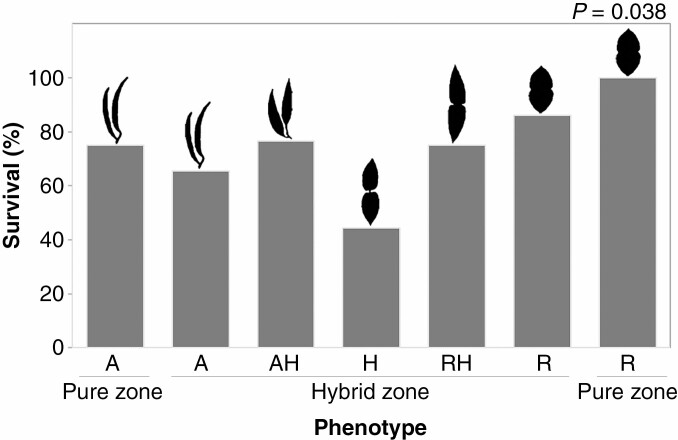
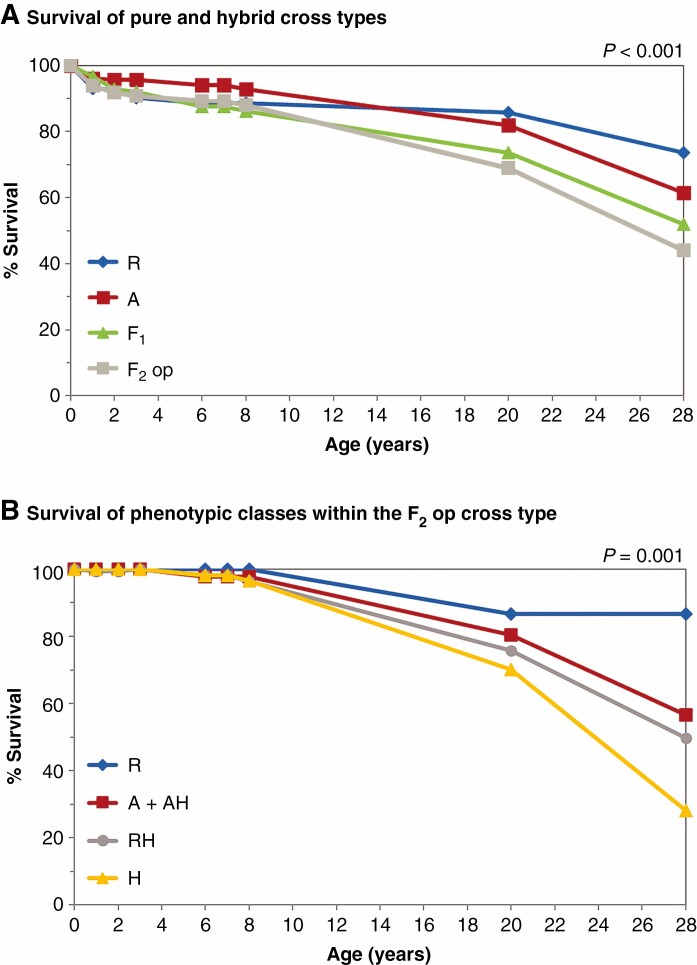
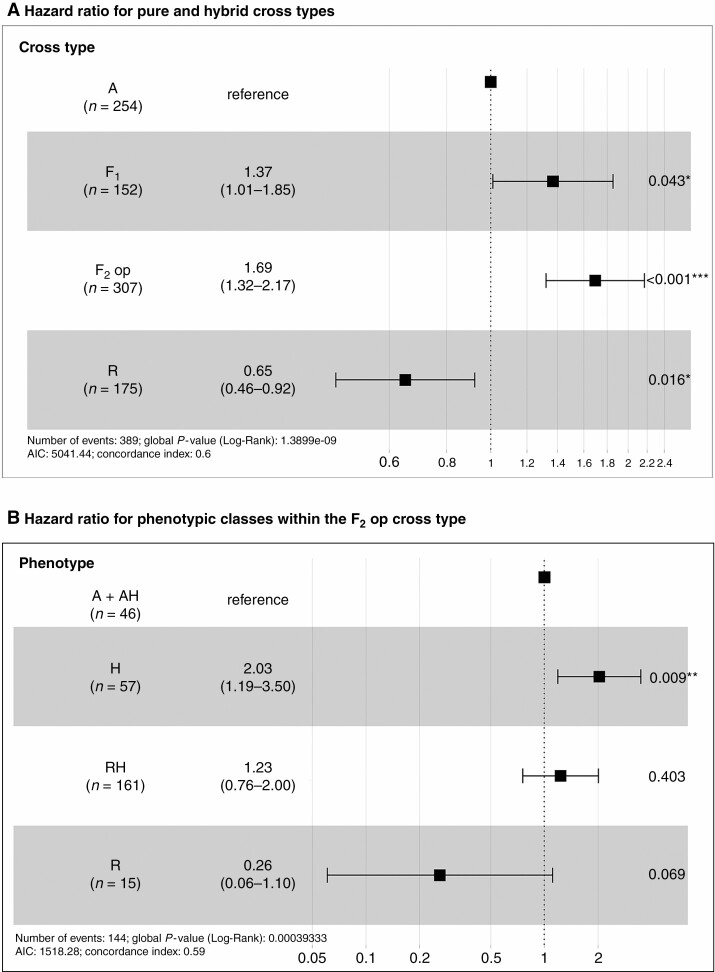
Key results: In the hybrid zone, E. amygdalina adults showed greater mortality than E. risdonii, and the current seedling cohort is still dominated by E. risdonii phenotypes. Morphologically intermediate individuals appeared to be the least fit. Similar results were observed after growing artificial first-generation and natural hybrids alongside pure species families in a common garden trial. Here, the survival, reproduction, health and growth of the intermediate hybrids were significantly less than those of either pure species, consistent with hybrid inferiority, although this did not manifest until later reproductive ages. Among the variable progeny of natural intermediate hybrids, the most E. risdonii-like phenotypes were the most fit.
Conclusions: This study contributes to the increasing number of reports of hybrid inferiority in Eucalyptus, suggesting that post-zygotic barriers contribute to the maintenance of species integrity even between closely related species. However, with fitness rapidly recovered following backcrossing, it is argued that hybridization can still be an important evolutionary process, in the present case appearing to contribute to the range expansion of the rare E. risdonii in response to climate change.
Keywords: Eucalyptus amygdalina; Eucalyptus risdonii; fitness; hybrid inferiority; hybrid swarm; hybrid zone; hybridization; outbreeding depression; post-zygotic barriers.
© The Author(s) 2021. Published by Oxford University Press on behalf of the Annals of Botany Company. All rights reserved. For permissions, please e-mail: journals.permissions@oup.com.
Figures




Comment in
-
Long-term research reveals potential role of hybrids in climate-change adaptation. A commentary on 'Expansion of the rare Eucalyptus risdonii under climate change through hybridisation with a closely related species despite hybrid inferiority'.Ann Bot. 2022 Jan 8;129(1):i-iii. doi: 10.1093/aob/mcab085. Ann Bot. 2022. PMID: 34289013 Free PMC article.
References
-
- Abbott R, Albach D, Ansell S, et al. 2013. Hybridization and speciation. Journal of Evolutionary Biology 26: 229–246. - PubMed
-
- Abbott RJ, Barton NH, Good JM. 2016. Genomics of hybridization and its evolutionary consequences. Molecular Ecology 25: 2325–2332. - PubMed
-
- Abram NJ, McGregor HV, Tierney JE, et al. 2016. Early onset of industrial-era warming across the oceans and continents. Nature 536: 411–418. - PubMed
-
- Aitken SN, Whitlock MC. 2013. Assisted gene flow to facilitate local adaptation to climate change. Annual Review of Ecology, Evolution, and Systematics 44: 367–388.
Publication types
MeSH terms
LinkOut - more resources
Full Text Sources
