


Limosilactobacillus reuteri Fermented Brown Rice: A Product with Enhanced Bioactive Compounds and Antioxidant Potential
- PMID: 34356310
- PMCID: PMC8301027
- DOI: 10.3390/antiox10071077
Limosilactobacillus reuteri Fermented Brown Rice: A Product with Enhanced Bioactive Compounds and Antioxidant Potential
Abstract
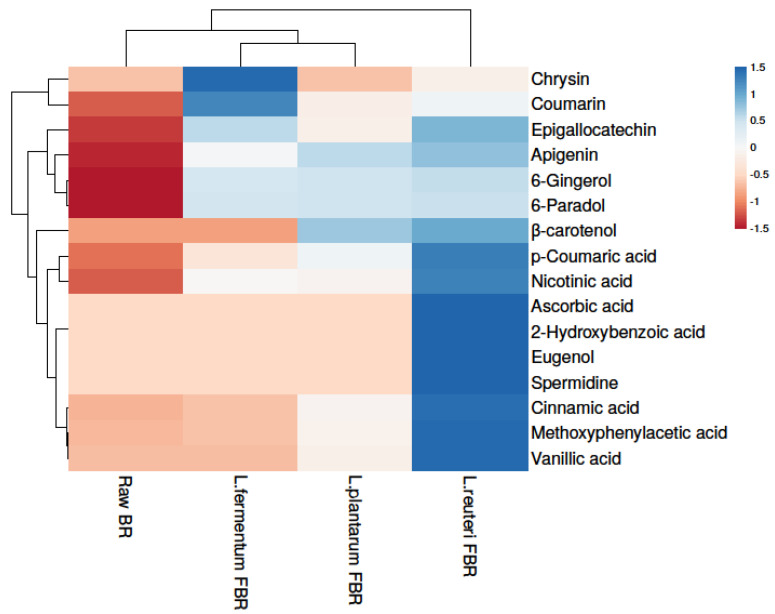
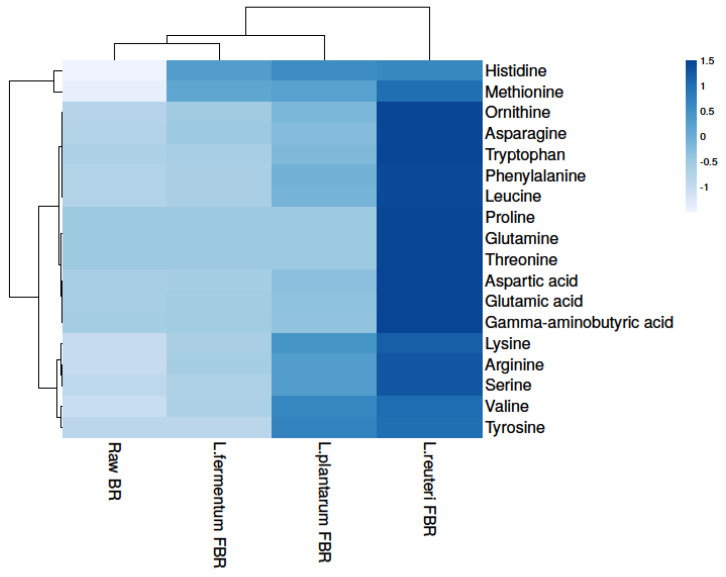
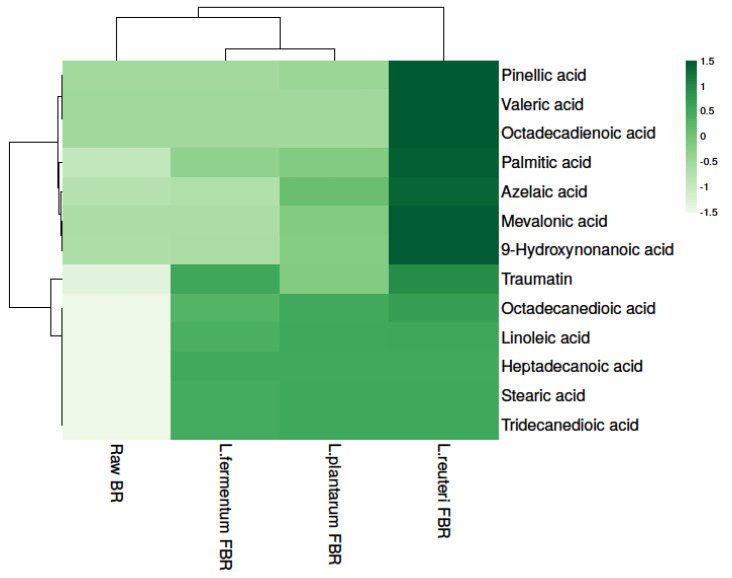
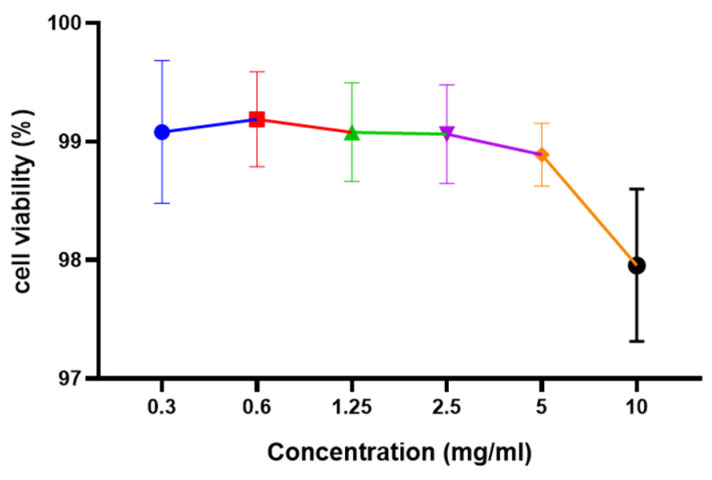
Oxidative stress has been postulated to play a role in several diseases, including cardiovascular diseases, diabetes, and stress-related disorders (anxiety/depression). Presently, natural plant-derived phytochemicals are an important tool in reducing metabolomic disorders or for avoiding the side effects of current medicinal therapies. Brown Rice (Oryza sativa L.) is an important part of Asian diets reported as a rich source of bioactive phytonutrients. In our present study, we have analyzed the effect of different lactic acid bacteria (LABs) fermentation on antioxidant properties and in the enhancement of bioactive constituents in Korean brown rice. Therefore, the antioxidant activities and phytochemical analysis were investigated for raw brown rice (BR) and different fermented brown rice (FBR). BR fermented with Limosilactobacillus reuteri, showed the highest antioxidant activities among all samples: DPPH (121.19 ± 1.0), ABTS (145.80 ± 0.99), and FRAP (171.89 ± 0.71) mg Trolox equiv./100 g, dry weight (DW). Total phenolic content (108.86 ± 0.63) mg GAE equiv./100 g, DW and total flavonoids content (86.79 ± 0.83) mg catechin equiv./100 g, DW was also observed highest in Limosilactobacillus reuteri FBR. Furthermore, phytochemical profiling using ultra-high-performance liquid tandem chromatography quadrupole time-of-flight mass spectrometry (UHPLC-QTOF/MS) and cell antioxidant assay (CAA) revealed L. reuteri FBR as a strong antioxidant with an abundance of bioactive compounds such as gamma-aminobutyric acid, coumarin, cinnamic acid, butanoic acid, ascorbic acid, nicotinic acid, and stearic acid. This study expanded current knowledge on the impact of fermentation leading to the enhancement of antioxidant capacity with an abundance of health-related bioactive compounds in BR. The results obtained may provide useful information on functional food production using fermented brown rice.
Keywords: UHPLC-QTOF/MS; antioxidants; brown rice; fermentation; health benefits; oxidative stress; untargeted metabolomics.
Conflict of interest statement
The authors declare no conflict of interest.
Figures
References
-
- Tyagi A., Yeon S.-J., Daliri E., Chen X., Chelliah R., Oh D.-H. Untargeted Metabolomics of Korean Fermented Brown Rice Using UHPLC Q-TOF MS/MS Reveal an Abundance of Potential Dietary Antioxidative and Stress-Reducing Compounds. Antioxidants. 2021;10:626. doi: 10.3390/antiox10040626. - DOI - PMC - PubMed
Grants and funding
LinkOut - more resources
Full Text Sources
Other Literature Sources
Miscellaneous
