


Prevalence and Antimicrobial Resistance of Klebsiella Strains Isolated from a County Hospital in Romania
- PMID: 34356789
- PMCID: PMC8300768
- DOI: 10.3390/antibiotics10070868
Prevalence and Antimicrobial Resistance of Klebsiella Strains Isolated from a County Hospital in Romania
Abstract
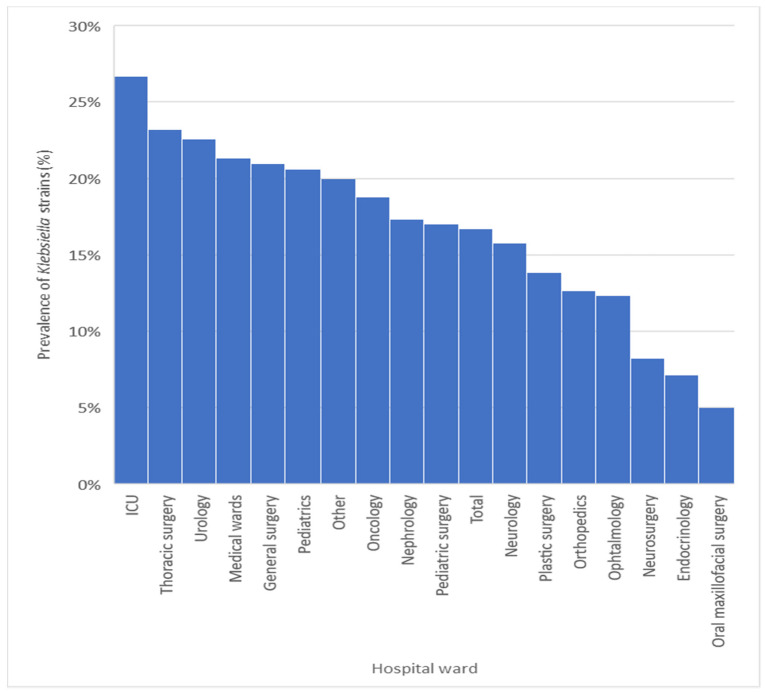
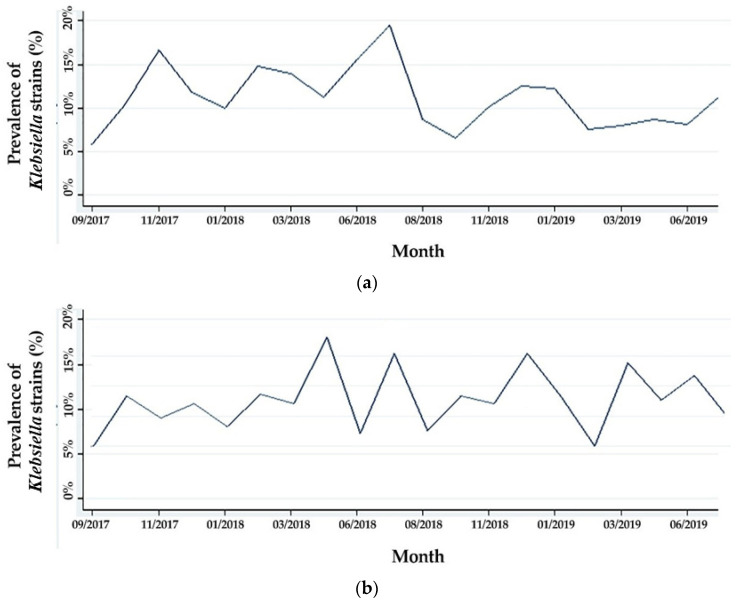
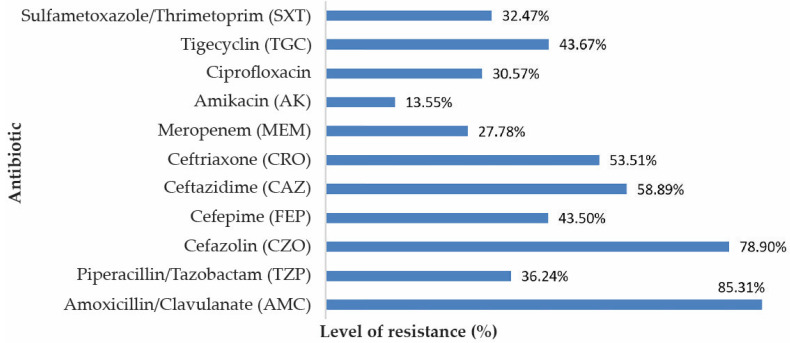
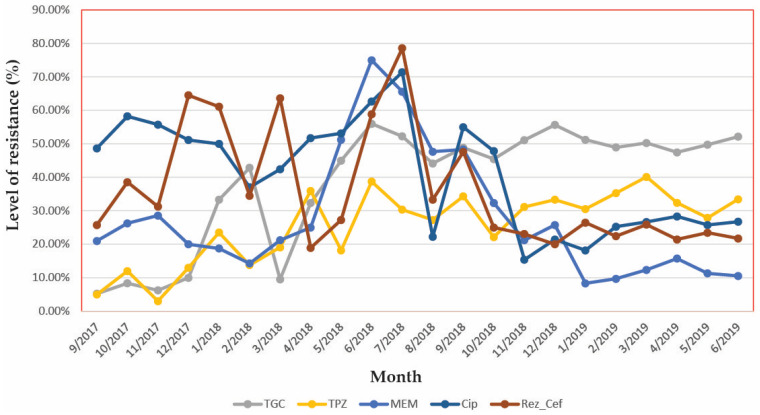
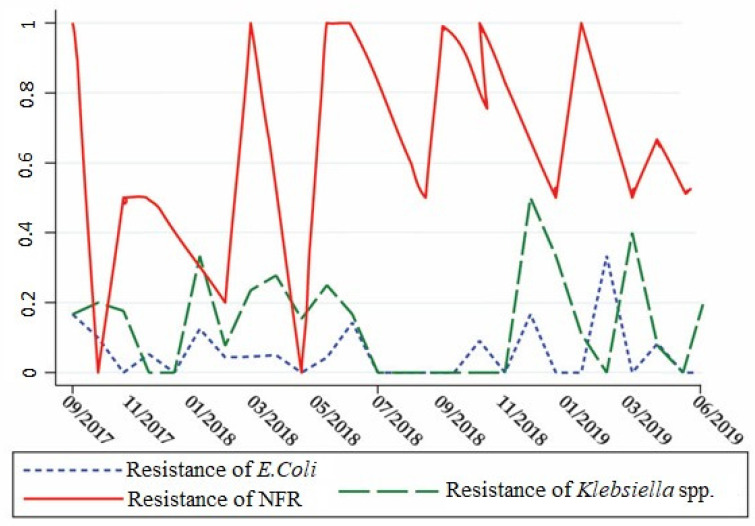
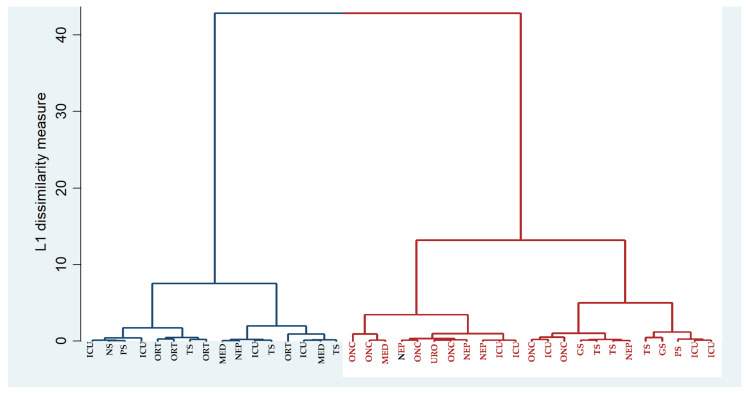
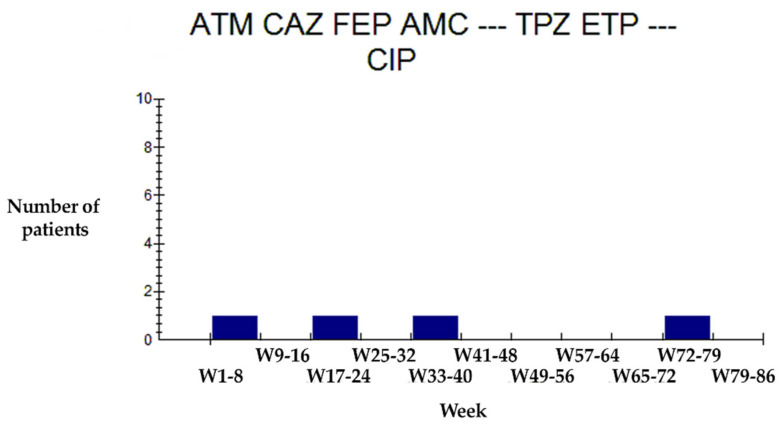
The study evaluated the evolution of the incidence of infections with Klebsiella in the County Clinical Emergency Hospital of Craiova (SCJUC), Romania. Also, we monitored antibiotic resistance over more than two years and detected changes in resistance to various antimicrobial agents. Our study included 2062 patients (823 women and 1239 men) hospitalised in SCJUC during the period 1st of September 2017 to 30 June 2019. In 458 patients (22.21%) from the 2062 total patients, the collected samples (1116) were positive and from those, we isolated 251 strains of Klebsiella spp. We conducted a longitudinal analysis of the prevalence of Klebsiella spp. over calendar months, which showed a prevalence in surgical wards that ranged between 5.25% and 19.49% in June 2018, while in medical wards the variation was much wider, between 5.15% and 17.36% in April 2018. Klebsiella spp. strains showed significant resistance to Amoxicillin/Clavulanate, Aztreonam and Cephalosporins such as Ceftriaxone, Ceftazidime and Cefepime. We examined the possible link with the consumption of antibiotics in the same month by performing a multiple linear regression analysis. The evolution of antibiotic resistance in Klebsiella was correlated with the variation of resistance in other bacteria, which suggests common resistance mechanisms in the hospital environment. By performing the regression for dependency between antibiotic resistance and antibiotic consumption, we observed some correlations between antibiotic consumption and the development of antibiotic resistance after 1, 2 and even 3 months (e.g., resistance to meropenem was influenced by the consumption in the hospital ward of imipenem 1 month and two months before, but only 1 month before by the consumption of meropenem). The clustering of strains showed filiation between multiresistant Klebsiella spp. strains isolated from specific patients from the ICU. The evolution of prevalence and antibiotic resistance in Klebsiella correlated with the resistance in other bacteria, which suggest common resistance mechanisms in the hospital environment, and also with the consumption of antibiotics.
Keywords: Klebsiella; antibiotic resistance; multidrug-resistant bacteria.
Conflict of interest statement
The authors declare no conflict of interest.
Figures
References
-
- Usha P.T.A., Jose S., Nisha A.R. Antimicrobial Drug Resistance-A global concern. Vet. World. 2010;3:138–139.
LinkOut - more resources
Full Text Sources
Miscellaneous
