


Inflammatory Mechanisms Contributing to Endothelial Dysfunction
- PMID: 34356845
- PMCID: PMC8301477
- DOI: 10.3390/biomedicines9070781
Inflammatory Mechanisms Contributing to Endothelial Dysfunction
Abstract
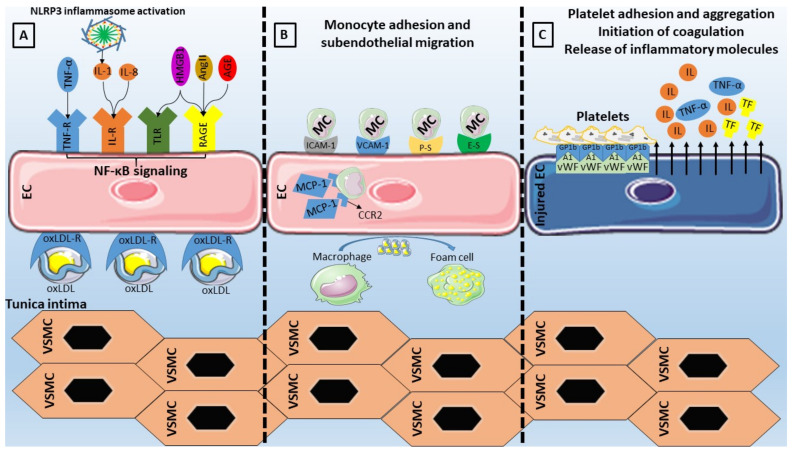
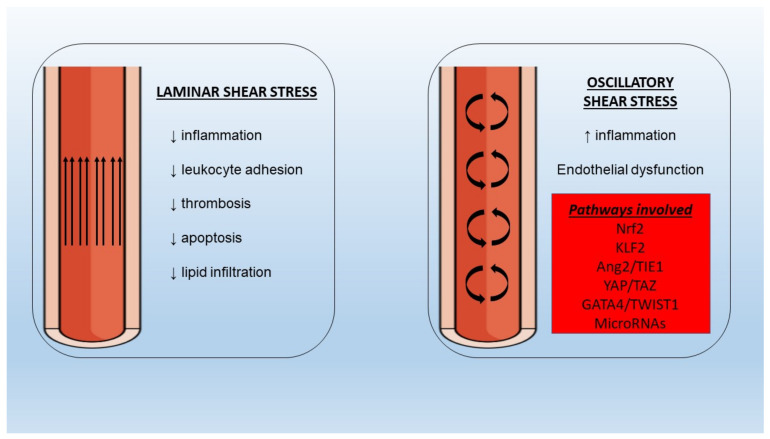
Maintenance of endothelial cell integrity is an important component of human health and disease since the endothelium can perform various functions including regulation of vascular tone, control of hemostasis and thrombosis, cellular adhesion, smooth muscle cell proliferation, and vascular inflammation. Endothelial dysfunction is encompassed by complex pathophysiology that is based on endothelial nitric oxide synthase uncoupling and endothelial activation following stimulation from various inflammatory mediators (molecular patterns, oxidized lipoproteins, cytokines). The downstream signaling via nuclear factor-κB leads to overexpression of adhesion molecules, selectins, and chemokines that facilitate leukocyte adhesion, rolling, and transmigration to the subendothelial space. Moreover, oscillatory shear stress leads to pro-inflammatory endothelial activation with increased monocyte adhesion and endothelial cell apoptosis, an effect that is dependent on multiple pathways and flow-sensitive microRNA regulation. Moreover, the role of neutrophil extracellular traps and NLRP3 inflammasome as inflammatory mechanisms contributing to endothelial dysfunction has recently been unveiled and is under further investigation. Consequently, and following their activation, injured endothelial cells release inflammatory mediators and enter a pro-thrombotic state through activation of coagulation pathways, downregulation of thrombomodulin, and an increase in platelet adhesion and aggregation owing to the action of von-Willebrand factor, ultimately promoting atherosclerosis progression.
Keywords: NLRP3 inflammasome; Nf-κB; adhesion molecules; endothelial dysfunction; inflammation; selectins; shear stress.
Conflict of interest statement
The authors declare no conflict of interest.
Figures
References
-
- Yeboah J., Folsom A.R., Burke G.L., Johnson C., Polak J.F., Post W., Lima J.A., Crouse J.R., Herrington D.M. Predictive Value of Brachial Flow-Mediated Dilation for Incident Cardiovascular Events in a Population-Based Study. Circulation. 2009;120:502–509. doi: 10.1161/CIRCULATIONAHA.109.864801. - DOI - PMC - PubMed
-
- Rubinshtein R., Kuvin J.T., Soffler M., Lennon R.J., Lavi S., Nelson R.E., Pumper G.M., Lerman L.O., Lerman A. Assessment of endothelial function by non-invasive peripheral arterial tonometry predicts late cardiovascular adverse events. Eur. Heart J. 2010;31:1142–1148. doi: 10.1093/eurheartj/ehq010. - DOI - PubMed
Publication types
LinkOut - more resources
Full Text Sources
