


Evaluating the antidiabetic effects of R-verapamil in type 1 and type 2 diabetes mellitus mouse models
- PMID: 34358247
- PMCID: PMC8345870
- DOI: 10.1371/journal.pone.0255405
Evaluating the antidiabetic effects of R-verapamil in type 1 and type 2 diabetes mellitus mouse models
Abstract
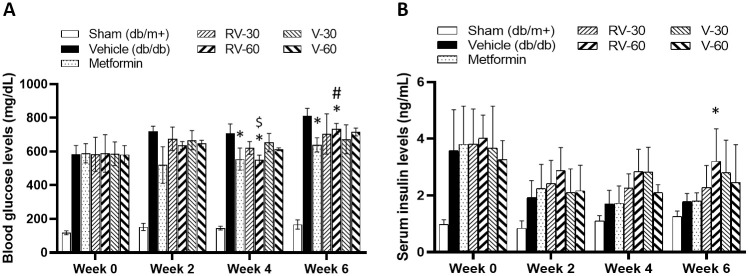
The global incidence of diabetes mellitus (DM) is increasing. Types 1 and 2 DM are associated with declining β-cell function. Verapamil (50% S-verapamil and 50% R-verapamil) can treat DM by downregulating thioredoxin-interacting protein (TXNIP), which induces islet β-cell apoptosis. However, it may also induce cardiovascular side effects as S-verapamil is negatively inotropic. In contrast, R-verapamil only weakly induces adverse cardiac effects. In this study, we aimed to determine the antidiabetic efficacy and cardiovascular safety of R-verapamil. We examined R- and S-verapamil binding through in vitro studies. Streptozotocin-induced type 1 and db/db type 2 DM mouse models were used to assess the antidiabetic efficacy of verapamil. IL-6, blood glucose (BG), Txnip expression, and β-cells were evaluated in streptozotocin-induced diabetic mice, while body weight, BG, and serum insulin were measured in the db/db mice. In the type 1 DM study, 100 mg/kg/day R-verapamil and racemic verapamil lowered BG, downregulated Txnip expression, and reduced β-cell apoptosis. In the type 2 DM study, the optimal R-verapamil dosage was 60 mg/kg/day and it lowered BG and raised serum insulin. However, efficacy did not increase with R-verapamil dosage. R-verapamil combined with metformin/acarbose improved BG and serum insulin more effectively than metformin/acarbose alone or verapamil combined with acarbose. R-verapamil had weaker cardiovascular side effects than S-verapamil. R-verapamil was 9.0× and 3.4× less effective than S-verapamil at inhibiting atrial inotropy and ileal contractility, respectively. It was also 8.7× weaker than S-verapamil as an agonist of somatostatin receptor type 2 (SSTR2), inhibiting ileal neurogenic contraction. Hence, R-verapamil may be an optimal DM treatment as it is safe, improves glycemic control, and preserves β-cell function both as monotherapy and in combination with metformin or acarbose. R-Verapamil has potential for delaying or arresting DM progression and improving patients' quality of life.
Conflict of interest statement
All the authors and Center Laboratories Inc. have not served on the editorial board of PLOS ONE. All the authors and Center Laboratories Inc. have not acted as an expert witness in relevant legal proceedings. All the authors and Center Laboratories Inc. have not sat on a committee for any organization that may benefit from publication of PLOS ONE. This Competing Interests statement does not alter our adherence to PLOS ONE policies on sharing data and materials.
Figures




References
-
- Centers for Disease Control and Prevention C. National diabetes statistics report, 2020. Atlanta, GA: Centers for Disease Control and Prevention, US Department of Health and Human Services. 2020.
-
- Cho NH, Kirigia J, Mbanya JC, Ogurstova K, Guariguata L, Rathmann W. IDF DIABETES ATLAS—8TH EDITION. The International Diabetes Federation; 2017.
MeSH terms
Substances
LinkOut - more resources
Full Text Sources
Medical
Miscellaneous
