


Decline in Sars-CoV-2 antibodies over 6-month follow-up in obstetrical healthcare workers
- PMID: 34358389
- PMCID: PMC8420239
- DOI: 10.1111/aji.13490
Decline in Sars-CoV-2 antibodies over 6-month follow-up in obstetrical healthcare workers
Abstract
Problem: Limited data exists on the temporal trend of the Sars-CoV-2 immunologic response and duration of protection following natural infection. We sought to investigate the presence and duration of Sars-CoV-2 serum antibodies in obstetrical healthcare workers (HCW) on serial assessments over a 6-month period, and to assess rates of vaccine acceptance and reported vaccine side effects among this cohort.
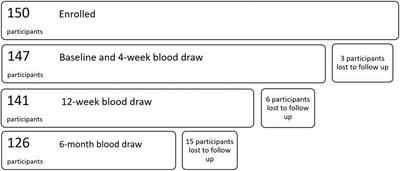
Method of study: A prospective cohort study of a convenience sample of obstetrical HCWs at a tertiary hospital. Serum Sars-CoV-2 antibodies for Immunoglobulin G (IgG) and Immunoglobulin M (IgM) were measured longitudinally at four intervals: baseline, 4 weeks, 12 weeks, and 6 months. Participants completed voluntary surveys on COVID19 testing, high-risk exposures, vaccine acceptance, and vaccine side effects.
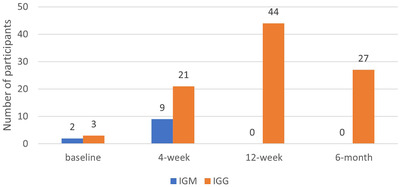
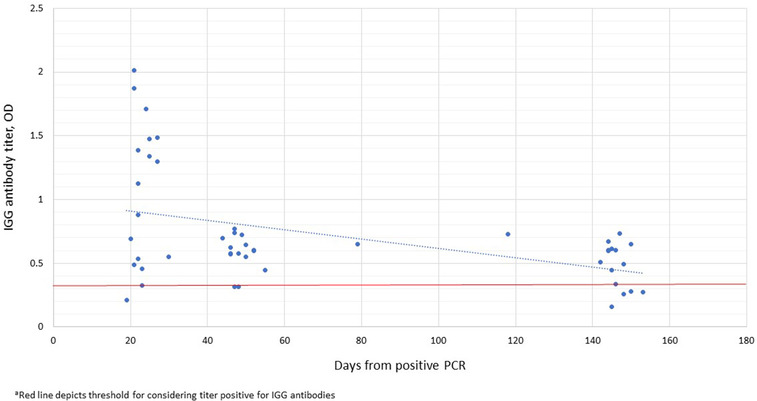
Results: One hundred twenty-six of 150 (84%) HCWs who volunteered for participation completed all four blood draws. Prevalence of seropositive HCWs based on positive Sars-CoV-2 IgG antibodies increased from 2% at baseline to 31% at 12 weeks but declined to 21% by 6 months. Forty-two percent (19/43) of the participants considered seropositive for Sars-CoV-2 IgG antibodies at any of the initial three blood draws converted to seronegative status at the 6-month follow-up. Eighty-seven percent (72/83) of participants who responded to a follow-up survey were willing to accept the COVID19 vaccine. Rates of acceptance did not differ by participant antibody status. Those that experienced symptoms with the first injection were more likely to have positive Sars-CoV-2 IgG antibodies (36.8% vs. 9.6%, p = .01).
Conclusion: Sars-CoV-2 IgG antibodies wane over time and may not provide prolonged and robust immune protection. This underscores the importance of vaccination and continued research in this area while the COVID19 pandemic continues.
Keywords: COVID19; Sars-CoV-2; antibodies; healthcare workers; vaccine hesitancy.
© 2021 John Wiley & Sons A/S. Published by John Wiley & Sons Ltd.
Figures
References
-
- Centers for Disease Control and Prevention. COVID‐19: Prevent Getting Sick . https://www.cdc.gov/coronavirus/2019‐ncov/prevent‐getting‐sick/index.html Accessed June 21, 2021
-
- Centers for Disease Control and Prevention . COVID Data Tracker: Trends in Number of COVID‐19 Vaccinations in the US. https://covid.cdc.gov/covid‐data‐tracker/#vaccination‐trends Accessed June 21, 2021
Publication types
MeSH terms
Substances
Grants and funding
LinkOut - more resources
Full Text Sources
Research Materials
Miscellaneous
