


Basic principles of hydrogel-based tissue transformation technologies and their applications
- PMID: 34358468
- PMCID: PMC8372535
- DOI: 10.1016/j.cell.2021.07.009
Basic principles of hydrogel-based tissue transformation technologies and their applications
Abstract
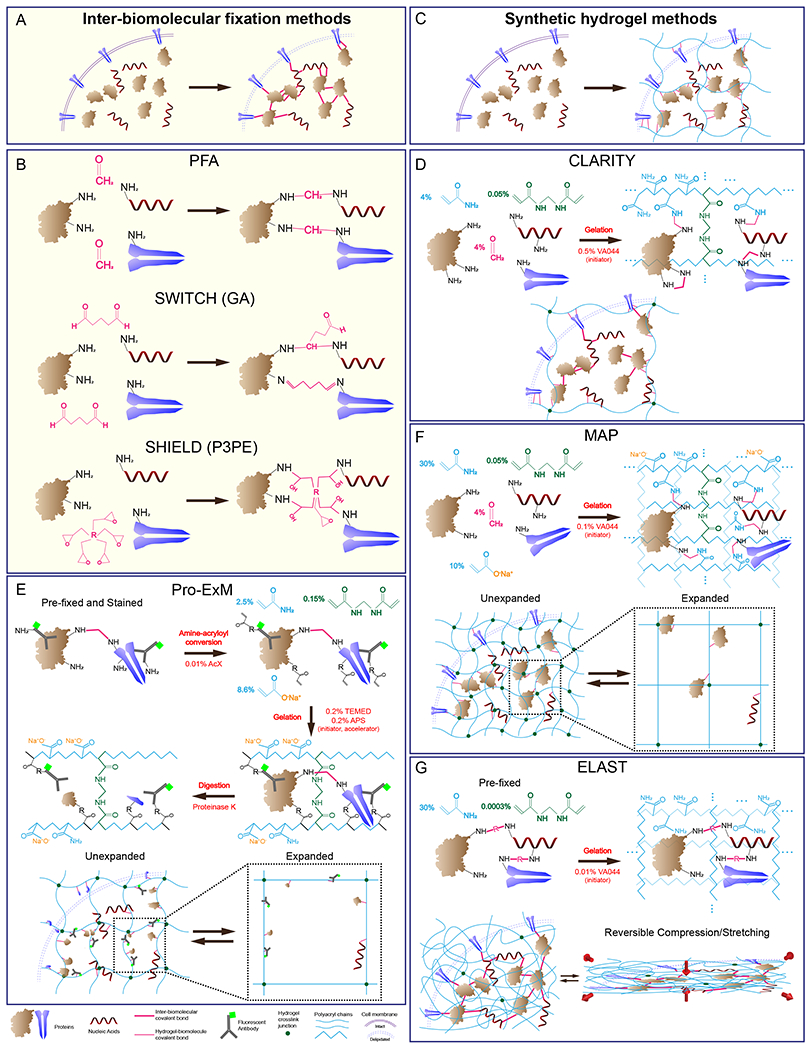
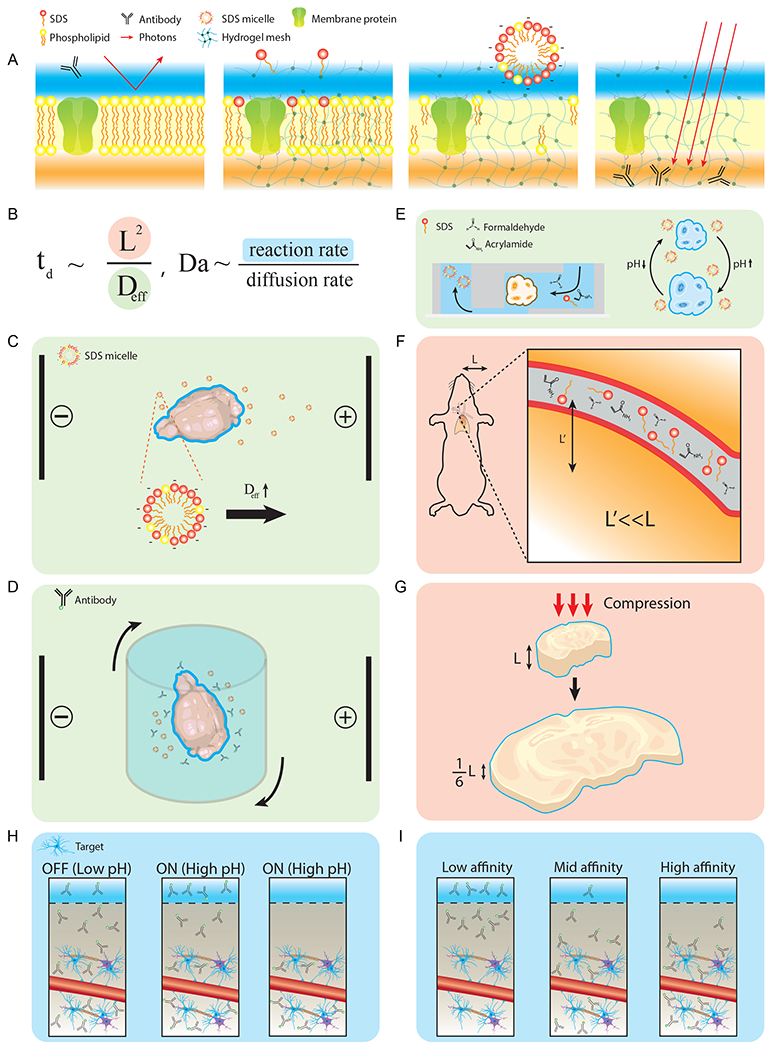
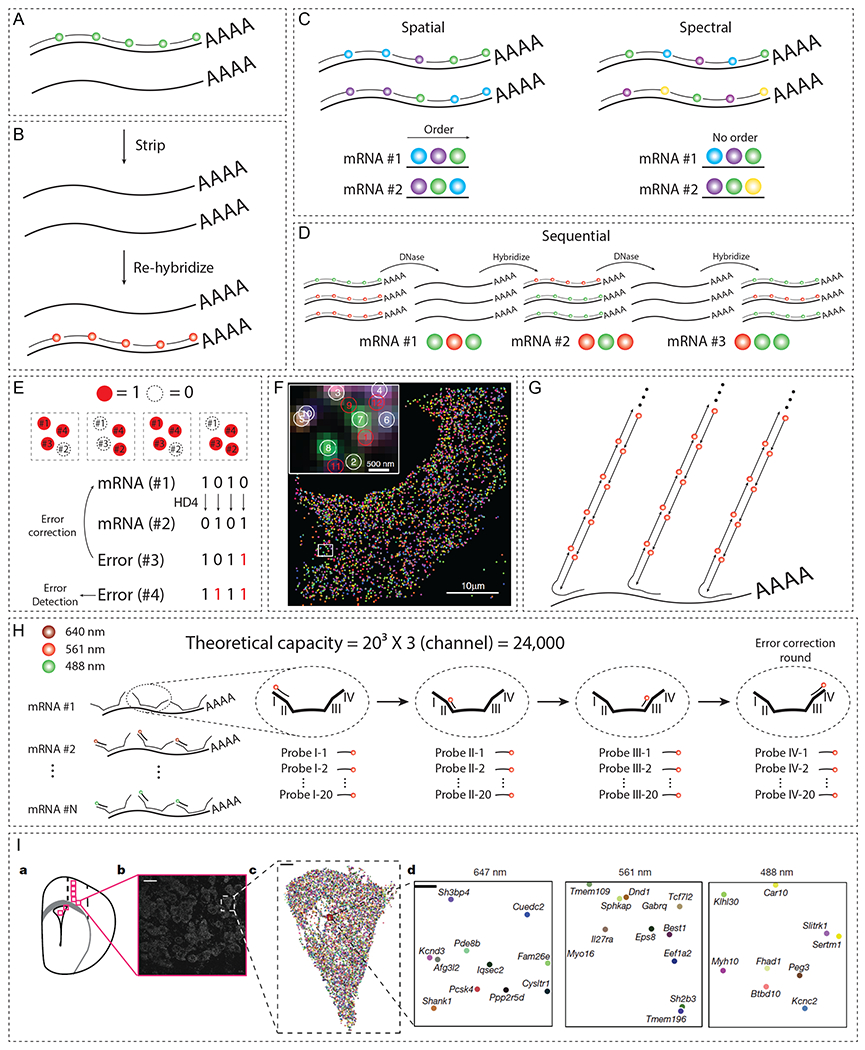
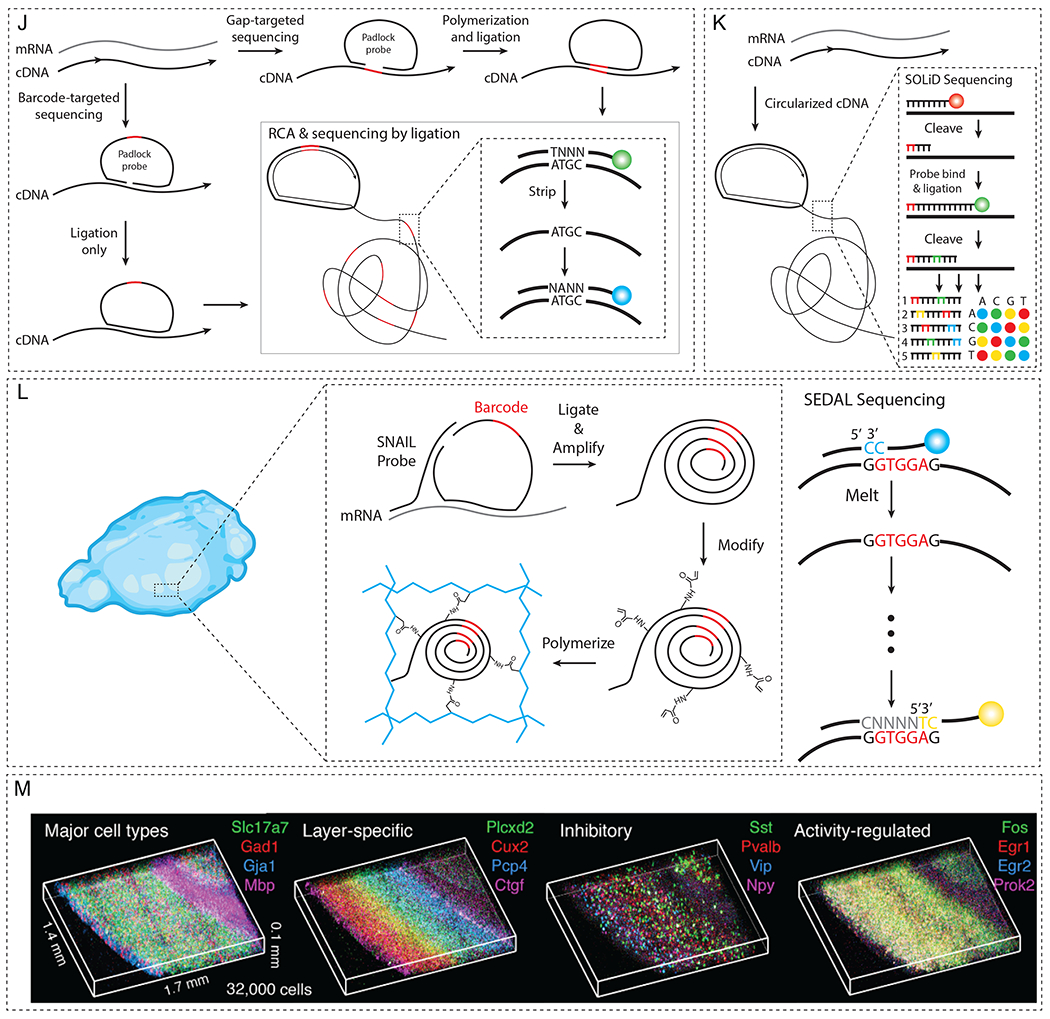
Emerging tissue transformation technologies provide an unprecedented opportunity to investigate system-level molecular and anatomical features in situ. Hydrogel-based methods engineer physicochemical tissue properties to render intact organs optically transparent and size and shape adjustable while preserving biomolecules at their physiological locations. When combined with advanced molecular tools, labeling, and imaging techniques, tissue transformation enables three-dimensional (3D) mapping of molecules, cells, and their interrelationships at increasing speeds and resolutions. In this review, we discuss the basic engineering principles of tissue transformation and labeling techniques as well as their broad applications, current challenges, and future potential.
Copyright © 2021 Elsevier Inc. All rights reserved.
Conflict of interest statement
Declaration of interests The authors declare no competing interests.
Figures


References
-
- Alon S, Goodwin DR, Sinha A, Wassie AT, Chen F, Daugharthy ER, Bando Y, Kajita A, Xue AG, Marrett K, Prior R, Cui Y, Payne AC, Yao CC, Suk HJ, Wang R, Yu CC, Tillberg P, Reginato P, … Boyden ES (2021). Expansion sequencing: Spatially precise in situ transcriptomics in intact biological systems. Science, 371(6528). 10.1126/science.aax2656 - DOI - PMC - PubMed
-
- Bolin FP, Preuss LE, Taylor RC, & Ference RJ (1989). Refractive index of some mammalian tissues using a fiber optic cladding method. 28(12), 2297–2303. - PubMed
Publication types
MeSH terms
Substances
Grants and funding
LinkOut - more resources
Full Text Sources
Other Literature Sources
