


Inflammation-Related Biomarkers for the Prediction of Prognosis in Colorectal Cancer Patients
- PMID: 34360768
- PMCID: PMC8348168
- DOI: 10.3390/ijms22158002
Inflammation-Related Biomarkers for the Prediction of Prognosis in Colorectal Cancer Patients
Abstract
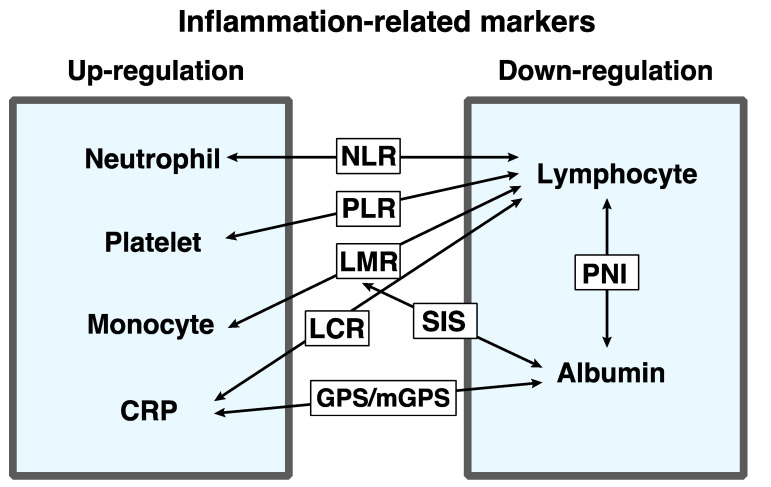
Colorectal cancer (CRC) is the leading cause of cancer deaths around the world. It is necessary to identify patients with poor prognosis or with high risk for recurrence so that we can selectively perform intensive treatments such as preoperative and/or postoperative chemotherapy and extended surgery. The clinical usefulness of inflammation-related prognostic biomarkers available from routine blood examination has been reported in many types of cancer, e.g., neutrophil-lymphocyte ratio (NLR), lymphocyte-C-reactive protein ratio (LCR), platelet-lymphocyte ratio (PLR), lymphocyte-monocyte ratio (LMR), and so on. Moreover, some scoring systems based on circulating blood cell counts and albumin concentration have been also reported to predict cancer patients' prognosis, such as the Glasgow prognostic score (GPS), systemic inflammation score (SIS), and prognostic nutritional index (PNI). The optimal biomarker and optimal cutoff value of the markers can be different depending on the cancer type. In this review, we summarize the prognostic impact of each inflammation-related marker in CRC.
Keywords: colorectal cancer; inflammation-related marker; prognostic biomarker.
Conflict of interest statement
The authors declare no conflict of interest.
Figures
Comment in
-
Comprehensive comparative analysis of prognostic value of serum systemic inflammation biomarkers for colorectal cancer: Results from a large multicenter collaboration.Front Immunol. 2023 Jan 5;13:1092498. doi: 10.3389/fimmu.2022.1092498. eCollection 2022. Front Immunol. 2023. PMID: 36685502 Free PMC article.
References
Publication types
MeSH terms
Substances
LinkOut - more resources
Full Text Sources
Medical
Research Materials
