


Role of Amine Neurotransmitters and Their Receptors in Skin Pigmentation: Therapeutic Implication
- PMID: 34360837
- PMCID: PMC8348573
- DOI: 10.3390/ijms22158071
Role of Amine Neurotransmitters and Their Receptors in Skin Pigmentation: Therapeutic Implication
Abstract
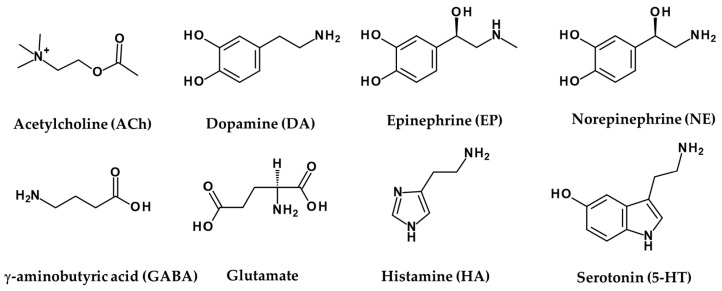
Skin pigmentation can occur due to increased melanin, including melanocyte proliferation, melanin biosynthesis, or melanocyte migration. There are many factors that influence the melanin production process, but the role of neurotransmitters in this process is still unclear. We found that histamine and serotonin influence the different stages of melanogenesis and melanogenesis, which increase melanogenesis. Since then, several related papers have been published, and from these papers, it has been recognised that the role of neurotransmitters in skin-pigment-related diseases needs to be summarised. By introducing the role of neurotransmitters in the regulation of various pigment disorders, including vitiligo and melasma, through this review, many researchers can be expected to try to apply neurotransmitter-related agonists and antagonists as treatments for skin pigment disorders.
Keywords: acetylcholine; dopamine; histamime; melanogenesis; serotonin; skin pigment abnormality; vitiligo.
Conflict of interest statement
The authors declare no conflict of interest.
Figures



References
-
- Jevtić M., Löwa A., Nováčková A., Kováčik A., Kaessmeyer S., Erdmann G., Vávrová K., Hedtrich S. Impact of intercellular crosstalk between epidermal keratinocytes and dermal fibroblasts on skin homeostasis. Biochim. Biophys. Acta (BBA)-Mol. Cell Res. 2020;1867:118722. doi: 10.1016/j.bbamcr.2020.118722. - DOI - PubMed
Publication types
MeSH terms
Substances
Grants and funding
LinkOut - more resources
Full Text Sources
Other Literature Sources
Medical
