


Effects of Antidepressant Treatment on Neurotrophic Factors (BDNF and IGF-1) in Patients with Major Depressive Disorder (MDD)
- PMID: 34362162
- PMCID: PMC8346988
- DOI: 10.3390/jcm10153377
Effects of Antidepressant Treatment on Neurotrophic Factors (BDNF and IGF-1) in Patients with Major Depressive Disorder (MDD)
Abstract
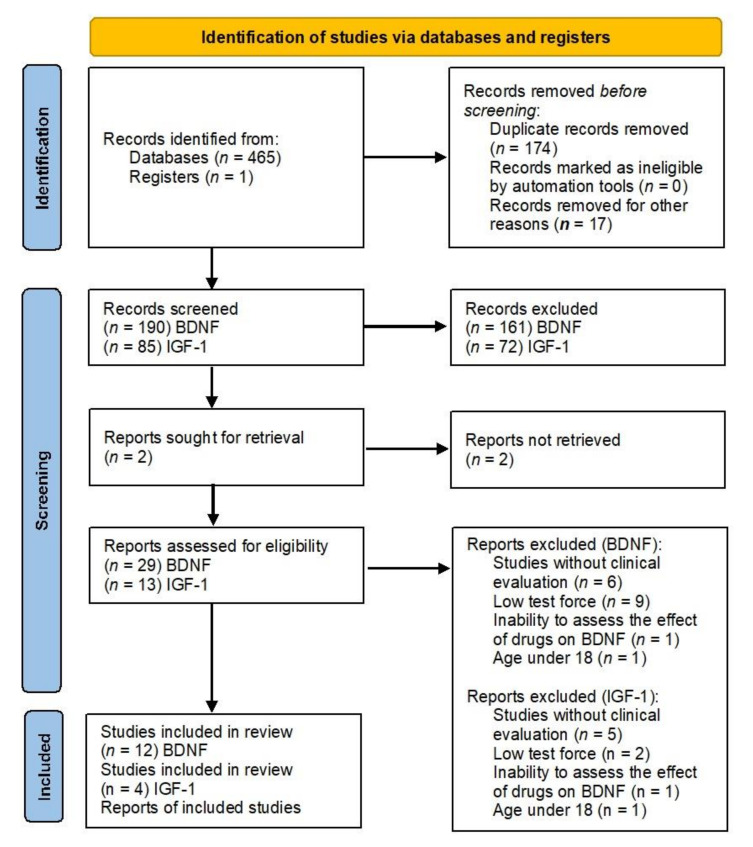
Major depressive disorder (MDD) remains the subject of ongoing research as a multifactorial disease and a serious public health problem. There is a growing body of literature focusing on the role of neurotrophic factors in pathophysiology of MDD. A neurotrophic hypothesis of depression proposes that abnormalities of neurotrophins serum levels lead to neuronal atrophy and decreased neurogenesis, resulting in mood disorders. Consequently, in accordance with recent findings, antidepressant treatment modifies the serum levels of neurotrophins and thus leads to a clinical improvement of MDD. The purpose of this review is to summarize the available data on the effects of various antidepressants on serum levels of neurotrophins such as brain-derived neurotrophic factor (BDNF) and insulin-like growth factor (IGF-1). In addition, the authors discuss their role as prognostic factors for treatment response in MDD. A literature search was performed using the PubMed database. Following the inclusion and exclusion criteria, nine original articles and three meta-analyses were selected. The vast majority of studies have confirmed the effect of antidepressants on BDNF levels. Research on IGF-1 is limited and insufficient to describe the correlation between different antidepressant drugs and factor serum levels; however, four studies indicated a decrease in IGF-1 after treatment. Preliminary data suggest BDNF as a promising predictor of treatment response in MDD patients. The role of IGF-1 needs further investigation.
Keywords: BDNF; IGF-1; antidepressants; neurotrophic factors.
Conflict of interest statement
The authors declare no conflict of interest.
Figures
References
-
- Barlow D., Durand V. Abnormal Psychology. 1st ed. Wadsworth/Thomson Learning; Belmont, CA, USA: 2007. pp. 292–295.
-
- Maes M., Leonard B., Myint A., Kubera M., Verkerk R. The new ‘5-HT’ hypothesis of depression: Cell-mediated immune activation induces indoleamine 2,3-dioxygenase, which leads to lower plasma tryptophan and an increased synthesis of detrimental tryptophan catabolites (TRYCATs), both of which contribute to the onset of depression. Prog. Neuro-Psychopharmacol. Biol. Psychiatry. 2011;35:702–721. doi: 10.1016/j.pnpbp.2010.12.017. - DOI - PubMed
Publication types
LinkOut - more resources
Full Text Sources
Miscellaneous
