


Mask decontamination methods (model N95) for respiratory protection: a rapid review
- PMID: 34364396
- PMCID: PMC8349237
- DOI: 10.1186/s13643-021-01742-1
Mask decontamination methods (model N95) for respiratory protection: a rapid review
Abstract
Background: N95 respiratory protection masks are used by healthcare professionals to prevent contamination from infectious microorganisms transmitted by droplets or aerosols.
Methods: We conducted a rapid review of the literature analyzing the effectiveness of decontamination methods for mask reuse. The database searches were carried out up to September 2020. The systematic review was conducted in a way which simplified the stages of a complete systematic review, due to the worldwide necessity for reliable fast evidences on this matter.
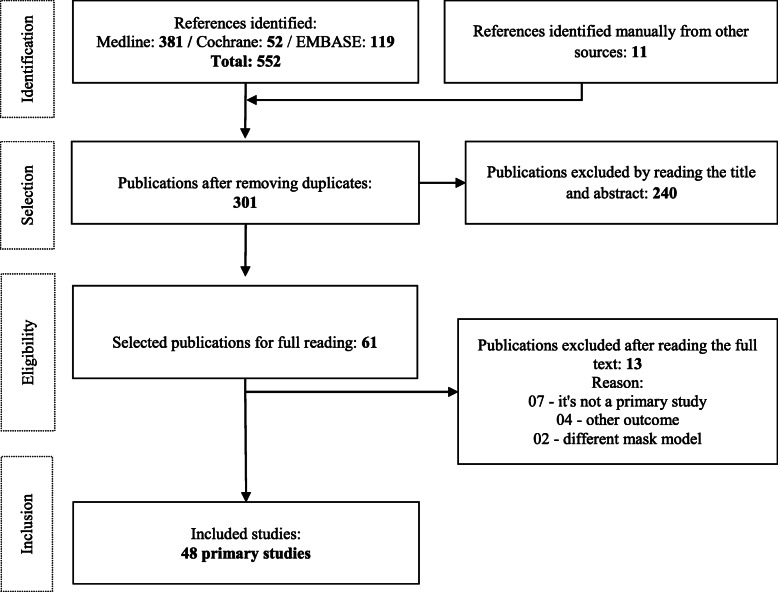
Results: A total of 563 articles were retrieved of which 48 laboratory-based studies were selected. Fifteen decontamination methods were included in the studies. A total of 19 laboratory studies used hydrogen peroxide, 21 studies used ultraviolet germicidal irradiation, 4 studies used ethylene oxide, 11 studies used dry heat, 9 studies used moist heat, 5 studies used ethanol, two studies used isopropanol solution, 11 studies used microwave oven, 10 studies used sodium hypochlorite, 7 studies used autoclave, 3 studies used an electric rice cooker, 1 study used cleaning wipes, 1 study used bar soap, 1 study used water, 1 study used multi-purpose high-level disinfection cabinet, and another 1 study used chlorine dioxide. Five methods that are promising are as follows: hydrogen peroxide vapor, ultraviolet irradiation, dry heat, wet heat/pasteurization, and microwave ovens.
Conclusions: We have presented the best available evidence on mask decontamination; nevertheless, its applicability is limited due to few studies on the topic and the lack of studies on real environments.
Keywords: COVID-19; Decontamination; Disinfection; Equipment reuse; N95 respirator; Sterilization.
© 2021. The Author(s).
Conflict of interest statement
The authors declare that they have no competing interests. This study was financed in part by the Coordenação de Aperfeiçoamento de Pessoal de Nível Superior - Brasil (CAPES) - Finance Code 001.
Figures
References
Publication types
MeSH terms
LinkOut - more resources
Full Text Sources
Medical
