Review
. 2021 Dec:71:180-192.
doi: 10.1016/j.sbi.2021.06.015. Epub 2021 Aug 6.

Post-translational modification of RAS proteins

Affiliations
Review

Post-translational modification of RAS proteins

Sharon L Campbell et al. Curr Opin Struct Biol. 2021 Dec.

Abstract

Mutations of RAS genes drive cancer more frequently than any other oncogene. RAS proteins integrate signals from a wide array of receptors and initiate downstream signaling through pathways that control cellular growth. RAS proteins are fundamentally binary molecular switches in which the off/on state is determined by the binding of GDP or GTP, respectively. As such, the intrinsic and regulated nucleotide-binding and hydrolytic properties of the RAS GTPase were historically believed to account for the entirety of the regulation of RAS signaling. However, it is increasingly clear that RAS proteins are also regulated by a vast array of post-translational modifications (PTMs). The current challenge is to understand what are the functional consequences of these modifications and which are physiologically relevant. Because PTMs are catalyzed by enzymes that may offer targets for drug discovery, the study of RAS PTMs has been a high priority for RAS biologists.

Keywords: Cancer; GTPase; Post-translational modification; RAS; Signaling.


Figures

Figure 1.
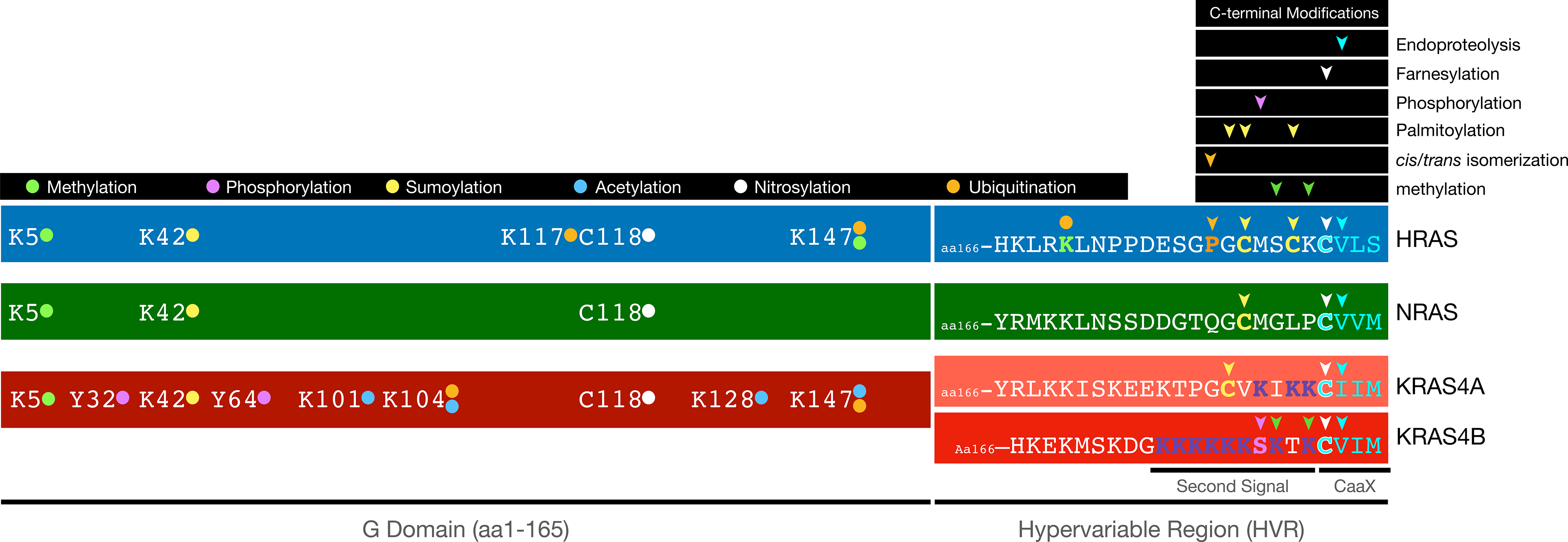
Figure 1.. Posttranslational modifications of RAS proteins.
All reported and validated modifications of the four mammalian RAS proteins are indicated. Prenylation and palmitoylation of the C-terminal portion of the hypervariable region (HVR) create affinity for phospholipid bilayers whereas phosphorylation and lysine methylation of KRAS4B modulate that affinity. Methylation, phosphorylation, sumoylation, nitrosylation and mono-, di- and polyubiquitination of the G domains regulate trafficking, GDP/GTP exchange and degradation.
Figure 2.
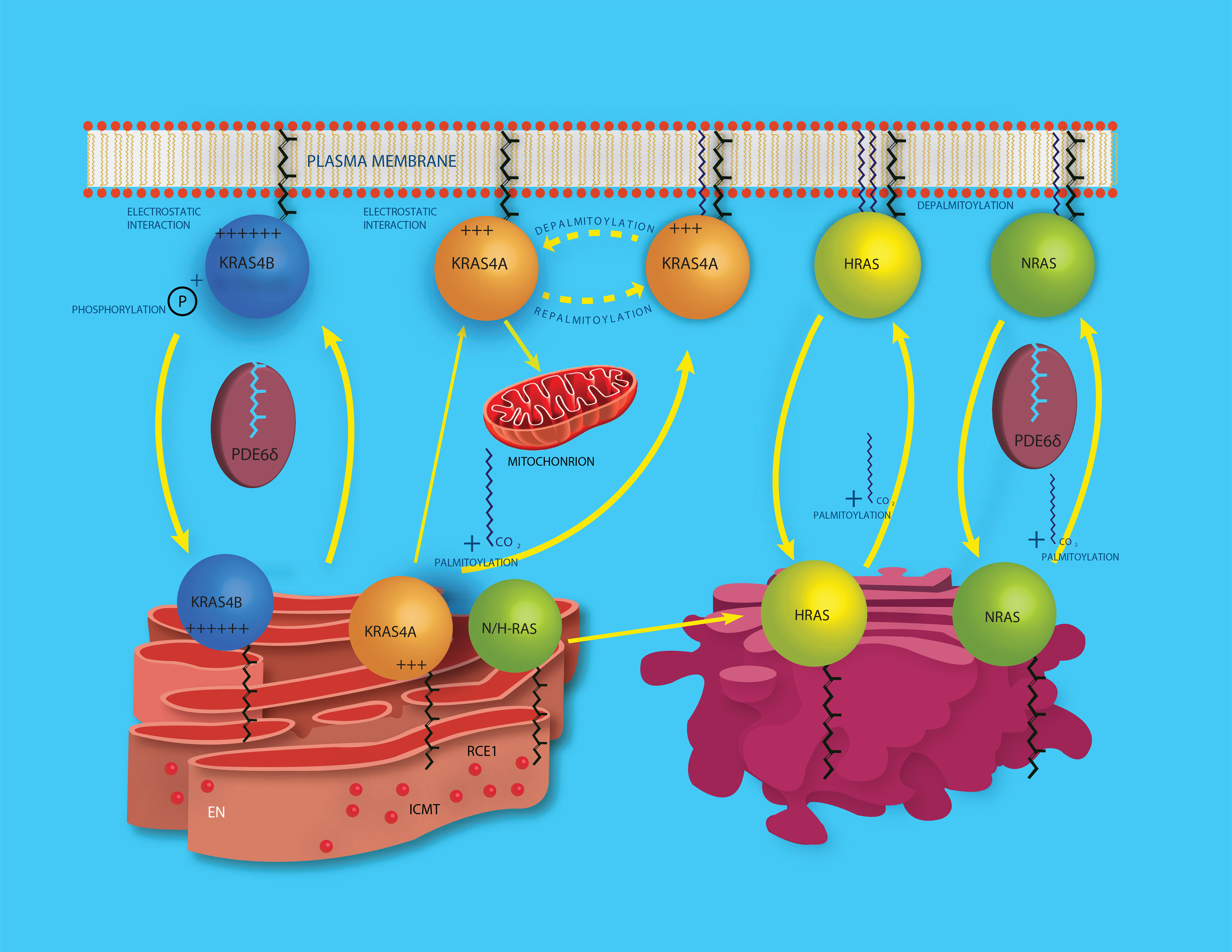
Figure 2.. Postprenylation modification and trafficking of RAS.
All RAS proteins are prenylated in the cytosol and then delivered to the cytosolic face of the endoplasmic reticulum (ER) where CaaX processing is completed through the actions of RAS converting enzyme 1 (RCE1) and isoprenylcysteine carboxylmethyltransferase (ICMT). CaaX processed NRAS and HRAS then traffic to the cytosolic face of the Golgi apparatus where they are palmitoylated and thereby gain enough affinity for membranes to engage in vesicular traffic to the plasma membrane (PM). NRAS also traffics through the cytosol in complex with chaperones such as PDE6δ and VPS35. Depalmitoylation occurs at the PM allowing NRAS and HRAS to cycle back to the Golgi for another round of palmitoylation. KRAS4A is palmitoylated, although the location for this modification has not been determined. KRAS4A is also depalmitoylated at the PM and moves to endomembranes that include the outer mitochondrial membrane. KRAS4B has a strong polybasic region that substitutes for palmitoylation, the prenylated protein traffics in complex with chaperones like PDE6δ and loses affinity for the PM upon phosphorylation of S181 in its HVR.
Figure 3.
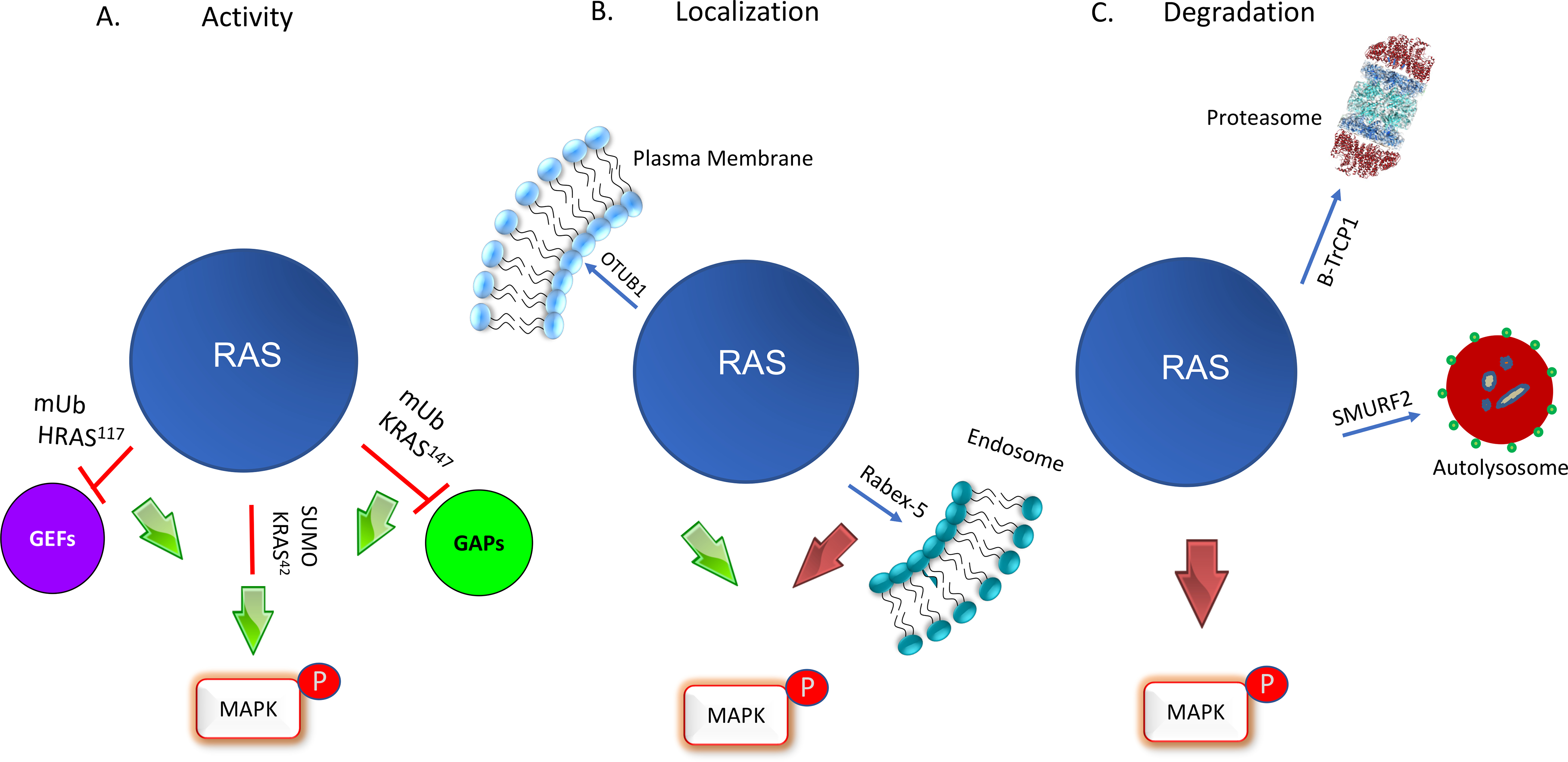
Figure 3.. Three modes of RAS regulation by ubiquitination and SUMOylation.
A. RAS activity is regulated by ubiquitination. Primary sites of monoubiquitination occur at residues 147 in KRAS, whereas in HRAS it is at 117. Monoubiquitination of KRAS at 147 upregulates RAS activity through a GAP defect leading to enhanced MAPK activation. In contrast, monoubiquitination of HRAS at 117 induces fast exchange and activates RAS in a GEF-independent manner. All RAS isoforms undergo SUMOylation at Lys 42 which upregulates downstream signaling by an unknown mechanism. B. RAS localization is regulated by ubiquitination. Rabex-5 promotes mono- and diubiquitination of HRAS and NRAS resulting in endosome localization and reduced MAPK signaling. The deubiquitinase, OTUB1, removes ubiquitin from RAS and promotes plasma membrane localization and MAPK signaling. C. Ubiquitination by β-TrCP1 and SMURF2 promote RAS degradation through proteasome and autolysosomes resulting in reduced MAPK signaling.

References

    1. Tsai FD, Lopes MS, Zhou M, Court H, Ponce O, Fiordalisi JJ, Gierut JJ, Cox AD, Haigis KM, Philips MR: K-Ras4A splice variant is widely expressed in cancer and uses a hybrid membrane-targeting motif. Proc Natl Acad Sci U S A 2015, 112:779–784. - PMC - PubMed
    1. Wright LP, Philips MR: Thematic review series: lipid posttranslational modifications. CAAX modification and membrane targeting of Ras. J Lipid Res 2006, 47:883–891. - PubMed
    1. Palsuledesai CC, Distefano MD: Protein prenylation: enzymes, therapeutics, and biotechnology applications. ACS Chem Biol 2015, 10:51–62. - PMC - PubMed
    1. Buhaescu I, Izzedine H: Mevalonate pathway: a review of clinical and therapeutical implications. Clin Biochem 2007, 40:575–584. - PubMed
    1. Kuchay S, Wang H, Marzio A, Jain K, Homer H, Fehrenbacher N, Philips MR, Zheng N, Pagano M: GGTase3 is a newly identified geranylgeranyltransferase targeting a ubiquitin ligase. Nat Struct Mol Biol 2019, 26:628–636. - PMC - PubMed

Publication types

MeSH terms