


APOE E2/E2 Is Associated with Slower Rate of Cognitive Decline with Age
- PMID: 34366332
- PMCID: PMC8896199
- DOI: 10.3233/JAD-201205
APOE E2/E2 Is Associated with Slower Rate of Cognitive Decline with Age
Abstract
Background: The E4 allele of the APOE gene is known to be associated with cognitive impairment. However, a limited number of studies have examined the association between the E2 allele and longitudinal changes of cognitive function.
Objective: To determine whether rates of cognitive change differ in carriers of the APOE E2 allele compared to other genotypes.
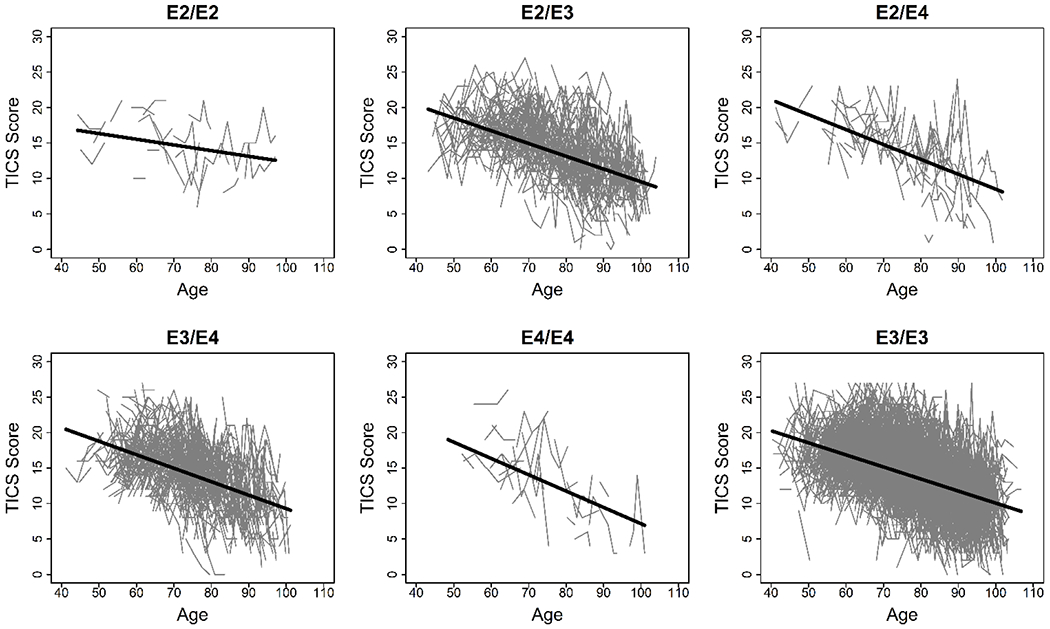
Methods: We conducted a secondary analysis of data from two ongoing longitudinal cohort studies, the Long Life Family Study (LLFS) and New England Centenarian Study (NECS). We included participants who had APOE genotyping data, data from longitudinal administrations of the Telephone Interview for Cognitive Status (TICS), and age, sex, and education available. We assessed whether cognitive change as measured by rate of decline in TICS score differed among people with different APOE genotypes. We used a hierarchical mixed effect model with APOE genotypes, their interactions with age, and potential confounders.
Results: After adjusting for sex and education, in carriers of the common E3/E3 genotype, TICS score decreased by 0.15 points per year of age. In those with the E2/E2 genotype, TICS score decreased by 0.05 points per year of age, a significantly slower rate of decline (p = 0.017). We observed no protective effect of the E2/E3 genotype on cognitive decline.
Conclusion: These results suggest a protective effect of the E2/E2 genotype on a measure of global cognitive function.
Keywords: Apolipoproteins E; cognitive aging; cognitive dysfunction; genetics.
Conflict of interest statement
Figures
References
-
- Suri S, Heise V, Trachtenberg AJ, Mackay CE (2013) The forgotten APOE allele: A review of the evidence and suggested mechanisms for the protective effect of APOE ɛ2. Neuroscience & Biobehavioral Reviews 37, 2878–2886. - PubMed
Publication types
MeSH terms
Substances
Grants and funding
LinkOut - more resources
Full Text Sources
Medical
Miscellaneous
