. 2021 Jul-Sep;45(3):126-134.
doi: 10.1097/jwh.0000000000000209.

Hip and Pelvic Floor Muscle Strength in Women with and without Urgency and Frequency Predominant Lower Urinary Tract Symptoms

Affiliations

Hip and Pelvic Floor Muscle Strength in Women with and without Urgency and Frequency Predominant Lower Urinary Tract Symptoms

Stefanie N Foster et al. J Womens Health Phys Therap. 2021 Jul-Sep.

Abstract

Background: Urgency and frequency are common lower urinary tract symptoms (UF-LUTS) in women. There is limited evidence to guide physical therapist-led treatment.

Objectives: To compare hip and pelvic floor muscle strength between women with and without UF-LUTS. We hypothesized women with UF-LUTS would demonstrate 1) diminished hip external rotator and abductor strength and 2) equivalent pelvic floor strength and diminished endurance compared to controls.

Study design: A matched case-control study.

Methods: Women with UF-LUTS (cases) and controls were matched on age, body mass index (BMI), vaginal parity. Examiner measured participants' 1) hip external rotator and abductor strength via dynamometry (maximum voluntary effort against fixed resistance) and 2) pelvic floor muscle strength (peak squeeze pressure) and endurance (squeeze pressure over a 10 second hold) via vaginal manometry. Values compared between cases and controls with paired-sample t-tests (hip) or Wilcoxon signed rank tests (pelvic floor).

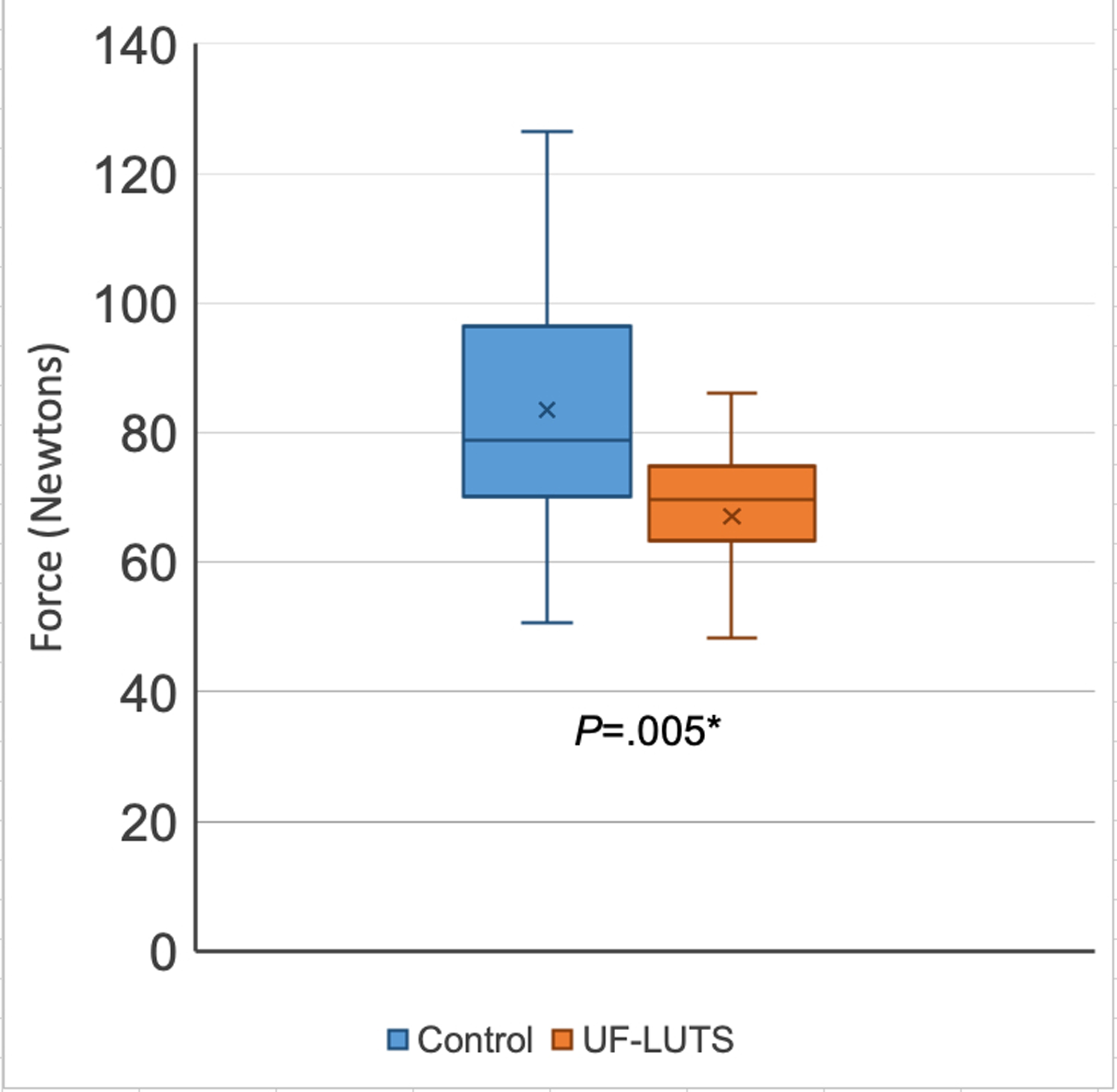
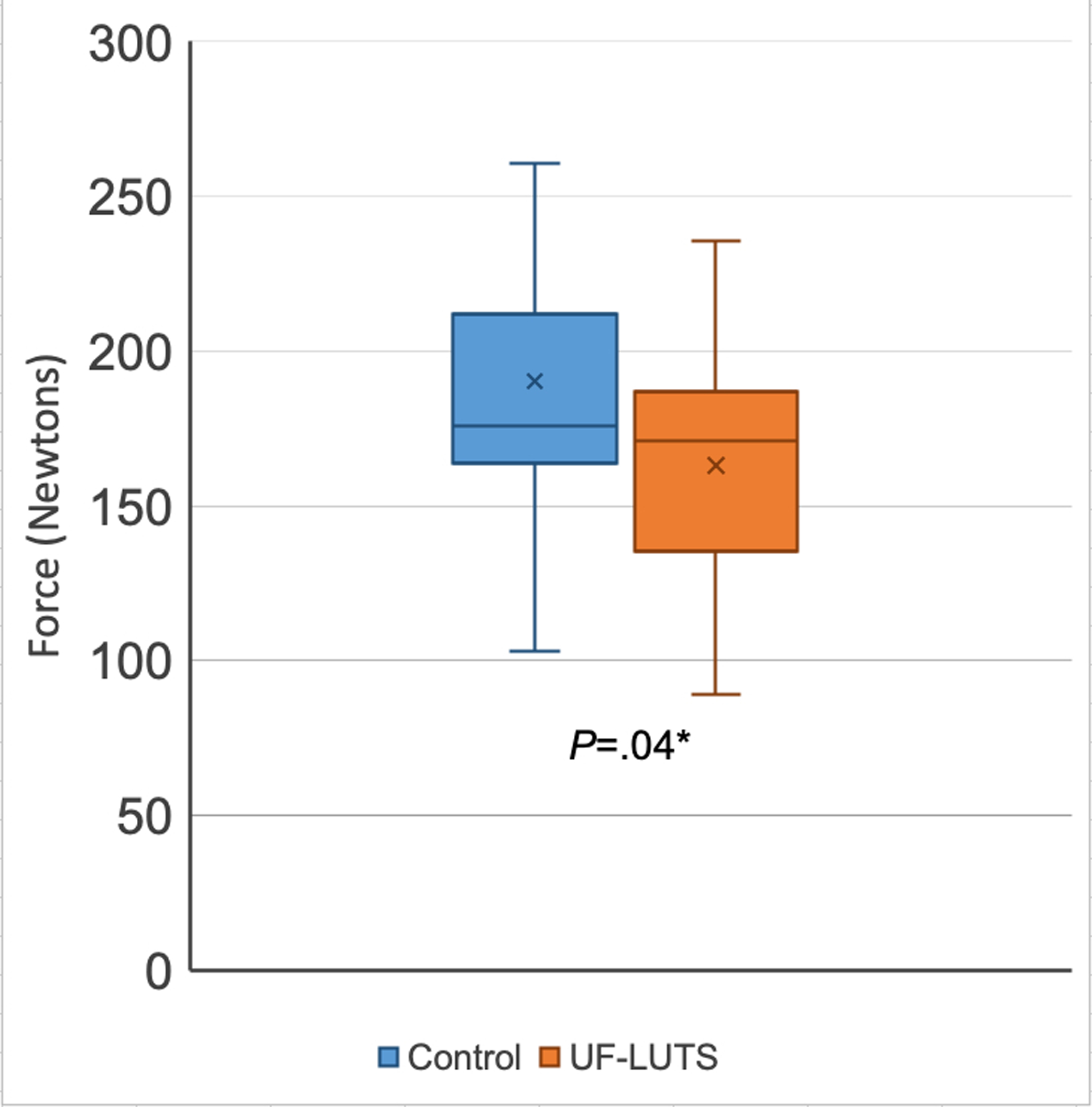
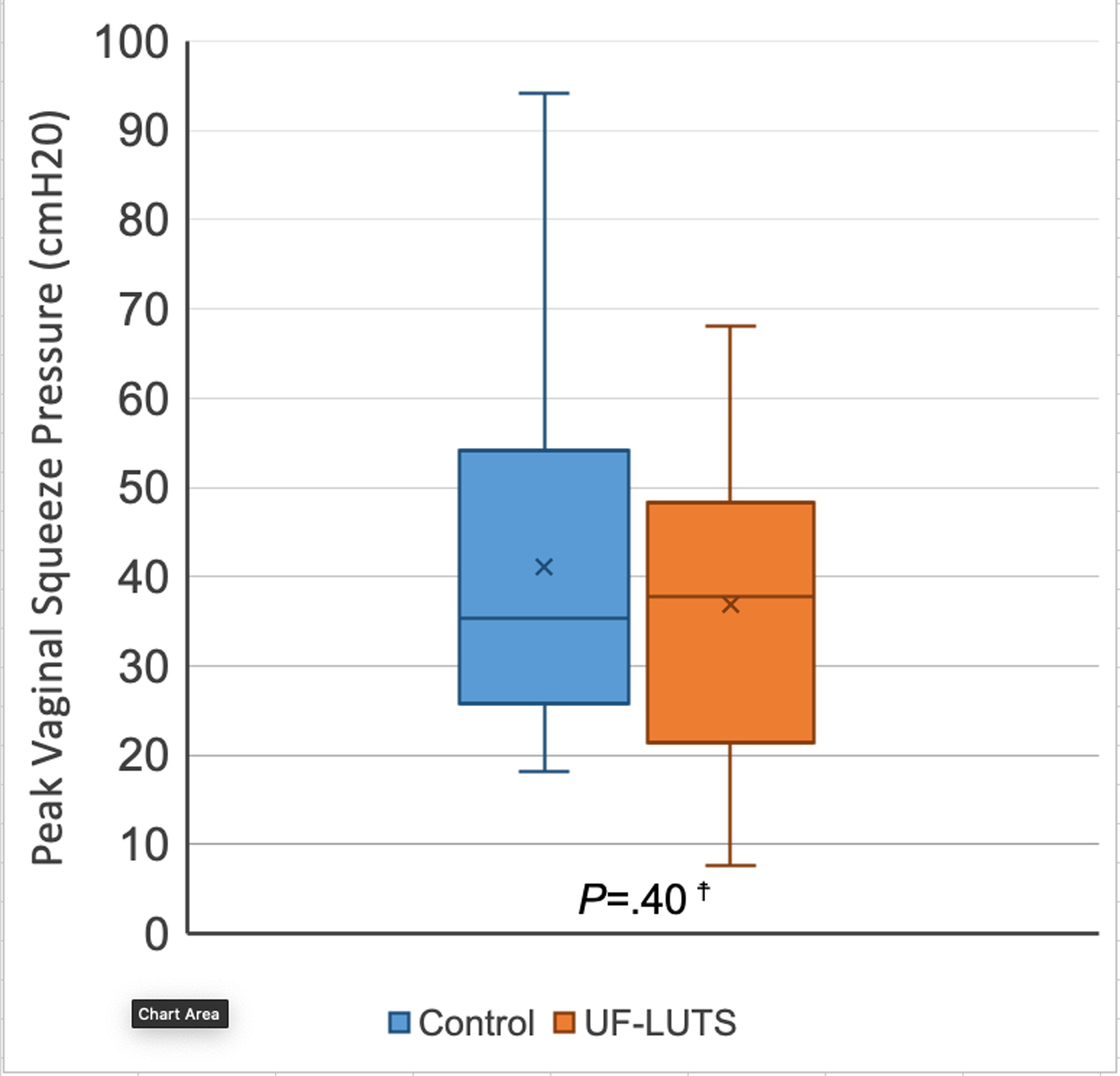
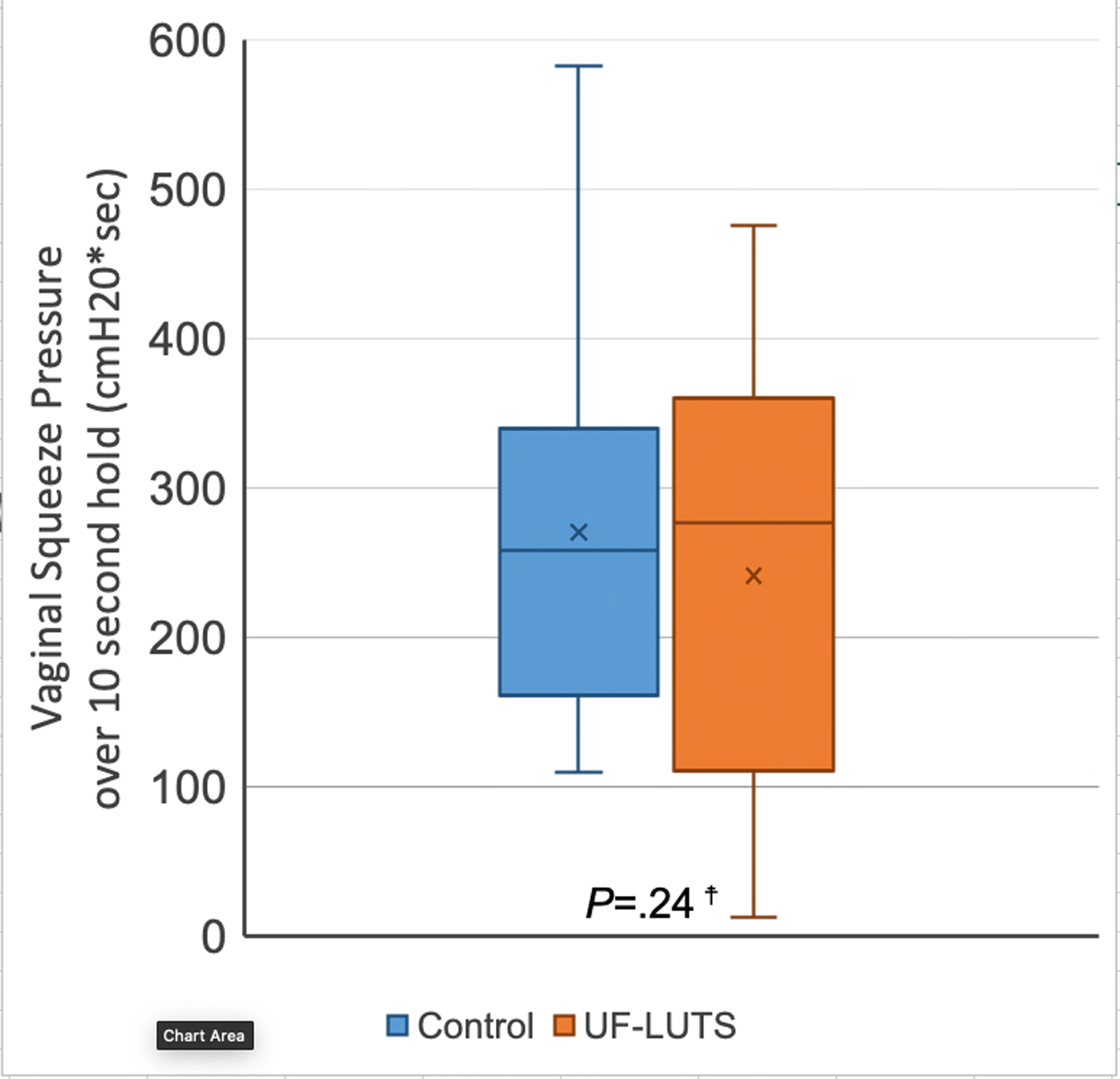
Results: 21 pairs (42 women): Hip external rotation (67.0 ± 19.0 N vs 83.6 ± 21.5 N; P=0.005) and hip abduction strength (163.1 ± 48.1 N vs 190.1 ± 53.1 N; P=0.04) were significantly lower in cases than controls. There was no significant difference in pelvic floor strength (36.8 ± 19.9 cmH20 vs 41.8 ± 21.0 cmH20; P=0.40) or endurance (234.0 ± 149.6 cmH20*seconds vs 273.4 ± 149.1 cmH20*seconds; P=0.24).

Conclusion: Women with UF-LUTS had weaker hip external rotator and abductor muscles, but similar pelvic floor strength and endurance compared to controls. Hip strength may be important to assess in patients with UF-LUTS, further research is needed.

Keywords: case-control studies; musculoskeletal system; overactive bladder; urinary frequency; urinary urgency.


Figures
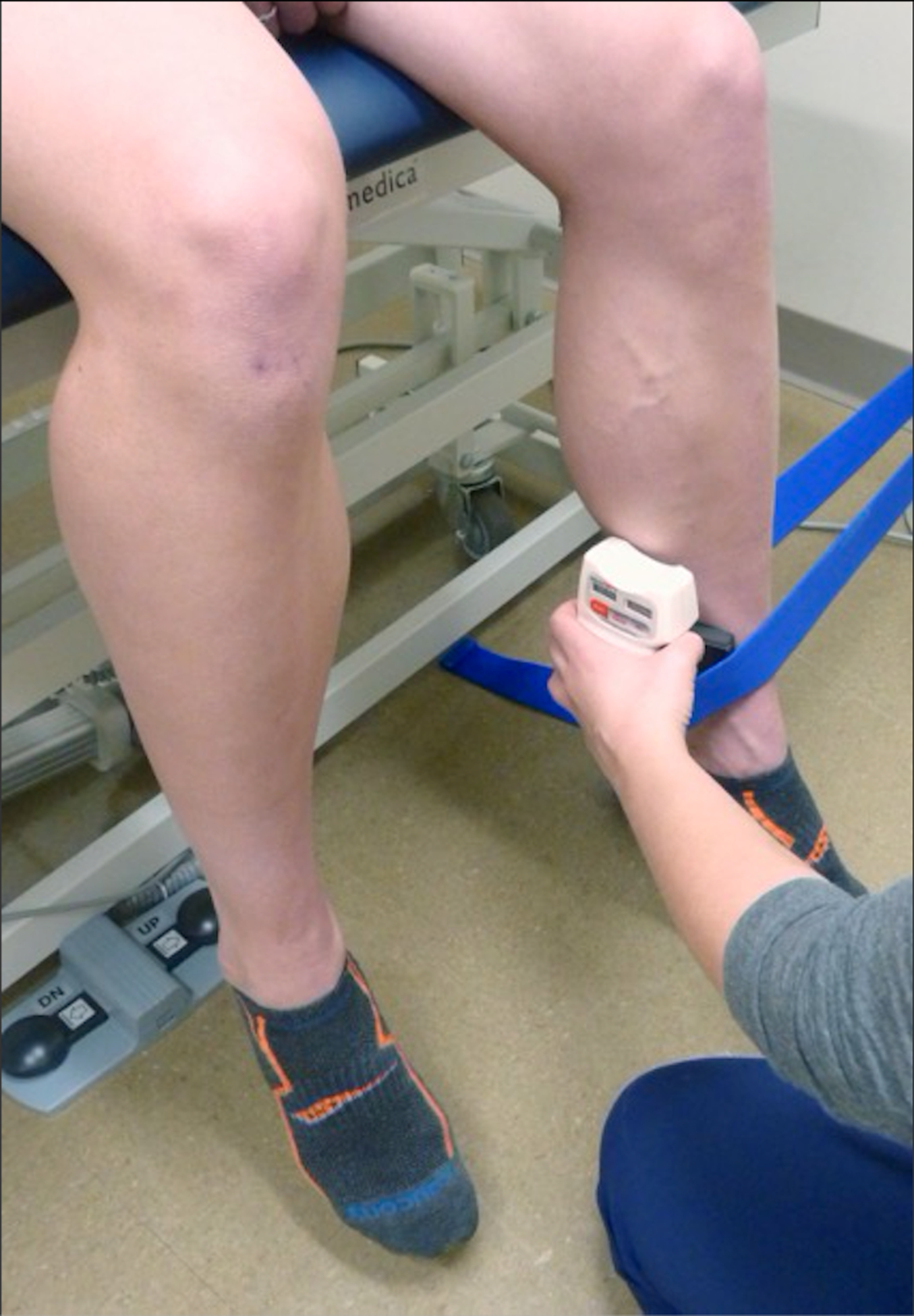
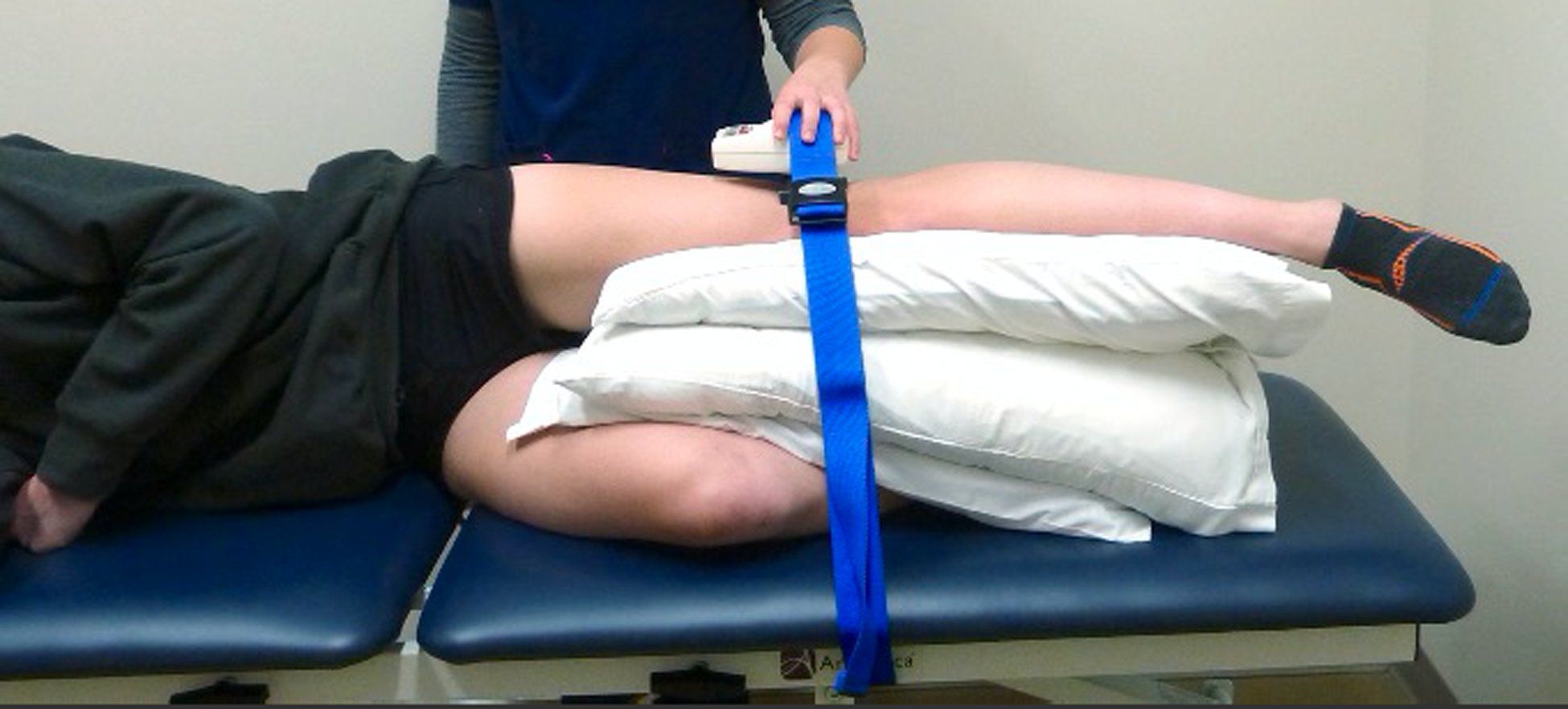
Figure 1.
Figure 1.. Hip External Rotator Isometric Make Test
With hip flexed to 90 degrees, participants externally rotated their hip as strongly as possible against fixed resistance of the strap. Peak force in Newtons was measured by a handheld dynamometer inside the strap at 4cm proximal to the medial malleolus.
Figure 2.
Figure 2.. Hip Abductor Isometric Make Test
With hip in neutral flexion, abduction and rotation, participants abducted their hip as strongly as possible against fixed resistance of the strap. Peak force in Newtons was measured by a handheld dynamometer inside the strap at 4cm proximal to the lateral knee joint line.
Figure 3.
Figure 3.. Hip External Rotator Strength in women with and without urgency and frequency predominant lower urinary tract symptoms (UF-LUTS)
*Significantly greater in Control compared to UF-LUTS, per one-tailed paired t-test X represents mean, line represents 50th percentile, error bars represent minimum and maximum
Figure 4.
Figure 4.. Hip Abductor Strength in women with and without urgency and frequency predominant lower urinary tract symptoms (UF-LUTS)
*Significantly greater in Control compared to UF-LUTS, per one-tailed t-test X represents mean, line represents 50th percentile, error bars represent minimum and maximum
Figure 5.
Figure 5.. Pelvic Floor Muscle Strength - Peak Vaginal Squeeze Pressure (cmH20) in women with and without urgency and frequency predominant lower urinary tract symptoms (UF-LUTS)
No significant paired differences, per two-tailed Wilcoxon signed ranks test X represents mean, line represents 50th percentile, error bars represent minimum and maximum
Figure 6.
Figure 6.. Pelvic Floor Muscle Endurance – Vaginal Squeeze Pressure over 10 second hold (cmH20*seconds) in women with and without urgency and frequency predominant lower urinary tract symptoms
No significant paired differences, per one-tailed Wilcoxon signed ranks test X represents mean, line represents 50th percentile, error bars represent minimum and maximum

References

    1. Coyne KS, Sexton CC, Thompson CL, et al. The prevalence of lower urinary tract symptoms (LUTS) in the USA, the UK and Sweden: results from the Epidemiology of LUTS (EpiLUTS) study. BJU Int. 2009;104(3):352–360. doi:10.1111/j.1464-410X.2009.08427.x - DOI - PubMed
    1. Coyne KS, Payne C, Bhattacharyya SK, et al. The impact of urinary urgency and frequency on health-related quality of life in overactive bladder: results from a national community survey. Value Health. 2004;7(4):455–463. doi:10.1111/j.1524-4733.2004.74008.x - DOI - PubMed
    1. Sutcliffe S, Bavendam T, Cain C, et al. The Spectrum of Bladder Health: The Relationship Between Lower Urinary Tract Symptoms and Interference with Activities. J Women’s Heal. 2019;28(6):827–841. doi:10.1089/jwh.2018.7364 - DOI - PMC - PubMed
    1. Takahashi S, Takei M, Nishizawa O, et al. Clinical Guideline for Female Lower Urinary Tract Symptoms. Low Urin Tract Symptoms. 2016;8(1):5–29. doi:10.1111/luts.12111 - DOI - PubMed
    1. Lightner DJ, Gomelsky A, Souter L, Vasavada SP. Diagnosis and Treatment of Overactive Bladder (Non-Neurogenic) in Adults: AUA/SUFU Guideline Amendment 2019. J Urol. 2019;202(3):558–563. doi:10.1097/JU.0000000000000309 - DOI - PubMed