


A Nutritional Counseling Program Prevents an Increase in Workers' Dietary Intake and Body Weight During the COVID-19 Pandemic
- PMID: 34366892
- PMCID: PMC8335487
- DOI: 10.3389/fphys.2021.703862
A Nutritional Counseling Program Prevents an Increase in Workers' Dietary Intake and Body Weight During the COVID-19 Pandemic
Abstract
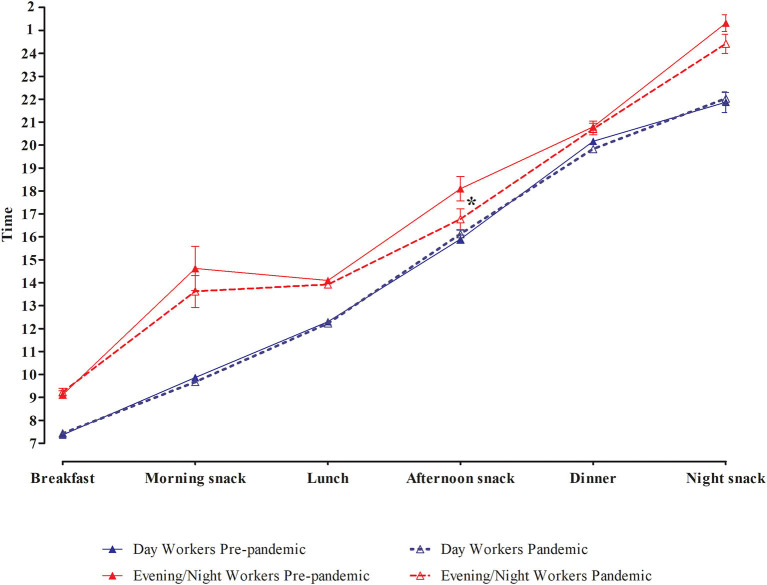
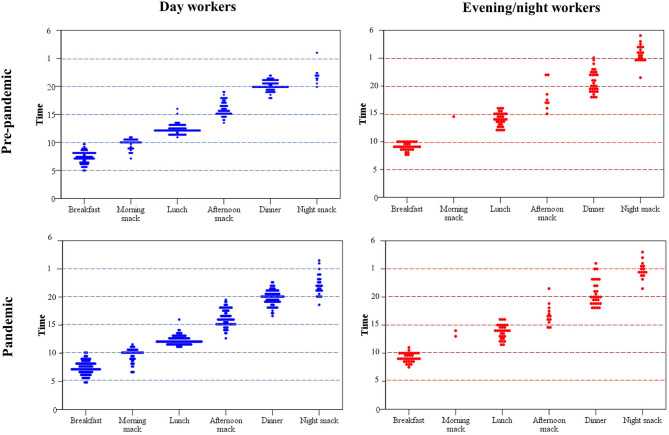
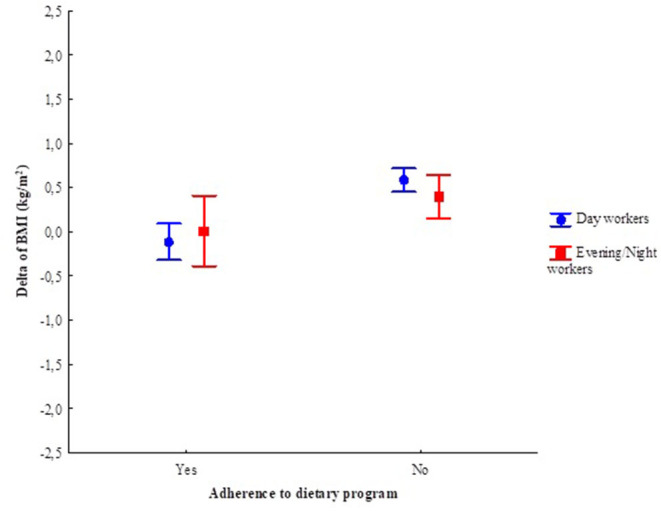
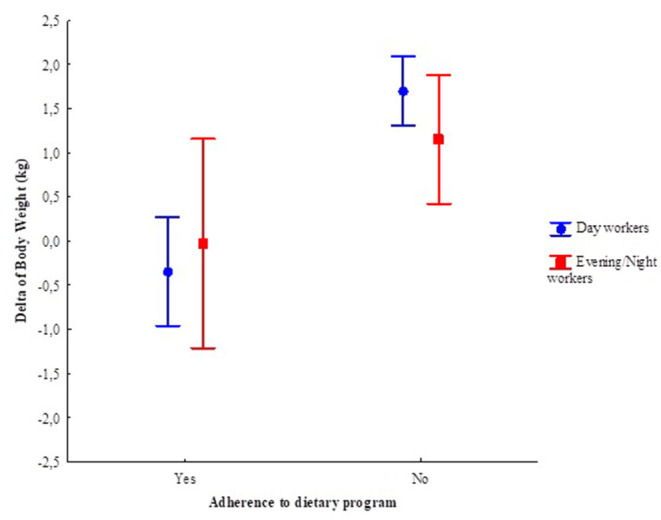
The COVID-19 pandemic caused thousands of deaths and changed lives all over the world. Daily life has also altered people's eating habits, mainly among those who stayed working at home. However, changes in the eating habits of workers who remained working during the pandemic are still unknown. The aim of this study was to evaluate the impact of the COVID-19 pandemic on the dietary habits of day and shift workers from a condominium management company, as well as to measure adherence to a nutritional counseling program and its effect on workers' food intake and body weight. One hundred and fifty-one workers (77.5% of day workers and 22.5% of shift workers) were followed up in the pre-pandemic period and during the pandemic. Data on anthropometry, food consumption, and adherence to nutritional counseling were collected during nutritional meetings, which focused on qualitative modification of food intake and control of energy consumption. The rate of adherence to the program did not differ between shifts. The pandemic significantly increased the intake of calories, macronutrients, and several micronutrients in workers of both shifts. Adherence to the nutritional counseling program had an impact on the consumption of proteins and some micronutrients, and also promoted a reduction in body weight and body mass index of workers of both shifts. Evening/night shift workers overall ate their meals later than day workers and also presented an earlier afternoon snack during the pandemic when compared with the pre-pandemic period. In conclusion, the pandemic seems to contribute to the increase in food intake of workers, regardless of the work shift. Those who joined a nutritional counseling program managed their food intake and lost weight.
Keywords: COVID-19 pandemic; dietary intake; nutritional counseling; obesity; shift work.
Copyright © 2021 Nehme, Marot, Nogueira, Marqueze, Crispim and Moreno.
Conflict of interest statement
The authors declare that the research was conducted in the absence of any commercial or financial relationships that could be construed as a potential conflict of interest.
Figures
References
LinkOut - more resources
Full Text Sources
Research Materials
