


Can Psychosocial Intervention Suppress Testosterone and Triglycerides Among Women With Polycystic Ovary Syndrome? A Feasibility Trial
- PMID: 34367014
- PMCID: PMC8339270
- DOI: 10.3389/fpsyg.2021.690539
Can Psychosocial Intervention Suppress Testosterone and Triglycerides Among Women With Polycystic Ovary Syndrome? A Feasibility Trial
Abstract
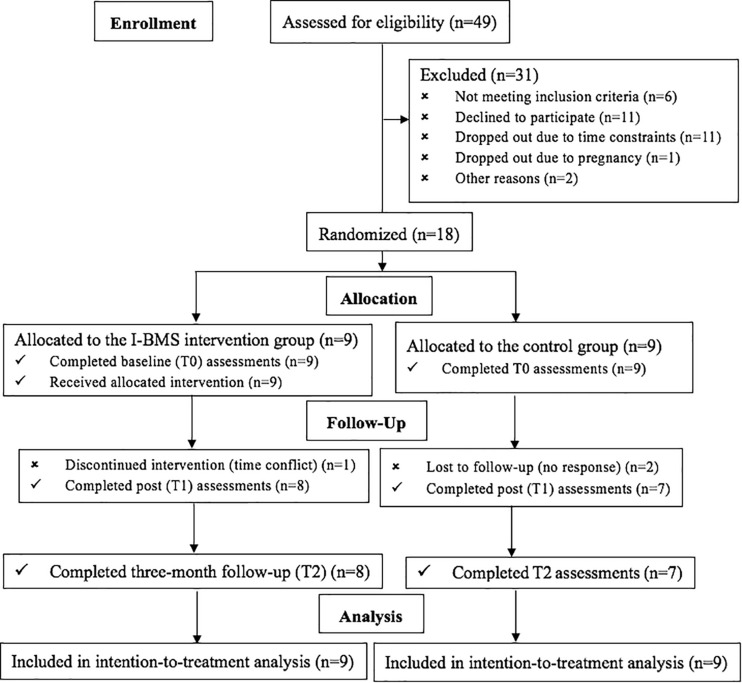
Women with polycystic ovary syndrome (PCOS) suffer significant psychological distress, which may activate the hypothalamus-pituitary-ovary axis and further affect their physiological state. They often experience elevated levels of testosterone and triglycerides. Considering reports of psychological distress among women with PCOS, this study aimed to develop a psychosocial intervention to improve their emotional and physical health, particularly in Chinese society. This pilot study employed the Integrative Body-Mind-Spirit (I-BMS) intervention model for women with PCOS in China. After a 2 h health information session, 18 participants were randomly assigned to the I-BMS group (9) or the control group (9). The intervention group received 6 weekly, 3 h I-BMS sessions. Pre- and post-blood tests and psychosocial questionnaires were collected from all participants. Retention to treatment was high with 79.6% treatment adherence gained and an overall average of five sessions completed. Compared with the control group, depression and anxiety symptoms reduced significantly for those in the intervention group (d = -1.24, p < 0.05 and d = -1.33, p < 0.01), their health-related quality of life improved significantly (d = 1.02, p < 0.01) both at post-intervention and 3 month follow-up, and their testosterone and triglycerides levels reduced significantly (d = -0.97, p < 0.001 and d = -0.41, p < 0.05) after joining the intervention. The I-BMS model is feasible and appears promising in improving psychological health, and reducing testosterone and triglyceride levels, in women with PCOS in China. Clinical Trial Registration: www.chictr.org.cn, identifier ChiCTR1900027606.
Keywords: anxiety; depression; integrative body-mind-spirit (I-BMS); polycystic ovary syndrome (PCOS); testosterone; triglycerides.
Copyright © 2021 Yin, Du, Zou, Fung, Sun, Chan and Chan.
Conflict of interest statement
The authors declare that the research was conducted in the absence of any commercial or financial relationships that could be construed as a potential conflict of interest.
Figures
References
-
- Abdollahi L., Mirghafourvand M., Kheyradin J. B., Mohammadi M. (2018). The effect of cognitive behavioral therapy on depression and obesity in women with polycystic ovarian syndrome: a randomized controlled clinical trial. Iranian Red Crescent Med. J. 20 1–8. 10.5812/ircmj.62735 - DOI
-
- Amini L., Ghorbani B., Seyedfatemi N. (2012). Mental health of women with polycystic ovary syndrome (PCOS) and some of its Socio-demographic determinants. Iran J. Nursing (2008-5923) 25 34–41.
-
- Balen A. H., Morley L. C., Misso M., Franks S., Legro R. S., Wijeyaratne C. N., et al. (2016). The management of anovulatory infertility in women with polycystic ovary syndrome: an analysis of the evidence to support the development of global WHO guidance. Hum. Reprod. Update 22 687–708. 10.1093/humupd/dmw025 - DOI - PubMed
-
- Barry J. A. (2019). “Psychobiological pathways of PCOS,” in Psychological Aspects of Polycystic Ovary Syndrome (Cham: Palgrave Macmillan; ). 10.1007/978-3-030-30290-0 - DOI
LinkOut - more resources
Full Text Sources
