


Maize Responses Challenged by Drought, Elevated Daytime Temperature and Arthropod Herbivory Stresses: A Physiological, Biochemical and Molecular View
- PMID: 34367221
- PMCID: PMC8341156
- DOI: 10.3389/fpls.2021.702841
Maize Responses Challenged by Drought, Elevated Daytime Temperature and Arthropod Herbivory Stresses: A Physiological, Biochemical and Molecular View
Abstract
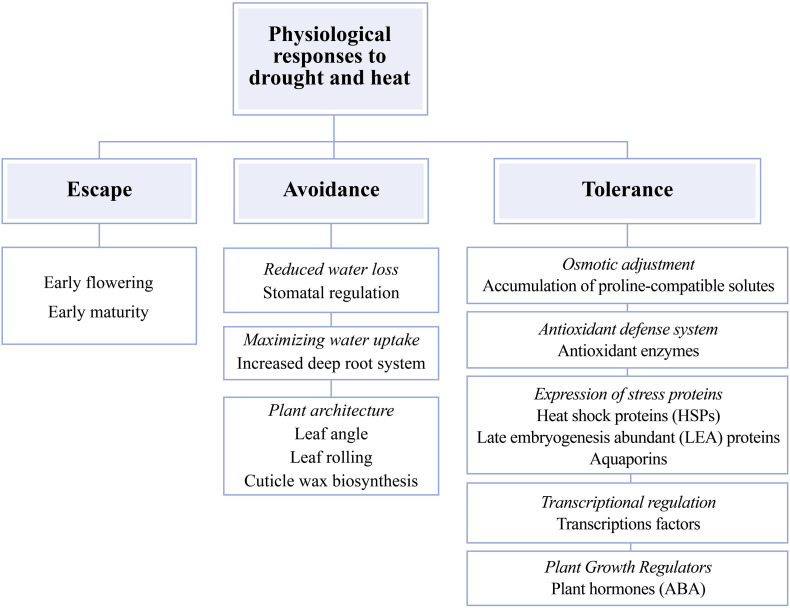
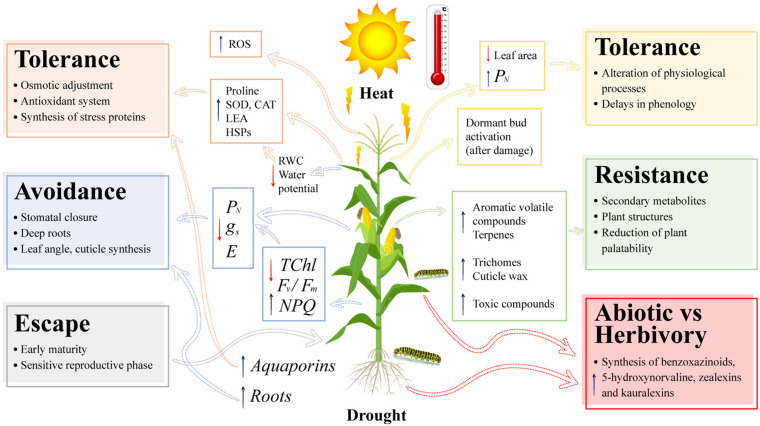
Maize (Zea mays L.) is one of the main cereals grown around the world. It is used for human and animal nutrition and also as biofuel. However, as a direct consequence of global climate change, increased abiotic and biotic stress events have been reported in different regions of the world, which have become a threat to world maize yields. Drought and heat are environmental stresses that influence the growth, development, and yield processes of maize crops. Plants have developed dynamic responses at the physiological, biochemical, and molecular levels that allow them to escape, avoid and/or tolerate unfavorable environmental conditions. Arthropod herbivory can generate resistance or tolerance responses in plants that are associated with inducible and constitutive defenses. Increases in the frequency and severity of abiotic stress events (drought and heat), as a consequence of climate change, can generate critical variations in plant-insect interactions. However, the behavior of herbivorous arthropods under drought scenarios is not well understood, and this kind of stress may have some positive and negative effects on arthropod populations. The simultaneous appearance of different environmental stresses and biotic factors results in very complex plant responses. In this review, recent information is provided on the physiological, biochemical, and molecular responses of plants to the combination of drought, heat stress, and the effect on some arthropod pests of interest in the maize crop.
Keywords: Zea mays L; climate change; drought; herbivorous arthropods; high temperature; stress combination.
Copyright © 2021 Chávez-Arias, Ligarreto-Moreno, Ramírez-Godoy and Restrepo-Díaz.
Conflict of interest statement
The authors declare that the research was conducted in the absence of any commercial or financial relationships that could be construed as a potential conflict of interest.
Figures
References
-
- Ahmad B., Raina A., Khan S. (2019). “Impact of biotic and abiotic stresses on plants, and their responses,” in Disease Resistance in Crop Plants, ed. Wani S. (Cham: Springer; ), 1–20. 10.1007/978-3-030-20728-1_1 - DOI
-
- Ainsworth E. A. (2008). Rice production in a changing climate: a meta-analysis of responses to elevated carbon dioxide and elevated ozone concentration. Glob. Change Biol. 14 1642–1650. 10.1111/j.1365-2486.2008.01594.x - DOI
Publication types
LinkOut - more resources
Full Text Sources
