


Reducing transmission of methicillin-resistant Staphylococcus aureus in a surgical ward of a resource-limited hospital in Indonesia: an intervention study
- PMID: 34368685
- PMCID: PMC8335904
- DOI: 10.1016/j.infpip.2019.100028
Reducing transmission of methicillin-resistant Staphylococcus aureus in a surgical ward of a resource-limited hospital in Indonesia: an intervention study
Abstract
Background: Methicillin-resistant Staphylococcus aureus (MRSA) is endemic in healthcare settings in Indonesia.
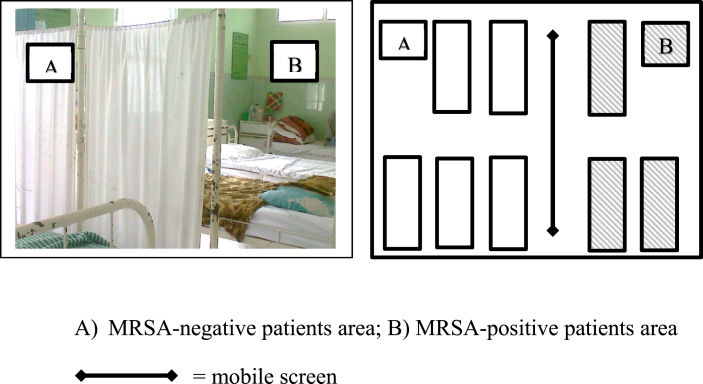
Aim: To evaluate the effect of a bundle of preventive measures on the transmission and acquisition of MRSA in a surgical ward of a resource-limited hospital in Indonesia.
Methods: The study consisted of a pre-intervention (7 months), intervention (2 months), and post-intervention phase (5 months) and included screening for MRSA among eligible patients, healthcare workers (HCWs), and the hospital environment. In the intervention phase, a bundle of preventive actions was introduced, comprising: a hand hygiene educational program, cohorting of MRSA-positive patients, decolonization therapy for all MRSA-positive patients and HCWs, and cleaning and disinfection of the ward's innate environment. Hand hygiene compliance was assessed throughout the study period. The primary outcome was the acquisition rate of MRSA among patients per 1,000 patient-days at risk. Clonality of MRSA isolates was determined by Raman spectroscopy and multilocus sequence typing.
Findings: In total, 1,120 patients were included. Hand hygiene compliance rate rose from 15% pre-intervention to 65% post-intervention (P<0.001). The MRSA acquisition decreased from 9/1,000 patient-days at risk pre-intervention to 3/1,000 patient-days at risk post-intervention, but this difference did not reach statistical significance (P=0.08). Raman type 9 which belonged to ST239 was the single dominant MRSA clone.
Conclusion: The introduction of a bundle of preventive measures may reduce MRSA transmission and acquisition among surgery patients in a resource-limited hospital in Indonesia, but additional efforts are needed.
Keywords: Asia; Indonesia; Infection control; Panton-Valentine leukocidin; Patient isolation; Staphylococcus aureus.
© 2019 The Authors.
Figures



References
-
- Chuang Y.Y., Huang Y.C. Molecular epidemiology of community-associated meticillin-resistant Staphylococcus aureus in Asia. Lancet Infect Dis. 2013;13:698–708. - PubMed
-
- Labreche M.J., Lee G.C., Attridge R.T., Mortensen E.M., Koeller J., Du L.C. Treatment failure and costs in patients with methicillin-resistant Staphylococcus aureus (MRSA) skin and soft tissue infections: a South Texas ambulatory research network (STARNet) study. J Am Board Fam Med. 2013;26:508–517. - PMC - PubMed
LinkOut - more resources
Full Text Sources
