


Trichodynia and telogen effluvium in COVID-19 patients: Results of an international expert opinion survey on diagnosis and management
- PMID: 34368790
- PMCID: PMC8328568
- DOI: 10.1016/j.jdin.2021.07.006
Trichodynia and telogen effluvium in COVID-19 patients: Results of an international expert opinion survey on diagnosis and management
Abstract
Background: The cutaneous manifestations of COVID-19 may be useful disease markers and prognostic indicators. Recently, postinfectious telogen effluvium and trichodynia have also been reported.
Objective: To evaluate the presence of trichodynia and telogen effluvium in patients with COVID-19 and describe their characteristics in relation to the other signs and symptoms of the disease.
Methods: Patients with a history of COVID-19 presenting to the clinics of a group of hair experts because of telogen effluvium and/or scalp symptoms were questioned about their hair signs and symptoms in relation to the severity of COVID-19 and associated symptoms.
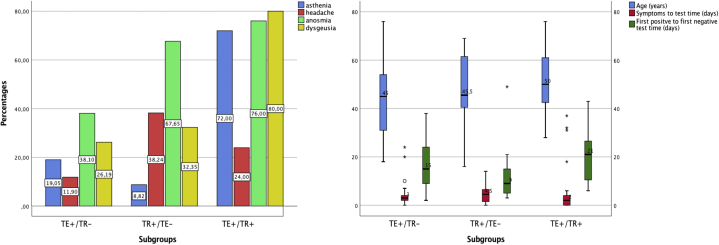
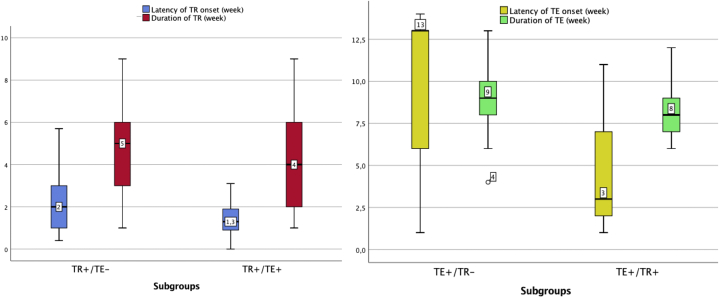
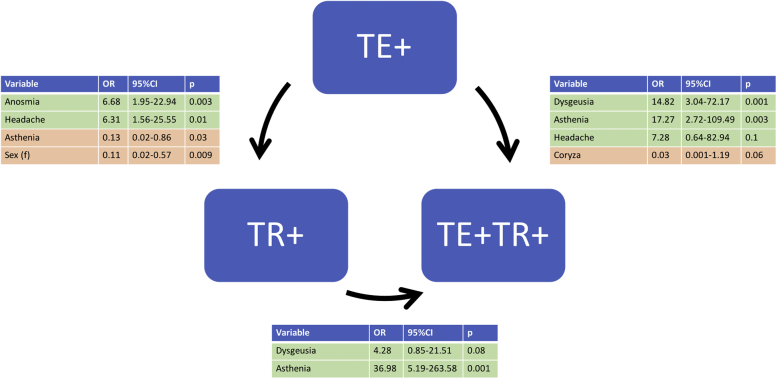
Results: Data from 128 patients were collected. Telogen effluvium was observed in 66.3% of the patients and trichodynia in 58.4%. Trichodynia was associated with telogen effluvium in 42.4% of the cases and anosmia and ageusia in 66.1% and 44.1% of the cases, respectively. In majority (62.5%) of the patients, the hair signs and symptoms started within the first month after COVID-19 diagnosis, and in 47.8% of the patients, these started after 12 weeks or more.
Limitations: The recruitment of patients in specialized hair clinics, lack of a control group, and lack of recording of patient comorbidities.
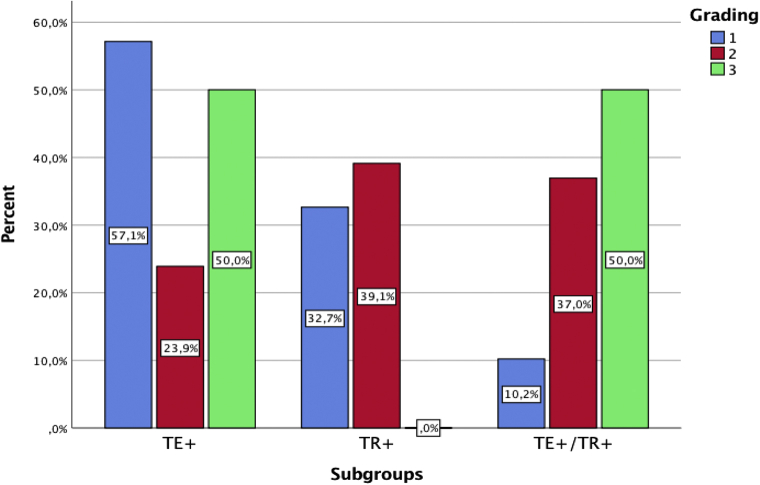
Conclusion: The severity of postviral telogen effluvium observed in patients with a history of COVID-19 infection may be influenced by COVID-19 severity. We identified early-onset (<4 weeks) and late-onset (>12 weeks) telogen effluvium.
Keywords: COVID-19; OR, odds ratios; SARS-CoV-2; TE, telogen effluvium; TR, trichodynia; hair loss; hair shedding; multicentric study; scalp allodynia; telogen effluvium; trichodynia.
© 2021 Published by Elsevier Inc on behalf of the American Academy of Dermatology, Inc.
Conflict of interest statement
Dr Tosti is a consultant for DS Laboratories, Monat Global, Almirall, Tirthy Madison, Eli Lilly, Leo Pharmaceuticals, Bristol Myers Squibb, and P&G. Drs Starace, Lorizzo, Sechi, Alessandrini, Carpanese, Bruni, Vara, Apalla, Asz-Sigall, Barruscotti, Camacho, Doche, Estrada, Dhurat, Gavazzoni, Grimalt, Harries, Ioannidis, McMichael, Melo, Oliveira, Ovcharenko, Pirmez, Ramot, Rudnicka, Shapiro, Silyuk, Sinclair, Vano-Galvan, and Piraccini have no conflicts of interest to declare.
Figures
References
-
- Kubanov A.A., Deryabin D.G. Skin manifestations in COVID-19 provide a clue for disease's pathophysiology understanding. J Eur Acad Dermatol Venereol. 2020;35(1):e3–e4. - PubMed
LinkOut - more resources
Full Text Sources
Miscellaneous
