


Risk Assessment for the Establishment of Vespa mandarinia (Hymenoptera: Vespidae) in the Pacific Northwest, United States
- PMID: 34369564
- PMCID: PMC8351285
- DOI: 10.1093/jisesa/ieab052
Risk Assessment for the Establishment of Vespa mandarinia (Hymenoptera: Vespidae) in the Pacific Northwest, United States
Abstract
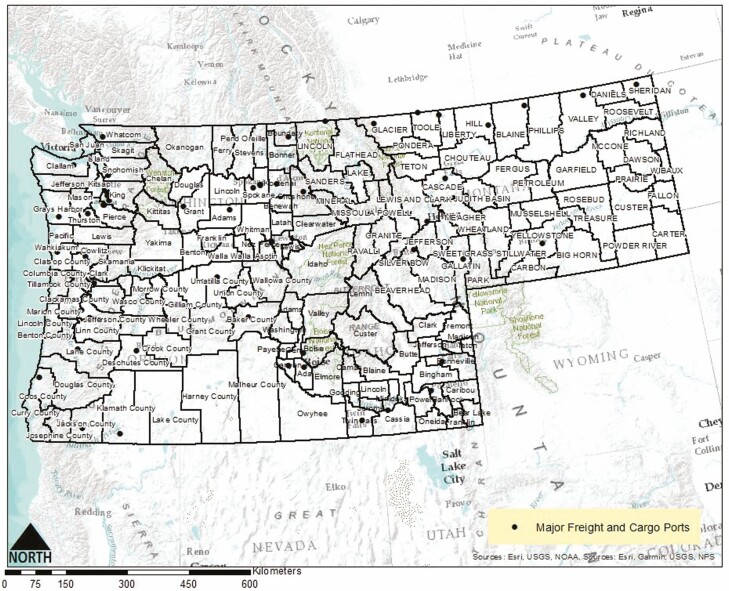
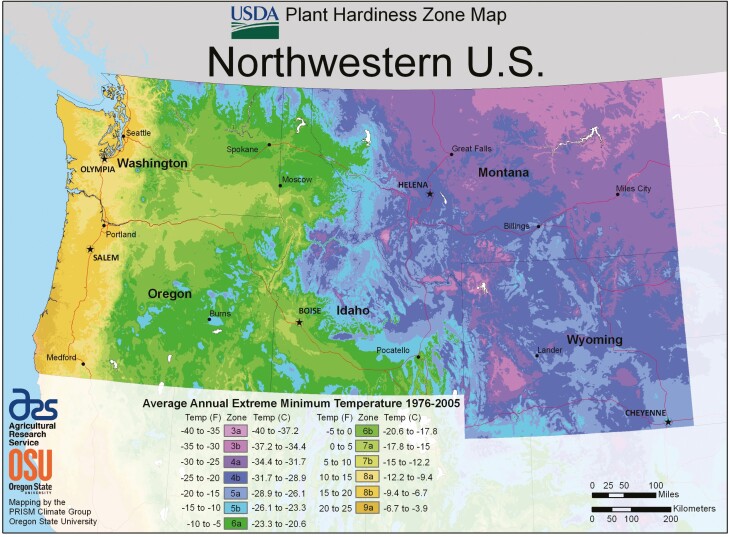
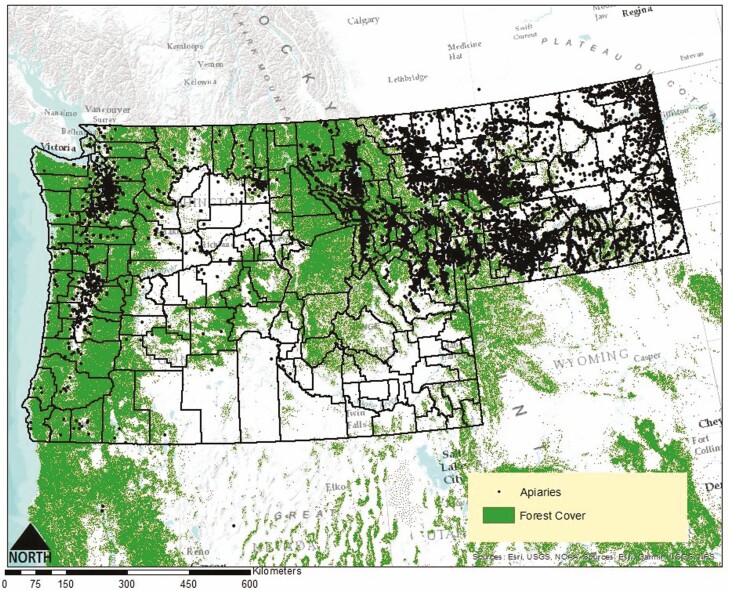
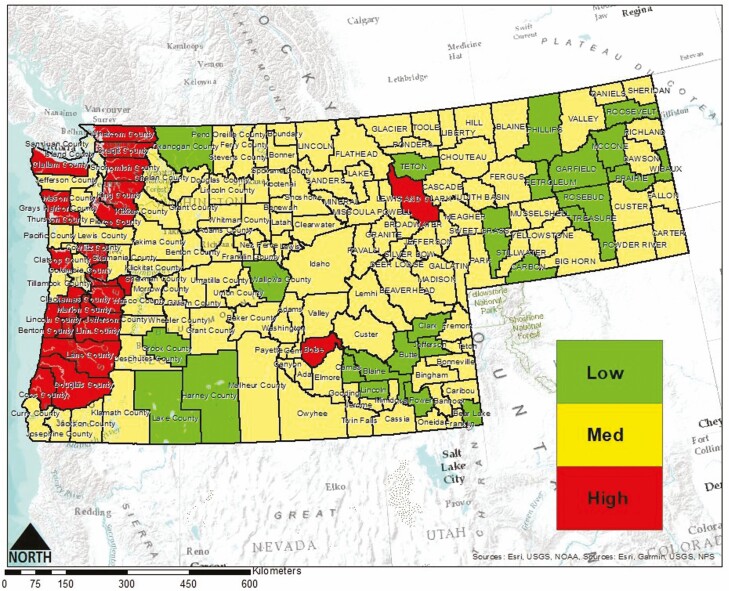
The recent introduction of the Asian giant hornet, Vespa mandarinia Smith, in the United States in late 2019 has raised concerns about its establishment in the Pacific Northwest and its potential deleterious effects on honey bees, Apis spp., and their pollination services in the region. Therefore, we conducted a risk assessment of the establishment of V. mandarinia in Washington, Oregon, Montana, and Idaho on a county-by-county basis. Our highly conservative tier-1 qualitative and semiquantitative risk assessment relied on the biological requirements and ecological relationships of V. mandarinia in the environments of the Pacific Northwest. Our risk characterization was based on climate and habitat suitability estimates for V. mandarinia queens to overwinter and colonize nests, density and distribution of apiaries, and locations of major human-mediated introduction pathways that may increase establishment of the hornet in the counties. Our results suggest that 32 counties in the region could be at low risk, 120 at medium risk, and 23 at high risk of establishment. Many of the western counties in the region were estimated to be at the highest risk of establishment mainly because of their suitable climate for queens to overwinter, dense forest biomass for nest colonization, and proximity to major port and freight hubs in the region. By design, our tier-1 risk assessment most likely overestimates the risk of establishment, but considering its negative effects, these counties should be prioritized in ongoing monitoring and eradication efforts of V. mandarinia.
Keywords: Apis mellifera; Asian giant hornet; honey bee; invasive species; risk analysis.
© The Author(s) 2021. Published by Oxford University Press on behalf of Entomological Society of America.
Figures
References
-
- Alaniz, A. J., Carvajal M. A., and Vergara P. M.. . 2021. Giants are coming? Predicting the potential spread and impacts of the giant Asian hornet (Vespa mandarinia, Hymenoptera:Vespidae) in the USA. Pest Manag. Sci. 77: 104–112. - PubMed
-
- Archer, M. E. 1995. Taxonomy, distribution, and nesting biology of the Vespa mandarinia group (Hym., Vespinae). Entomol. Mon. Mag. 131: 47–53.
-
- Batra, S. W. T. 1996. Biology of Apis Laboriosa Smith, a pollinator of apples at high altitude in the Great Himalaya Range of Garhwal, India, (Hymenoptera: Apidae). J. Kans. Entomol. Soc. 69:177–181.
-
- Blackard, J. A., Finco M. V., Helmer E. H., Holden G. R., Hoppus M. L., Jacobs D. M., Lister A. J., Moisen G. G., Nelson M. D., Riemann R., . et al. 2008. Mapping U.S. forest biomass using nationwide forest inventory data and moderate resolution information. Remote. Sens. Environ. 112:1658–1677.
-
- Choi, M. B., and Kwon O.. . 2015. Occurrence of Hymenoptera (wasps and bees) and their foraging in the southwestern part of Jirisan National Park, South Korea. J. Ecol. Environ. 38:367–374.
MeSH terms
Grants and funding
LinkOut - more resources
Full Text Sources
Miscellaneous
