Review
. 2022;20(5):836-856.
doi: 10.2174/1570159X19666210809103346.

Phytochemicals Targeting Oxidative Stress, Interconnected Neuroinflammatory, and Neuroapoptotic Pathways Following Radiation

Affiliations
Review

Phytochemicals Targeting Oxidative Stress, Interconnected Neuroinflammatory, and Neuroapoptotic Pathways Following Radiation

Sajad Fakhri et al. Curr Neuropharmacol. 2022.

Abstract

The radiation for therapeutic purposes has shown positive effects in different contexts; however, it can increase the risk of many age-related and neurodegenerative diseases such as Alzheimer's disease (AD), amyotrophic lateral sclerosis (ALS), Huntington's disease (HD), and Parkinson's disease (PD). These different outcomes highlight a dose-response phenomenon called hormesis. Prevailing studies indicate that high doses of radiation could play several destructive roles in triggering oxidative stress, neuroapoptosis, and neuroinflammation in neurodegeneration. However, there is a lack of effective treatments in combating radiation-induced neurodegeneration, and the present drugs suffer from some drawbacks, including side effects and drug resistance. Among natural entities, polyphenols are suggested as multi-target agents affecting the dysregulated pathogenic mechanisms in neurodegenerative disease. This review discusses the destructive effects of radiation on the induction of neurodegenerative diseases by dysregulating oxidative stress, apoptosis, and inflammation. We also describe the promising effects of polyphenols and other candidate phytochemicals in preventing and treating radiation-induced neurodegenerative disorders, aiming to find novel/potential therapeutic compounds against such disorders.

Keywords: Neurodegeneration; apoptosis; inflammation; oxidative stress; phytochemicals; polyphenols; radiation.


Figures

Fig. (1)
Fig. (1)
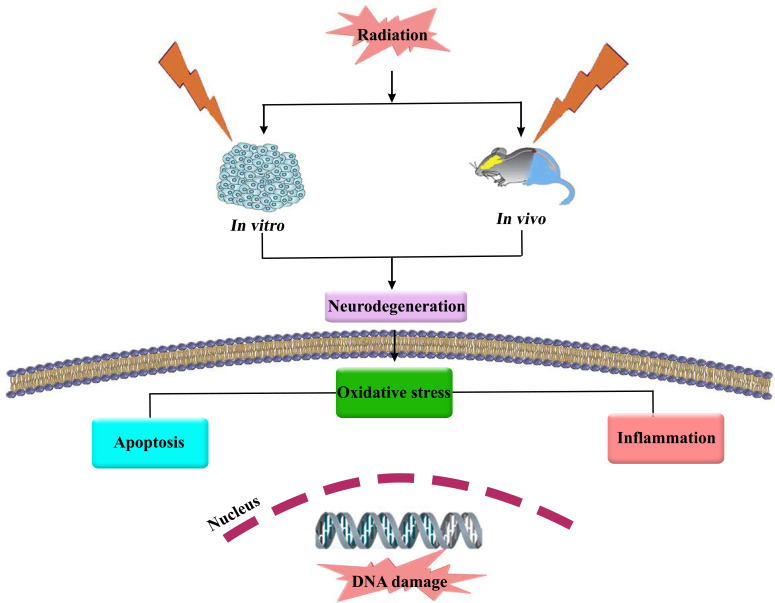
Radiation causes neurodegeneration through oxidative stress, inflammation and apoptosis.
Fig. (2)
Fig. (2)
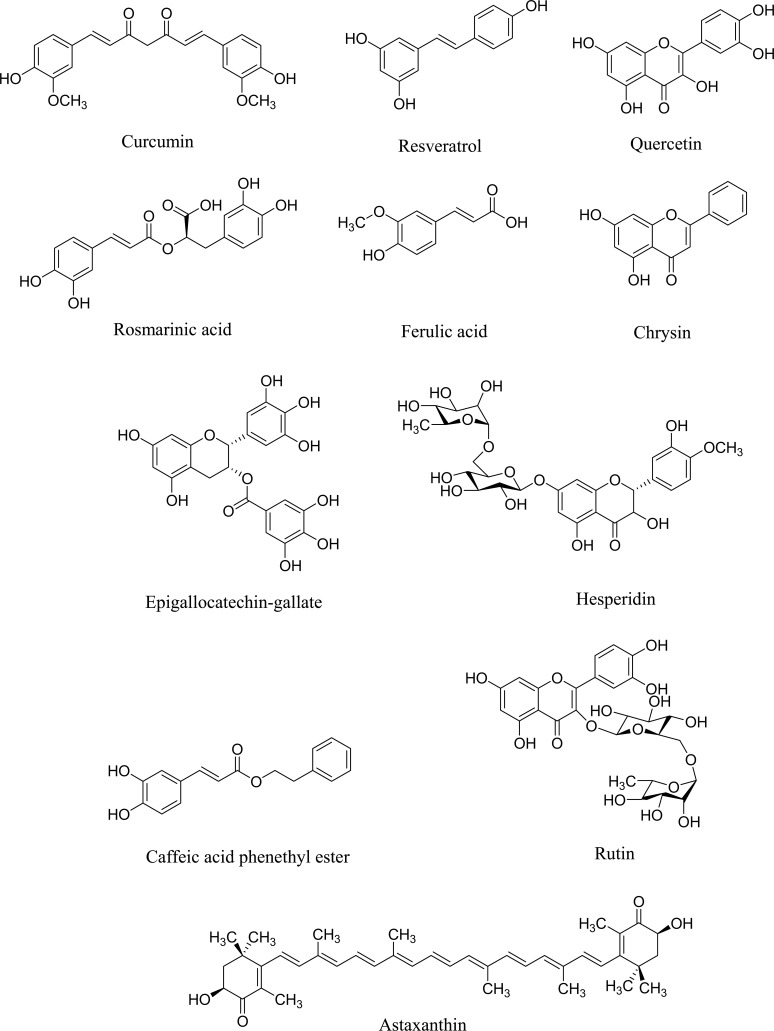
Chemical structures of selected polyphenols and candidate phytochemicals against radiation-induced neurodegeneration.
Fig. (3)
Fig. (3)
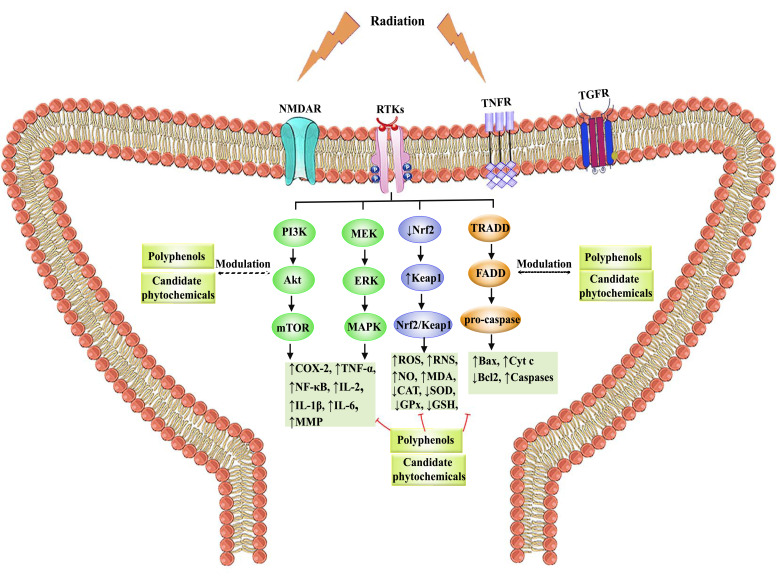
The role of polyphenols in modulating neurodegeneration-induced oxidative stress and cross-talking inflammatory/apoptotic mediators. Abbreviations: CAT: catalase, COX: cyclooxygenase, Cyt C: cytochrome C, ERK: extracellular signal-regulated kinase, FADD: Fas Associated Via Death Domain, GLUTR: glutamate receptor, GPx: glutathione peroxidase, GSH: glutathione, IFN γ: interferon-gamma, IL: interleukin, Keap1: Kelch-like ECH-associated protein 1, LPO: lipid peroxidation, MAPK: mitogen-activated protein kinase, MDA: malondialdehyde, MEK: mitogen-activated protein kinase/ERK kinase, MMP: matrix metalloproteinase, mTOR: mammalian target of rapamycin, NF-κB: nuclear factor-κB, NMDAR: N-methyl-D-aspartate receptor, NO: nitric oxide, NOS: nitric oxide synthase, Nrf2: nuclear factor erythroid 2–related factor 2, PI3K: phosphoinositide 3-kinases, RNS: reactive nitrogen species, ROS: reactive oxygen species, RTKs: receptor tyrosine kinases, SOD: superoxide dismutase, TGFR: transforming growth factor-beta receptor, TNF-α: tumor necrosis factor-alpha, TNFR: tumor necrosis factor receptor, TRADD: TNFR1-associated death domain protein.

References

    1. Nordvig A.S., Rimmer K.T., Willey J.Z., Thakur K.T., Boehme A.K., Vargas W.S., Smith C.J., Elkind M.S. Potential neurological manifestations of COVID-19. Neurol. Clin. Pract. 2020 - PMC - PubMed
    1. Megha K., Deshmukh P.S., Banerjee B.D., Tripathi A.K., Ahmed R., Abegaonkar M.P. Low intensity microwave radiation induced oxidative stress, inflammatory response and DNA damage in rat brain. Neurotoxicology. 2015;51:158–165. doi: 10.1016/j.neuro.2015.10.009. - DOI - PubMed
    1. Kruman I., Bruce-Keller A.J., Bredesen D., Waeg G., Mattson M.P. Evidence that 4-hydroxynonenal mediates oxidative stress-induced neuronal apoptosis. J. Neurosci. 1997;17(13):5089–5100. doi: 10.1523/JNEUROSCI.17-13-05089.1997. - DOI - PMC - PubMed
    1. Belikov A.V. Age-related diseases as vicious cycles. Ageing Res. Rev. 2019;49:11–26. doi: 10.1016/j.arr.2018.11.002. - DOI - PubMed
    1. Hao Y-H., Zhao L., Peng R-Y. Effects of microwave radiation on brain energy metabolism and related mechanisms. Mil. Med. Res. 2014;4:9. - PMC - PubMed

MeSH terms