EndoVAscular treatment and ThRombolysis for Ischemic Stroke Patients (EVA-TRISP) registry: basis and methodology of a pan-European prospective ischaemic stroke revascularisation treatment registry
- PMID: 34373287
- PMCID: PMC8354282
- DOI: 10.1136/bmjopen-2020-042211
EndoVAscular treatment and ThRombolysis for Ischemic Stroke Patients (EVA-TRISP) registry: basis and methodology of a pan-European prospective ischaemic stroke revascularisation treatment registry
Abstract
Purpose: The Thrombolysis in Ischemic Stroke Patients (TRISP) collaboration was a concerted effort initiated in 2010 with the purpose to address relevant research questions about the effectiveness and safety of intravenous thrombolysis (IVT). The collaboration also aims to prospectively collect data on patients undergoing endovascular treatment (EVT) and hence the name of the collaboration was changed from TRISP to EVA-TRISP. The methodology of the former TRISP registry for patients treated with IVT has already been published. This paper focuses on describing the EVT part of the registry.
Participants: All centres committed to collecting predefined variables on consecutive patients prospectively. We aim for accuracy and completeness of the data and to adapt local databases to investigate novel research questions. Herein, we introduce the methodology of a recently constructed academic investigator-initiated open collaboration EVT registry built as an extension of an existing IVT registry in patients with acute ischaemic stroke (AIS).
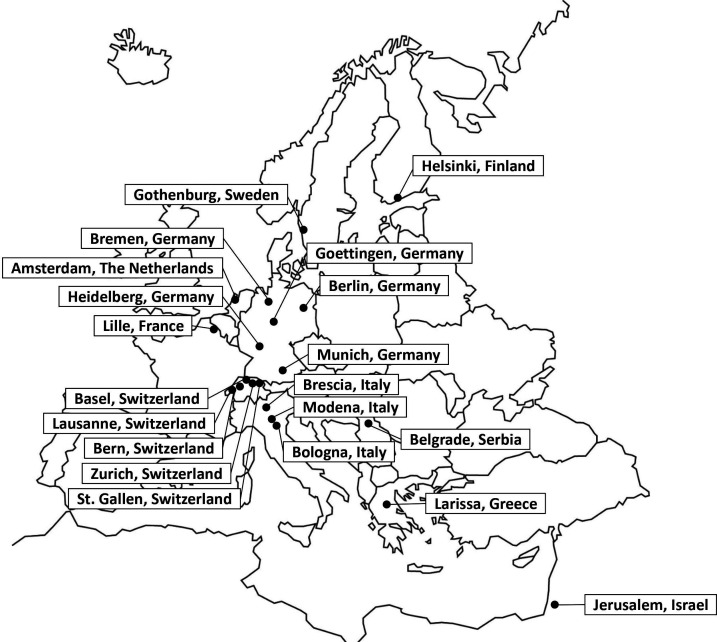
Findings to date: Currently, the EVA-TRISP network includes 20 stroke centres with considerable expertise in EVT and maintenance of high-quality hospital-based registries. Following several successful randomised controlled trials (RCTs), many important clinical questions remain unanswered in the (EVT) field and some of them will unlikely be investigated in future RCTs. Prospective registries with high-quality data on EVT-treated patients may help answering some of these unanswered issues, especially on safety and efficacy of EVT in specific patient subgroups.
Future plans: This collaborative effort aims at addressing clinically important questions on safety and efficacy of EVT in conditions not covered by RCTs. The TRISP registry generated substantial novel data supporting stroke physicians in their daily decision making considering IVT candidate patients. While providing observational data on EVT in daily clinical practice, our future findings may likewise be hypothesis generating for future research as well as for quality improvement (on EVT). The collaboration welcomes participation of further centres willing to fulfill the commitment and the outlined requirements.
Keywords: neurology; stroke; stroke medicine.
© Author(s) (or their employer(s)) 2021. Re-use permitted under CC BY-NC. No commercial re-use. See rights and permissions. Published by BMJ.
Conflict of interest statement
Competing interests: None declared.