Review
. 2021 Aug 13;135(15):1915-1927.
doi: 10.1042/CS20201453.

Klotho and calciprotein particles as therapeutic targets against accelerated ageing

Affiliations
Review

Klotho and calciprotein particles as therapeutic targets against accelerated ageing

Makoto Kuro-O. Clin Sci (Lond). .

Abstract

The klotho gene, named after a Greek goddess who spins the thread of life, was identified as a putative 'ageing-suppressor' gene. Klotho-deficient mice exhibit complex ageing-like phenotypes including hypogonadism, arteriosclerosis (vascular calcification), cardiac hypertrophy, osteopenia, sarcopenia, frailty, and premature death. Klotho protein functions as the obligate co-receptor for fibroblast growth factor-23 (FGF23), a bone-derived hormone that promotes urinary phosphate excretion in response to phosphate intake. Thus, Klotho-deficient mice suffer not only from accelerated ageing but also from phosphate retention due to impaired phosphate excretion. Importantly, restoration of the phosphate balance by placing Klotho-deficient mice on low phosphate diet rescued them from premature ageing, leading us to the notion that phosphate accelerates ageing. Because the extracellular fluid is super-saturated in terms of phosphate and calcium ions, an increase in the phosphate concentration can trigger precipitation of calcium-phosphate. In the blood, calcium-phosphate precipitated upon increase in the blood phosphate concentration is adsorbed by serum protein fetuin-A to form colloidal nanoparticles called calciprotein particles (CPPs). In the urine, CPPs appear in the renal tubular fluid when FGF23 increases phosphate load excreted per nephron. CPPs can induce cell damage, ectopic calcification, and inflammatory responses. CPPs in the blood can induce arteriosclerosis and non-infectious chronic inflammation, whereas CPPs in the urine can induce renal tubular damage and interstitial inflammation/fibrosis. Thus, we propose that CPPs behave like a pathogen that accelerates ageing and should be regarded as a novel therapeutic target against age-related disorders including chronic kidney disease.

Keywords: Klotho; ageing; calciprotein particles; chronic kidney disease; fibroblast growth factors; phosphate.


Conflict of interest statement

The authors declare that there are no competing interests associated with the manuscript.

Figures
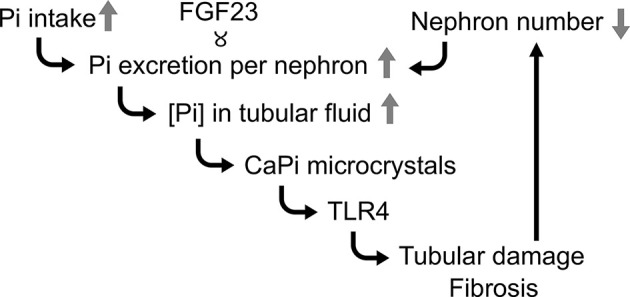
Figure 1
Figure 1. A deterioration spiral triggered by excess phosphate intake
See the text. Serum FGF23 levels correlate with phosphate excretion per nephron; Pi, phosphate. Modified from [12].
Figure 2
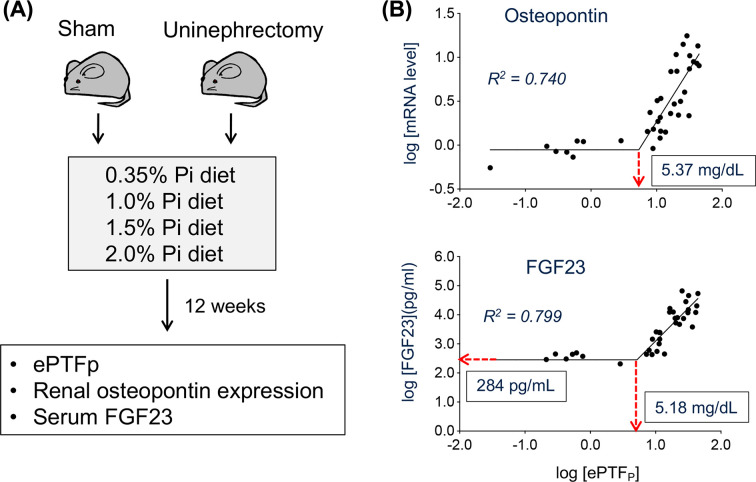
Figure 2. Relation between ePTFp, FGF23, and renal tubular damage
See the text. (A) The experimental design. Uninephrectomy was performed to reduce the nephron number to one-half. (B) The double logarithmic plots between ePTFp and relative mRNA levels of osteopontin in the kidney (upper panel) and between ePTFp and serum FGF23 levels (lower panel) fitted with two-segmented linear regression with the slope of the first segment being zero. The threshold values of ePTFp and FGF23 were indicated. Modified from [12].
Figure 3
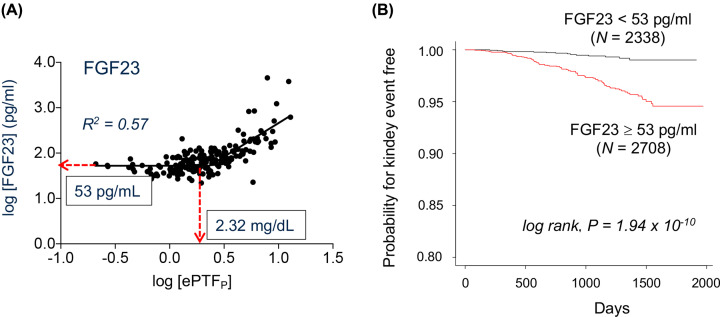
Figure 3. Clinical study
(A) Relation between ePTFp and serum FGF23 levels in 148 CKD patients at various stages. The threshold values of ePTFp and FGF23 were indicated. (B) Patients participated in the EMPATHY study were stratified into two groups by 53 pg/ml of FGF23 and the cumulative incidence of renal events were compared. Modified from [12].
Figure 4
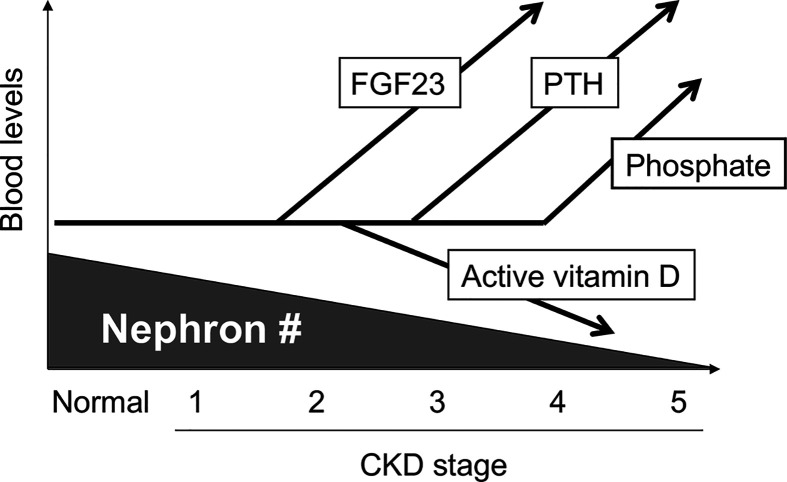
Figure 4. Progression of CKD-MBD
See the text. Regardless of the underlying disorders, progression of CKD can be viewed as the progressive loss of the functional nephron number. Modified from [8].
Figure 5
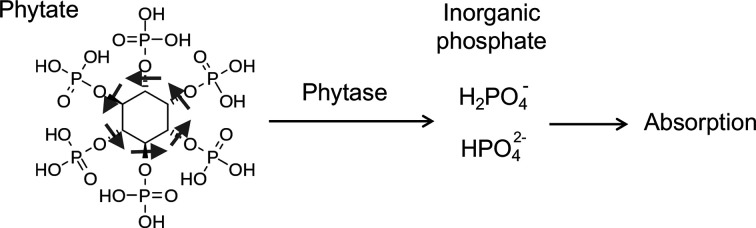
Figure 5. Phytate as a source of phosphate
See the text. Phytase is necessary to release phosphate from phytate.
Figure 6
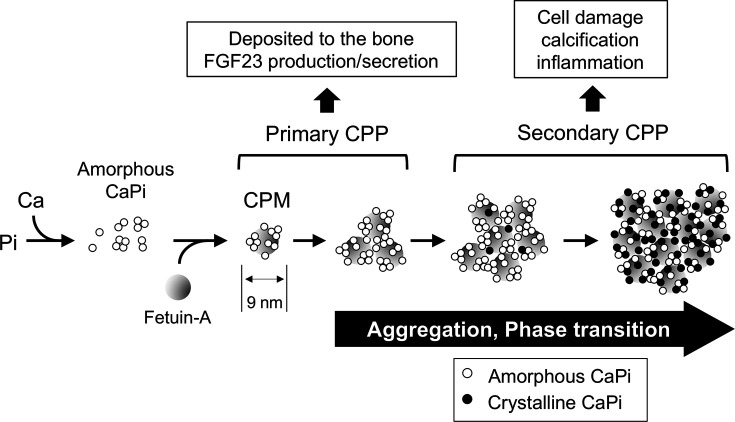
Figure 6. Process of CPP formation and maturation
See the text. Gray circles, white circles, and black circles indicate fetuin-A, amorphous calcium-phosphate (CaPi), and crystalline calcium-phosphate, respectively. Modified from [61].
Figure 7
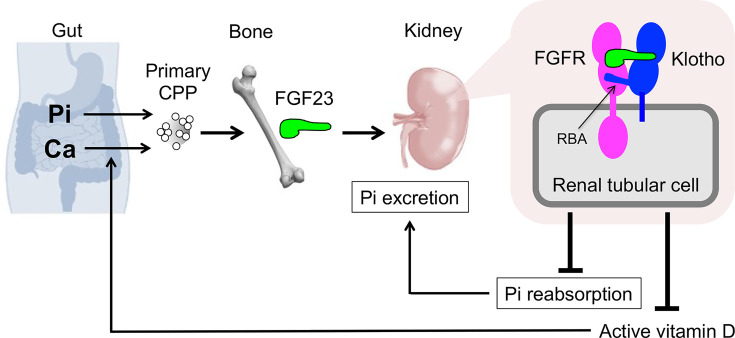
Figure 7. The FGF23-Klotho endocrine axis
See the text. Klotho protein has a long amino-acid stretch designated as the receptor binding arm (RBA) that directly interacts with FGFRs. Modified from [6,8,51].

References

    1. Wolfe-Simon F., Switzer Blum J., Kulp T.R., Gordon G.W., Hoeft S.E., Pett-Ridge J.et al. (2011) A bacterium that can grow by using arsenic instead of phosphorus. Science 332, 1163–1166 10.1126/science.1197258 - DOI - PubMed
    1. Blair-West J.R., Denton D.A., McKinley M.J., Radden B.G., Ramshaw E.H. and Wark J.D. (1992) Behavioral and tissue responses to severe phosphorus depletion in cattle. Am. J. Physiol. 263, R656–R663 10.1152/ajpregu.1992.263.3.R656 - DOI - PubMed
    1. Boaz M. and Smetana S. (1996) Regression equation predicts dietary phosphorus intake from estimate of dietary protein intake. J. Am. Diet. Assoc. 96, 1268–1270 10.1016/S0002-8223(96)00331-8 - DOI - PubMed
    1. Cupisti A. and Kalantar-Zadeh K. (2013) Management of natural and added dietary phosphorus burden in kidney disease. Semin. Nephrol. 33, 180–190 10.1016/j.semnephrol.2012.12.018 - DOI - PMC - PubMed
    1. Uribarri J. (2009) Phosphorus additives in food and their effect in dialysis patients. Clin. J. Am. Soc. Nephrol.:CJASN 4, 1290–1292 10.2215/CJN.03950609 - DOI - PubMed

MeSH terms