


Reprogramming plant specialized metabolism by manipulating protein kinases
- PMID: 34377580
- PMCID: PMC8209778
- DOI: 10.1007/s42994-021-00053-2
Reprogramming plant specialized metabolism by manipulating protein kinases
Abstract
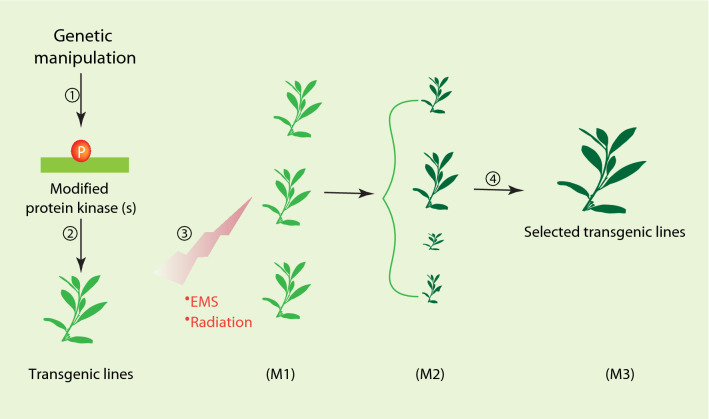
Being sessile, plants have evolved sophisticated mechanisms to balance between growth and defense to survive in the harsh environment. The transition from growth to defense is commonly achieved by factors, such as protein kinases (PKs) and transcription factors, that initiate signal transduction and regulate specialized metabolism. Plants produce an array of lineage-specific specialized metabolites for chemical defense and stress tolerance. Some of these molecules are also used by humans as drugs. However, many of these defense-responsive metabolites are toxic to plant cells and inhibitory to growth and development. Plants have, thus, evolved complex regulatory networks to balance the accumulation of the toxic metabolites. Perception of external stimuli is a vital part of the regulatory network. Protein kinase-mediated signaling activates a series of defense responses by phosphorylating the target proteins and translating the stimulus into downstream cellular signaling. As biosynthesis of specialized metabolites is triggered when plants perceive stimuli, a possible connection between PKs and specialized metabolism is well recognized. However, the roles of PKs in plant specialized metabolism have not received much attention until recently. Here, we summarize the recent advances in understanding PKs in plant specialized metabolism. We aim to highlight how the stimulatory signals are transduced, leading to the biosynthesis of corresponding metabolites. We discuss the post-translational regulation of specialized metabolism and provide insights into the mechanisms by which plants respond to the external signals. In addition, we propose possible strategies to increase the production of plant specialized metabolites in biotechnological applications using PKs.
Keywords: MAP kinase; Medicinal plants; Post-translational regulation; Protein kinases; Signal transduction; Specialized metabolites.
© Agricultural Information Institute, Chinese Academy of Agricultural Sciences 2021.
Conflict of interest statement
Conflict of interestAll the authors declare no conflict of interest.
Figures

References
-
- Hussein AR, El-Anssary AA. Plants secondary metabolites: the key drivers of the pharmacological actions of medicinal plants. In: Builders PF, editor. Herbal medicine. IntechOpen; 2019. pp. 12–30.
-
- Ashraf MA, Iqbal M, Rasheed R, Hussain I, Riaz M, Arif MS. Chapter 8—environmental stress and secondary metabolites in plants: an overview. In: Ahmad P, Ahanger MA, Singh VP, Tripathi DK, Alam P, Alyemeni MN, editors. Plant metabolites and regulation under environmental stress. Academic Press; 2018. pp. 153–167.
Publication types
LinkOut - more resources
Full Text Sources
Other Literature Sources
Research Materials
Miscellaneous