


Promoting youth mental health during the COVID-19 pandemic: A longitudinal study
- PMID: 34379656
- PMCID: PMC8357139
- DOI: 10.1371/journal.pone.0255294
Promoting youth mental health during the COVID-19 pandemic: A longitudinal study
Abstract
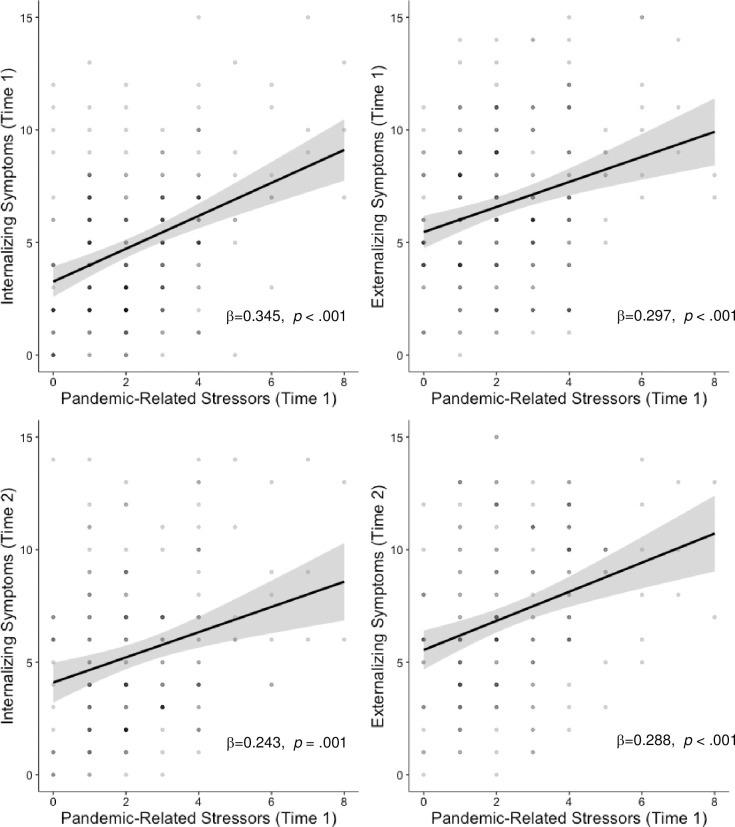
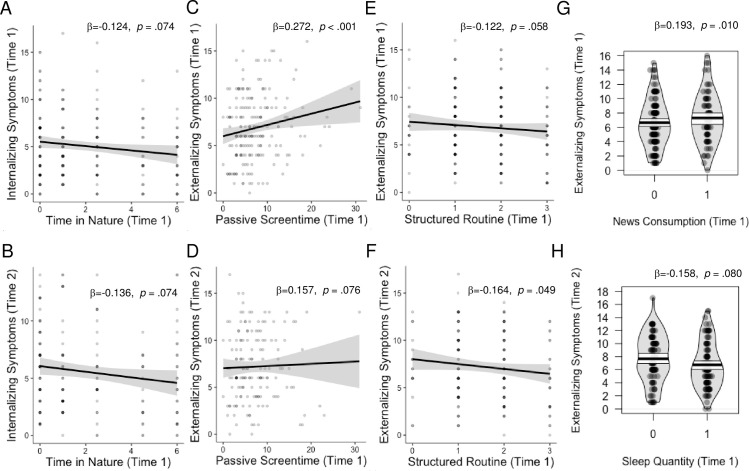
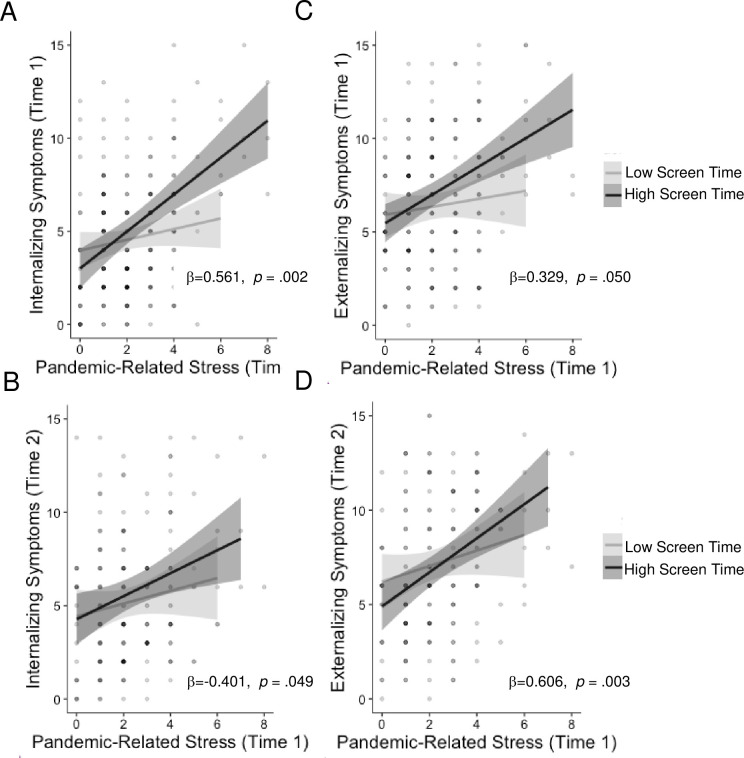
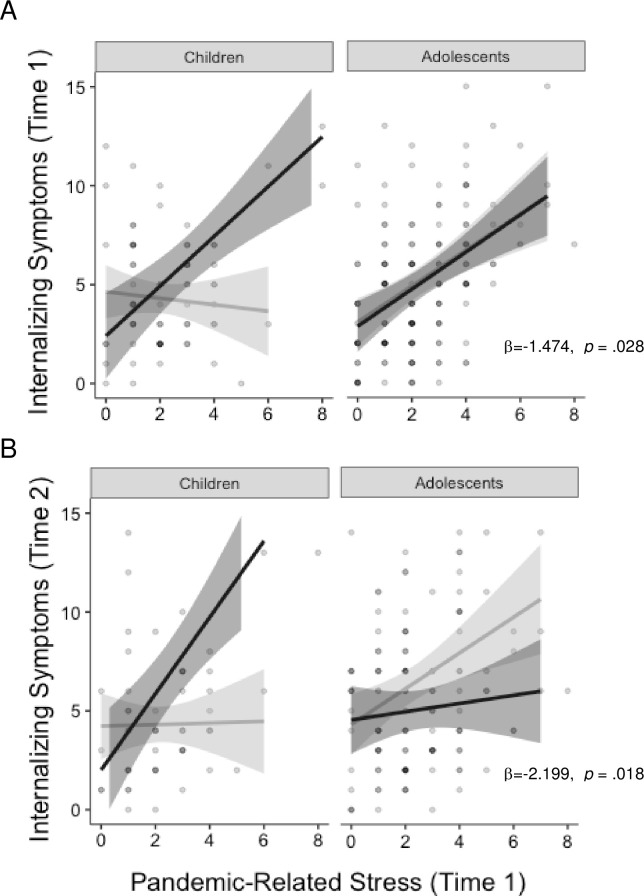
The COVID-19 pandemic has introduced novel stressors into the lives of youth. Identifying factors that protect against the onset of psychopathology in the face of these stressors is critical. We examine a wide range of factors that may protect youth from developing psychopathology during the pandemic. We assessed pandemic-related stressors, internalizing and externalizing psychopathology, and potential protective factors by combining two longitudinal samples of children and adolescents (N = 224, 7-10 and 13-15 years) assessed prior to the pandemic, during the stay-at-home orders, and six months later. We evaluated how family behaviors during the stay-at-home orders were related to changes in psychopathology during the pandemic, identified factors that moderate the association of pandemic-related stressors with psychopathology, and determined whether associations varied by age. Internalizing and externalizing psychopathology increased substantially during the pandemic. Higher exposure to pandemic-related stressors was associated with increases in internalizing and externalizing symptoms early in the pandemic and six months later. Having a structured routine, less passive screen time, lower exposure to news media about the pandemic, and to a lesser extent more time in nature and getting adequate sleep were associated with reduced psychopathology. The association between pandemic-related stressors and psychopathology was reduced for youths with limited passive screen time and was absent for children, but not adolescents, with lower news media consumption related to the pandemic. We provide insight into simple, practical steps families can take to promote resilience against mental health problems in youth during the COVID-19 pandemic and protect against psychopathology following pandemic-related stressors.
Conflict of interest statement
The authors have declared that no competing interests exist.
Figures
References
-
- Hankin BL, Abela JRZ. Development of psychopathology: A vulnerability-stress perspective. Thousand Oaks: Sage; 2005.
Publication types
MeSH terms
Grants and funding
LinkOut - more resources
Full Text Sources
Medical
