


Identification and characterization of O-linked glycans in cervical mucus as biomarkers of sperm transport: A novel sheep model
- PMID: 34379775
- PMCID: PMC8881736
- DOI: 10.1093/glycob/cwab085
Identification and characterization of O-linked glycans in cervical mucus as biomarkers of sperm transport: A novel sheep model
Abstract
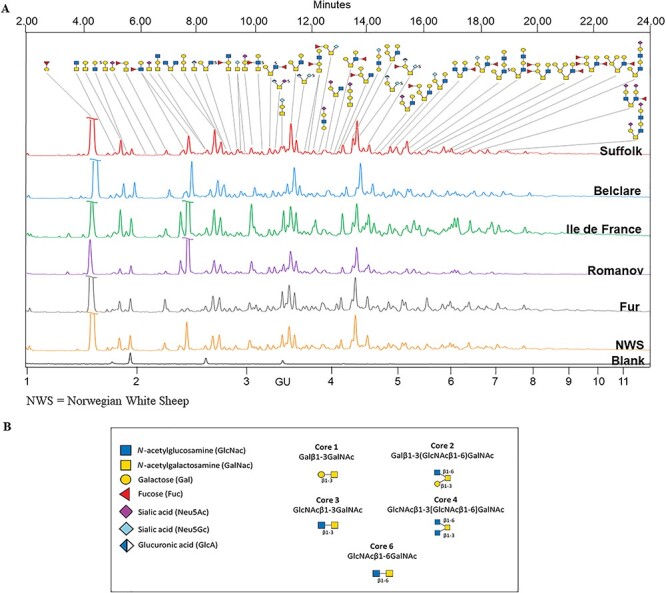
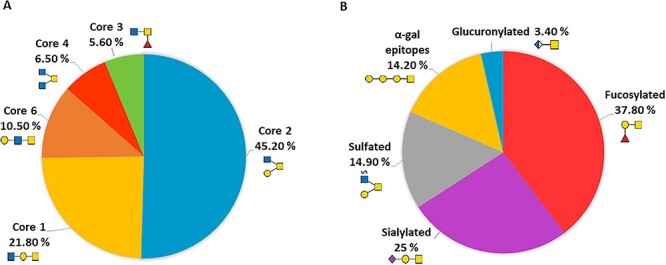
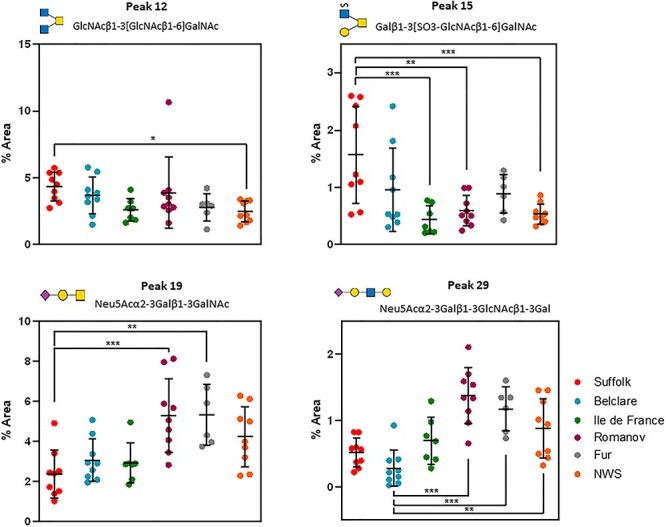
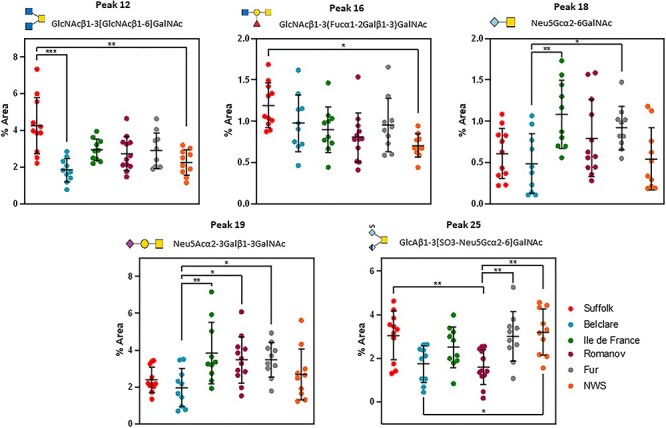
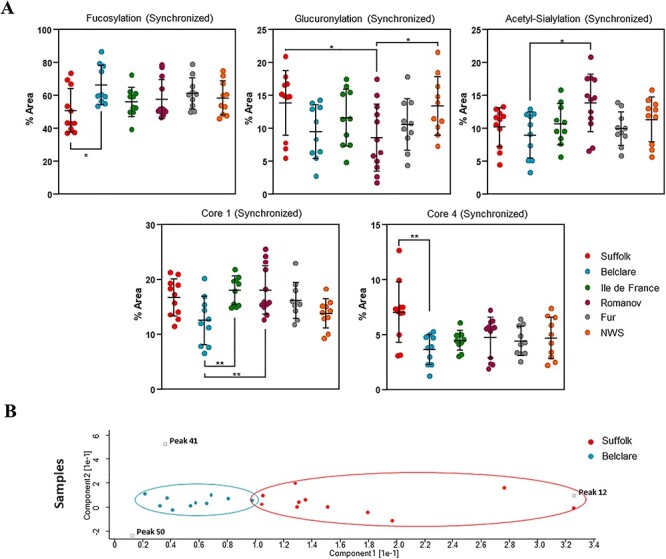
Cervical mucus plays an important role in female fertility, since it allows the entry of motile and morphological normal sperm while preventing the ascent of pathogens from the vagina. The function of cervical mucus is critically linked to its rheological properties that are in turn dictated by O-glycosylated proteins, called mucins. We aimed to characterize the O-glycan composition in the cervical mucus of six European ewe breeds with known differences in pregnancy rates following cervical/vaginal artificial insemination with frozen-thawed semen, which are due to reported differences in cervical sperm transport. These were Suffolk (low fertility) and Belclare (medium fertility) in Ireland, Ile de France and Romanov (both with medium fertility) in France, and Norwegian White Sheep (NWS) and Fur (both with high fertility) in Norway (n = 28-30 ewes/breed). We identified 124 O-glycans, from which 51 were the major glycans with core 2 and fucosylated glycans as the most common structures. The use of exogenous hormones for synchronization did not affect the O-glycan composition in both high-fertility ewe breeds, but it did in the other four ewe breeds. There was a higher abundance of the sulfated glycan (Galβ1-3[SO3-GlcNAcβ1-6]GalNAc), fucosylated glycan (GlcNAcβ1-3(Fucα1-2Galβ1-3)GalNAc) and core 4 glycan (GlcNAcβ1-3[GlcNAcβ1-6]GalNAc) in the low-fertility Suffolk breed compared with NWS (high fertility). In addition, core 4 glycans were negatively correlated with mucus viscosity. This novel study has identified O-glycans that are important for cervical sperm transport and could have applications across a range of species including human.
Keywords: O-glycans; UPLC; cervical mucus; fertility.
© The Author(s) 2021. Published by Oxford University Press. All rights reserved. For permissions, please e-mail: journals.permissions@oup.com.
Figures
References
-
- Abril-Parreno L, Krogenaes AK, Byrne CJ, Donovan A, Stuen S, Caldas E, Diskin M, Druart X, Fair S. 2020. Ewe breed differences in cervical anatomy and cervicovaginal mucus properties: An international study. Theriogenology. 160:18–25. - PubMed
-
- Abril-Parreño L, Krogenæs AK, Byrne CJ, Donovan A, Stuen S, Caldas E, Diskin M, Druart X, Fair S. 2021. Ewe breed differences in cervical anatomy and cervicovaginal mucus properties: An international study. Theriogenology. 160:18–25. - PubMed
-
- Adamczyk B, Stockmann H, O'Flaherty R, Karlsson NG, Rudd PM. 2017. High-throughput analysis of the plasma N-glycome by UHPLC. Methods Mol Biol. 1503:97–108. - PubMed
-
- Adams NR, Tang BY. 1979. Changes in ovine cervical mucus in response to oestrogen treatment. J Reprod Fertil. 57:261–266. - PubMed
-
- Andersch-Bjorkman Y, Thomsson KA, Holmen Larsson JM, Ekerhovd E, Hansson GC. 2007. Large scale identification of proteins, mucins, and their O-glycosylation in the endocervical mucus during the menstrual cycle. Mol Cell Proteomics. 6:708–716. - PubMed
