


Virtual Reality and Augmented Reality in Ophthalmology: A Contemporary Prospective
- PMID: 34383716
- PMCID: PMC9167643
- DOI: 10.1097/APO.0000000000000409
Virtual Reality and Augmented Reality in Ophthalmology: A Contemporary Prospective
Abstract
Purpose: Most published systematic reviews have focused on the use of virtual reality (VR)/augmented reality (AR) technology in ophthalmology as it relates to surgical training. To date, this is the first review that investigates the current state of VR/AR technology applied more broadly to the entire field of ophthalmology.
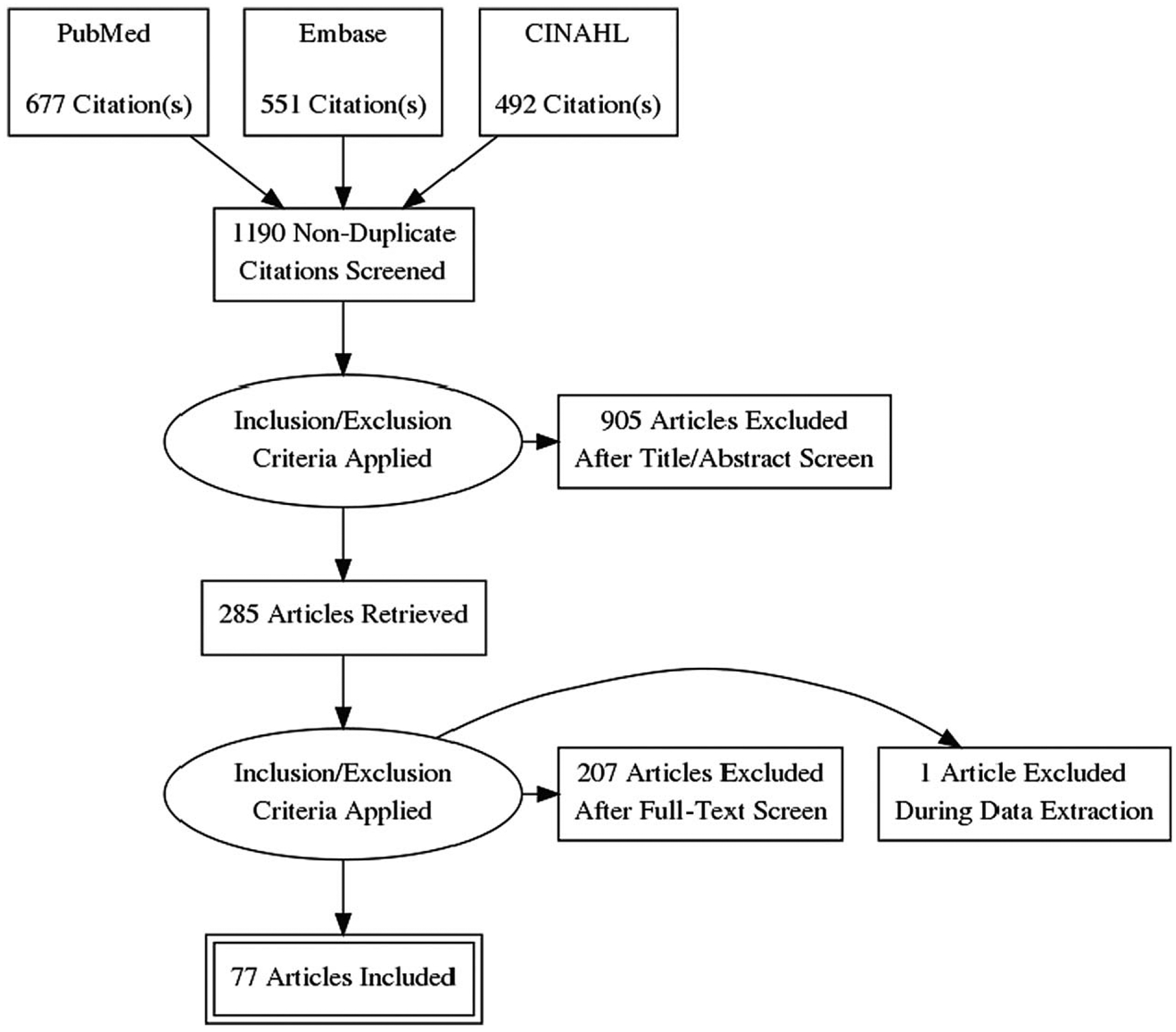
Methods: PubMed, Embase, and CINAHL databases were searched systematically from January 2014 through December 1, 2020. Studies that discussed VR and/or AR as it relates to the field of ophthalmology and provided information on the technology used were considered. Abstracts, non-peer-reviewed literature, review articles, studies that reported only qualitative data, and studies without English translations were excluded.
Results: A total of 77 studies were included in this review. Of these, 28 evaluated the use of VR/AR in ophthalmic surgical training/assessment and guidance, 7 in clinical training, 23 in diagnosis/screening, and 19 in treatment/therapy. 15 studies used AR, 61 used VR, and 1 used both. Most studies focused on the validity and usability of novel technologies.
Conclusions: Ophthalmology is a field of medicine that is well suited for the use of VR/AR. However, further longitudinal studies examining the practical feasibility, efficacy, and safety of such novel technologies, the cost-effectiveness, and medical/legal considerations are still needed. We believe that time will indeed foster further technological advances and lead to widespread use of VR/AR in routine ophthalmic practice.
Copyright © 2021 Asia-Pacific Academy of Ophthalmology. Published by Wolters Kluwer Health, Inc. on behalf of the Asia-Pacific Academy of Ophthalmology.
Conflict of interest statement
The authors have no conflicts of interest to declare.
Figures
References
-
- Regrebsubla N Determinants of Diffusion of Virtual Reality [Diploma Thesis]. GRIN: Chair of Technology and Management, Technical University of Berlin; 2015.
-
- Boas YAGV Overview of virtual reality technologies. In: Proceedings of the Interactive Multimedia Conference, Bogotá, Colombia. 2013;2013.
-
- Earnshaw RA. Virtual Reality Systems. Academic press; 1993, 2014.
-
- Milgram P, Takemura H, Utsumi A, et al. Augmented reality: a class of displays on the reality-virtuality continuum. Paper presented at: Telemanipulator and telepresence technologies; 1995.
-
- Thomsen ASS, Subhi Y, Kiilgaard JF, et al. Update on simulation-based surgical training and assessment in ophthalmology: a systematic review. Ophthalmology. 2015;122:1111–1130. - PubMed
Publication types
MeSH terms
Grants and funding
LinkOut - more resources
Full Text Sources
Research Materials
