


Socio-economic inequality in functional disability and impairments with focus on instrumental activity of daily living: a study on older adults in India
- PMID: 34384409
- PMCID: PMC8359266
- DOI: 10.1186/s12889-021-11591-1
Socio-economic inequality in functional disability and impairments with focus on instrumental activity of daily living: a study on older adults in India
Abstract
Background: Studies have examined functional disability among older adults by combining Activities of Daily Living (ADL) and Instrumental Activities of Daily Living (IADL). This study adds another dimension to ADL and IADL by combining various impairments such as hearing, vision, walking, chewing, speaking, and memory loss among older adults. This study examines functional disability among older adults in India as measured by ADL, IADL, along with various impairments.
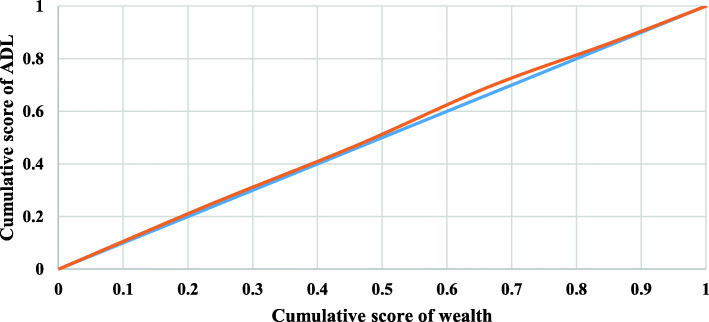
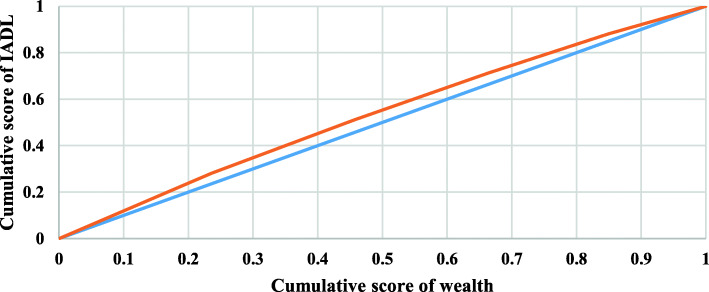
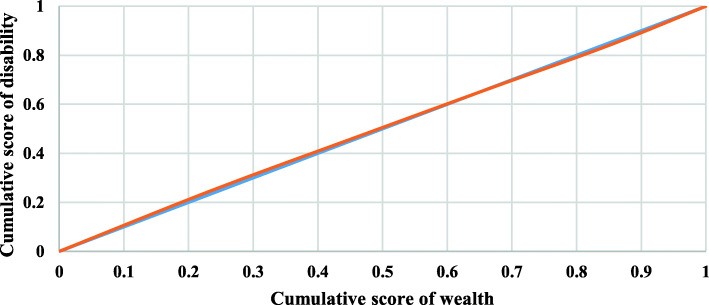
Methods: This study utilized data from Building a Knowledge Base on Population Aging in India (BKPAI), a national-level survey and conducted across seven states of India. The study utilized three outcome variables, namely, ADL, IADL, and Impairments. Descriptive and bivariate analyses were used along with multivariate analysis to fulfil the objectives of the study. The concentration index was calculated for ADL, IADL, and impairments, and further, decomposition analysis was carried out for IADL.
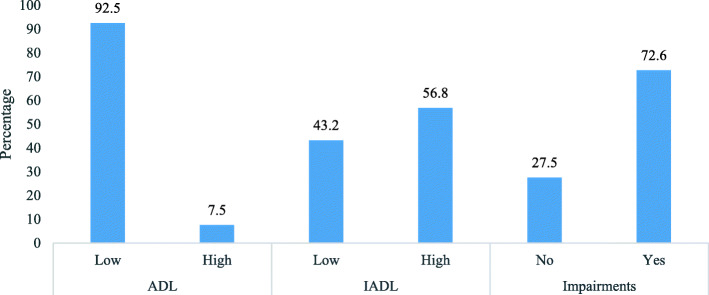
Results: The results observed that nearly 7.5% of older adults were not fully independent for ADL. More than half (56.8%) were not fully independent for IADL, and nearly three-fourths (72.6%) reported impairments. Overall, ADL, IADL, and impairments were higher among older adult's aged 80+ years, older adults with poor self-rated health, and those suffering from chronic diseases. The likelihood of ADL (AOR = 6.42, 95% CI: 5.1-8.08), IADL (AOR = 5.08, 95% CI: 4.16-6.21), and impairment (AOR = 3.50, 95% CI: 2.73-4.48) were significantly higher among older adults aged 80+ years compared to 60-69 years. Furthermore, older adults who had poor self-rated health and suffered from chronic diseases were more likely to report ADL (AOR = 2.95, 95% CI: 2.37-3.67 and AOR = 2.70, 95% CI: 2.13-3.43), IADL (AOR = 1.74, 95% CI: 1.57-1.92 and AOR = 1.15, 95% CI: 1.04-1.15), and impairment (AOR = 2.36, 95% CI: 2.11-2.63 and AOR = 2.95, 95% CI: 2.65-3.30), respectively compared to their counterparts. Educational status and wealth explained most of the socio-economic inequality in the prevalence of IADL among older adults.
Conclusion: It is recommended that the government advise older adults to adopt health-promoting approaches, which may be helpful. Further, there is a pressing need to deliver quality care to older adults suffering from chronic conditions.
Keywords: Functional disability; Impairments; India; Inequalities; Older adults.
© 2021. The Author(s).
Conflict of interest statement
The authors declare that they have no competing interests.
Figures
References
MeSH terms
LinkOut - more resources
Full Text Sources
Medical
