


Statins in Depression: An Evidence-Based Overview of Mechanisms and Clinical Studies
- PMID: 34385939
- PMCID: PMC8353114
- DOI: 10.3389/fpsyt.2021.702617
Statins in Depression: An Evidence-Based Overview of Mechanisms and Clinical Studies
Abstract
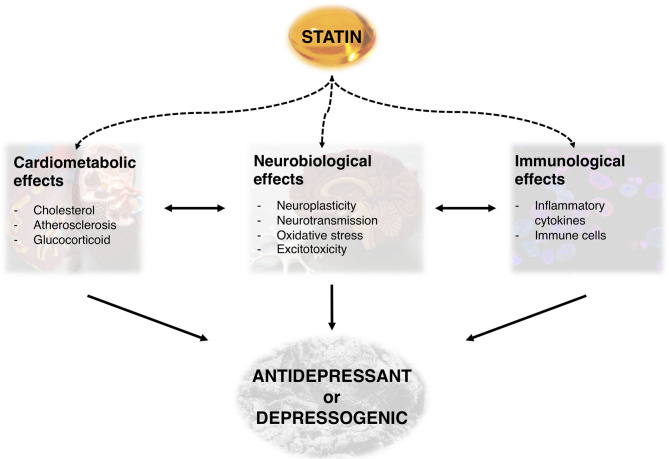
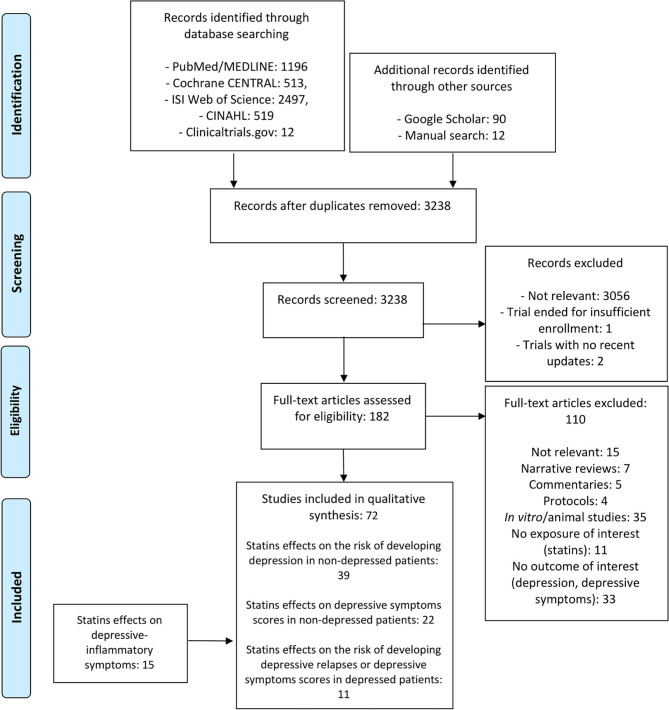
Background: Depression is a leading cause of disability, burdened by high levels of non-response to conventional antidepressants. Novel therapeutic strategies targeting non-monoaminergic pathways are sorely needed. The widely available and safe statins have several putative mechanisms of action, especially anti-inflammatory, which make them ideal candidates for repurposing in the treatment of depression. A large number of articles has been published on this topic. The aim of this study is to assess this literature according to evidence-based medicine principles to inform clinical practise and research. Methods: We performed a systematic review of the electronic databases MEDLINE, CENTRAL, Web of Science, CINAHL, and ClinicalTrials.gov, and an unstructured Google Scholar and manual search, until the 9th of April 2021, for all types of clinical studies assessing the effects of statins in depression. Results: Seventy-two studies were retrieved that investigated the effects of statins on the risk of developing depression or on depressive symptoms in both depressed and non-depressed populations. Fifteen studies specifically addressed the effects of statins on inflammatory-related symptoms of anhedonia, psychomotor retardation, anxiety, and sleep disturbances in depression. Most studies suggested a positive effect of statins on the occurrence and severity of depression, with fewer studies showing no effect, while a minority indicated some negative effects. Limitations: We provide a narrative report on all the included studies but did not perform any quantitative analysis, which limits the strength of our conclusions. Conclusions: Robust evidence indicates that statins are unlikely to lead to depressive symptoms in the general population. Promising data suggest a potential role for statins in the treatment of depression. Further clinical studies are needed, especially in specific subgroups of patients identified by pre-treatment assessments of inflammatory and lipid profiles.
Keywords: HMG 3-hydroxy-3-methylglutaryl; antidepressant; depression; mechanism; review; statin.
Copyright © 2021 De Giorgi, Rizzo Pesci, Quinton, De Crescenzo, Cowen and Harmer.
Conflict of interest statement
CH has received consultancy fees from P1vital, Janssen, Sage Pharmaceuticals, Zogenix, Pfizer, and Lundbeck outside of the current work. The remaining authors declare that the research was conducted in the absence of any commercial or financial relationships that could be construed as a potential conflict of interest.
Figures
References
-
- James SL, Abate D, Abate KH, Abay SM, Abbafati C, Abbasi N, et al. . Global, regional, and national incidence, prevalence, and years lived with disability for 354 Diseases and Injuries for 195 countries and territories, 1990-2017: a systematic analysis for the Global Burden of Disease Study 2017. Lancet. (2018) 392:1789–858. 10.1016/S0140-6736(18)32279-7 - DOI - PMC - PubMed
-
- Cipriani A, Furukawa TA, Salanti G, Chaimani A, Atkinson LZ, Ogawa Y, et al. . Comparative efficacy and acceptability of 21 antidepressant drugs for the acute treatment of adults with major depressive disorder: a systematic review and network meta-analysis. Lancet. (2018) 391:1357–66. 10.1016/S0140-6736(17)32802-7 - DOI - PMC - PubMed
Publication types
Grants and funding
LinkOut - more resources
Full Text Sources
Miscellaneous
